
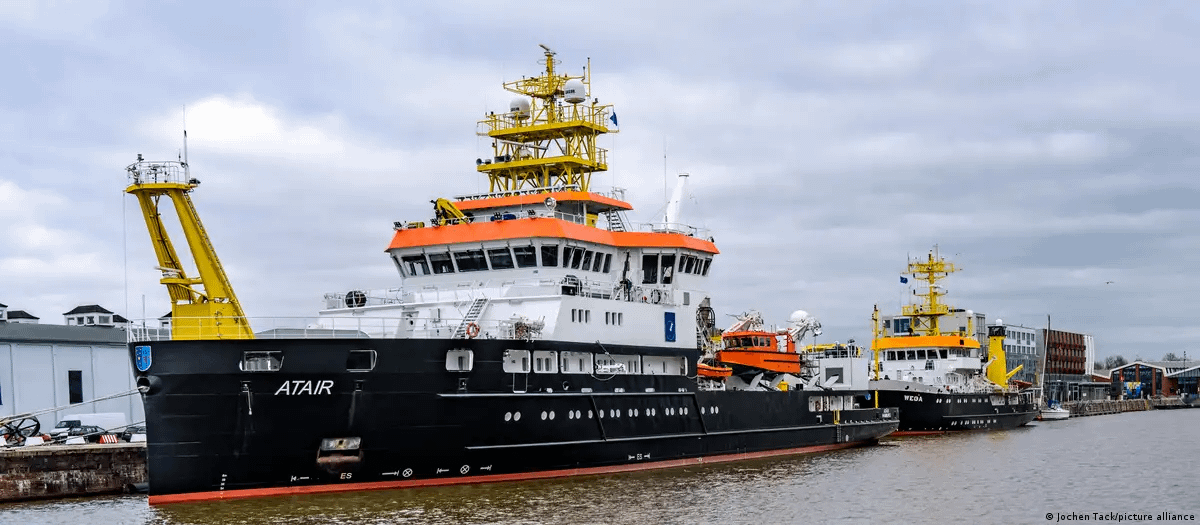
One of the largest car ports in Europe, Bremerhaven on the North Sea in Germany, is undergoing a modernization with a budget of €1.35 billion. This measure, included in the German federal budget for 2026, is part of Berlin's broader efforts to prepare for a potential conflict. This was reported on Saturday, May 2, by Bloomberg.
The modernization aims to strengthen loading docks to ensure the transportation of military equipment, particularly 60-ton Leopard tanks, to the future front line. In the event of an attack on Europe, Germany's central location and industrial resources provide a strategic position for supplying troops, the agency notes.
Meanwhile, the German armed forces are seeking help from the private sector - such companies as BLG Logistics - to make up for their capability shortfalls. At the same time, the Bundeswehr is not ready for public-private partnerships on the scale necessary for rapid mass mobilization in the event of an attack on one of NATO's allies, as emphasized further in the material. This specificity is partly due to the strict separation of civilian and military structures in Germany after World War II.
Germany's Defense Minister talks about a "paradigm shift."
Thus, the Federal Office for Equipment, Information Technology and Support for the Bundeswehr (BAAINBw) does not maintain direct contacts with civilian companies; communication is conducted exclusively through procurement platforms.
"We have initiated processes that truly represent a paradigm shift," said Germany's Defense Minister Boris Pistorius to journalists on April 22 while presenting the country's new military strategy. "We all must come to terms with the fact that peace and freedom, prosperity and tolerance can no longer be taken for granted, but must be defended," he added.
Companies are overwhelmed with paperwork.
The Operational Plan for Germany, which was completed in March 2024, outlines how private entities should contribute to national and allied defense in the event of an attack, including coordinating logistics to supply hundreds of thousands of soldiers.
However, the plan is classified, and logistics companies are only partially aware of it. This measure complicates private companies' attempts to engage in planning.
According to Niels Beuck, Deputy Director of the German Association of Freight Forwarders and Logistics (DSLV), Germany's preparation for war involves a significant amount of paperwork: companies are required to provide detailed information about their fleet sizes, warehouse capacities, and staffing levels, without ensuring adequate transparency.
Germany aims to fully equip the Bundeswehr by 2028.
The Federal Office for Equipment, Information Technology and Support for the Bundeswehr (BAAINBw) believes it has only three years left to modernize and equip the German armed forces in light of the increased military threat from Russia, said the head of the agency Annette Lehnigk-Emden in June 2025.
"By 2028, everything necessary must be procured to ensure full defense capability. After all, soldiers will still need to train on new equipment," Lehnigk-Emden told the Tagesspiegel newspaper. Her estimates are based on analysts' forecasts that Russia may be ready to attack NATO territory starting in 2029. This was, in particular, mentioned by the Bundeswehr's Inspector General Carsten Breuer and the Federal Minister of Defense Boris Pistorius.
In October 2024, the head of the Federal Intelligence Service of Germany (BND) Martin Jäger stated that preparations for escalation of conflict with Russia need to start now: "We must not relax, thinking that a potential Russian attack will not happen until 2029. We are already under threat today," he stated while addressing the Bundestag committee overseeing intelligence activities.