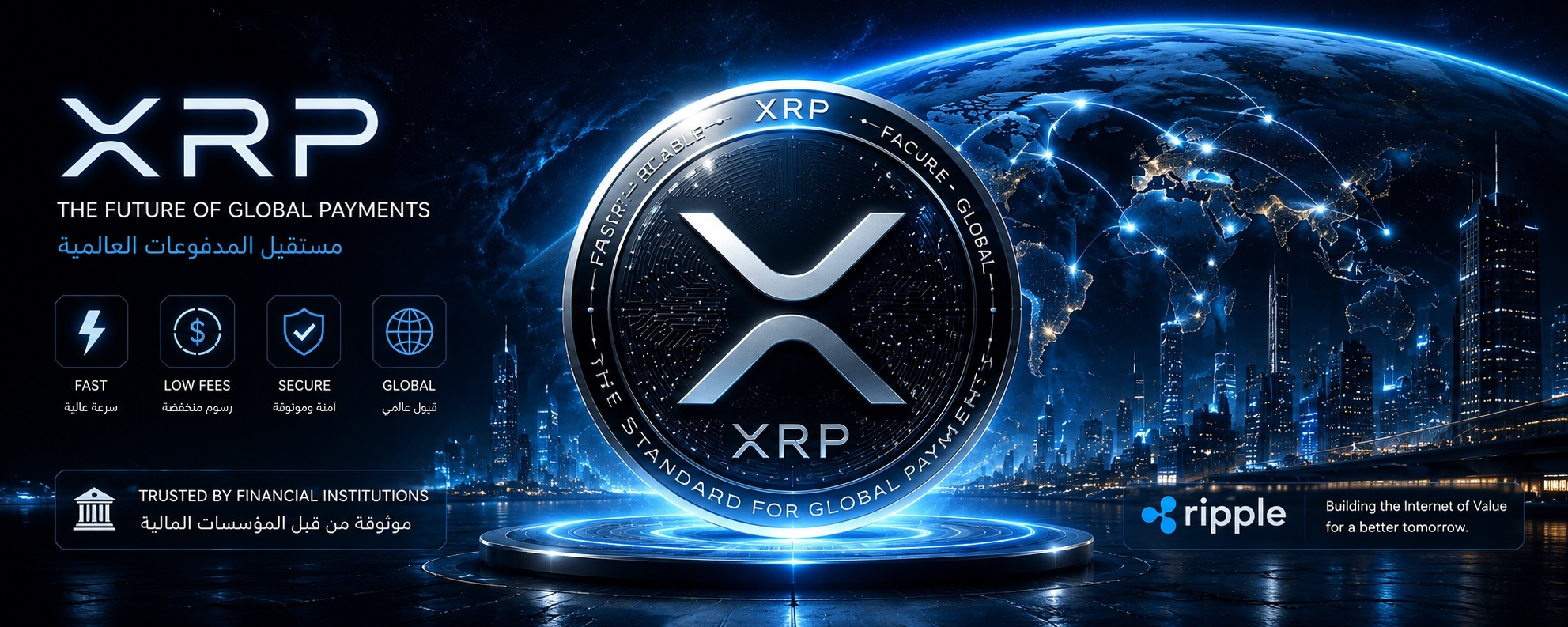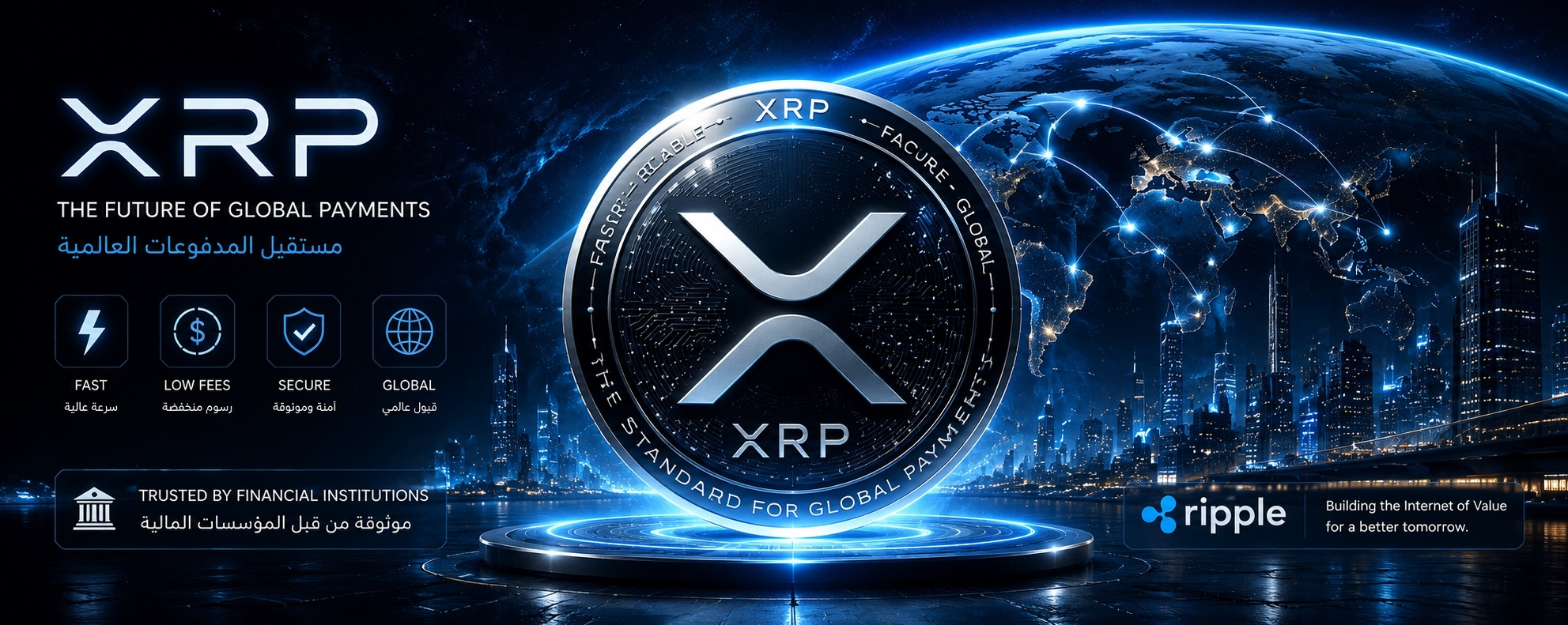
🚀 A comprehensive look at the coin
In the world of crypto, there are thousands of projects, but only a few have managed to stick around for years and maintain a strong presence in the market. Among the standout projects is XRP from the Ripple network.
This coin isn't just designed for speculation or trading; it came with a clear goal: to develop global financial transfer systems and make them faster, cheaper, and more efficient.
🔹 What is $XRP
#XRP is a digital currency operating on the Ripple network, a financial and tech platform aimed at facilitating money transfers between banks and financial institutions worldwide.
The core idea of the project is to solve traditional international transfer problems that are often:
Slow
Expensive
Complex
Requires multiple intermediaries
Through the Ripple network, transfers can be completed in just seconds and with very low fees.
⚡ How does the Ripple network work?
Ripple relies on a system that is relatively different from some other digital currencies like #BITCOIN
Instead of relying entirely on mining, the network uses a fast validation mechanism that allows for a massive number of transactions to be executed efficiently.
This makes #xrp suitable for financial and institutional uses, especially in:
International transfers
Cross-border payments
Fast financial transaction settlements
✅ Key features of $XRP
1️⃣ High speed
The network can process transactions in just a few seconds, compared to bank transfers that may take days.
2️⃣ Very low fees
The transfer cost on the #xrp network is extremely low, making it attractive for international remittances.
3️⃣ Strong scalability
The network can execute thousands of transactions in a short time without significant congestion.
4️⃣ Institutional interest
Ripple has focused from the beginning on building relationships with banks and financial institutions, giving the project a different character from many other coins.
5️⃣ Lower energy consumption
Due to not relying on traditional mining, energy consumption is lower compared to some other networks.
📈 Why are investors interested in XRP?
Several factors keep XRP consistently among the most watched coins:
🔹 The strength of the project and its longevity
🔹 Practical usage in the financial transfer sector
🔹 Potential expansion of digital banking technology usage
🔹 Strong community support for the coin
🔹 Its link to the future of rapid global payments
Any positive developments in crypto market regulations could strongly reflect on XRP.
⚖️ Challenges and risks
Despite the strength of the project, XRP has faced and continues to face several challenges, the most important being:
🔸 Legal issues and regulations
Ripple has faced legal disputes that impacted the coin's price and investor confidence at various times.
🔸 Strong competition
There are many competing projects working on similar payment and transfer solutions.
🔸 Crypto market volatility
The crypto market is inherently high risk and volatile.
🔮 Future of XRP
Some see that XRP could benefit significantly from:
Increasing global adoption of cryptocurrencies
Financial institutions entering the blockchain world
The need for faster and cheaper payment systems
Evolving regulations and legislations
While others believe that competition and regulations may limit its future growth.
But one thing is for sure, XRP remains one of the most present and influential coins in the crypto market.
📌 Summary
#xrp is not just a speculative digital currency; it’s a tech and financial project aimed at changing how money transfers globally.
It has successfully built a strong name in the market and possesses the qualities that make it a project constantly watched by investors.
But in the end, investing in cryptocurrencies requires:
✔️ Good study
✔️ Smart capital management
✔️ Understanding risks before making any decisions
💬 In your opinion… Can XRP lead the future of digital financial transfers? Or has competition become stronger than ever?