
A stablecoin is a type of digital currency (cryptocurrency) specifically designed to maintain a relatively stable value, unlike other digital currencies like Bitcoin that are affected by extreme market fluctuations. These currencies are pegged to external assets such as traditional currencies (like the US dollar) or commodities or even other digital currencies, making them an ideal tool for everyday payments, transfers, and trading without the risk of volatility. 0 Stablecoins aim to combine the advantages of blockchain technology such as speed, transparency, and security with the stability of traditional currencies. 1
How does stablecoin technology work?
Stablecoins rely on blockchain technology, issued as tokens on networks like Ethereum or Solana. The underlying mechanism is 'pegging', where the value of the stablecoin is linked to an external asset to maintain stability. For example:
Stablecoins are issued against the deposit of real assets in bank accounts or smart contracts.
If the value deviates from the peg (like $1), automatic mechanisms intervene such as buying or selling tokens to restore balance. 2
This technology makes stablecoins effective for cross-border payments, reducing fees and time compared to traditional bank transfers. 4
Types of stablecoins
Stablecoins are divided into several main types based on the stability mechanism:
Fiat-Backed: Linked to reserves of real currencies like the dollar. Example: USDT (Tether) and USDC (USD Coin), where one dollar is held for each issued token. 6
Crypto-Backed or Collateralized: Uses other cryptocurrencies as collateral, often with over-collateralization to withstand volatility. Example: DAI from MakerDAO. 0
Algorithmic: Relies on algorithms and smart contracts to automatically adjust supply and demand without real reserves. Example: Basis (which previously failed), it is riskier but more decentralized. 5
Hybrid: Combines the previous methods to enhance stability.
To illustrate the types, here is a chart summarizing them: 1
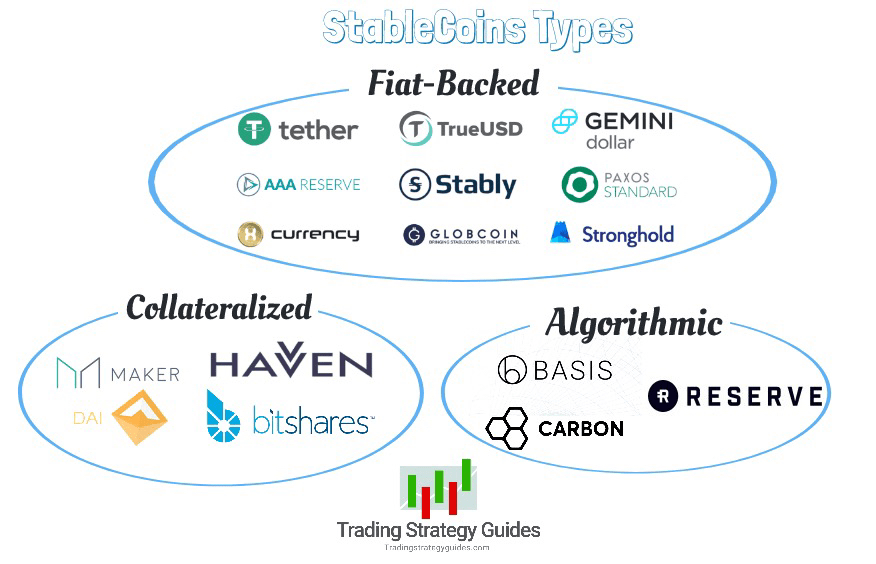
"display of stablecoin types with examples like Tether, DAI, and Basis" "LARGE"
Benefits and risks
Benefits: Provides stability in the crypto world, facilitates global payments at low costs, and supports decentralized finance (DeFi). 7
Risks: May lose its peg if reserves fail (like the case of TerraUSD), or face strict legal regulations. 3
In conclusion, stablecoin technology represents a bridge between traditional and digital currencies, continuously evolving with increased adoption in financial markets. If you need additional details about a specific type or practical examples, let me know!
