
Application developers quietly earn millions in revenue by building on platforms like Hyperliquid and Polymarket, using a new income attribution system called 'Building Tokens.'
This is a Roblox-like model in the crypto space: platforms serve as a foundation, enabling thousands of applications to build and monetize through unique code attribution activities and revenue sharing.
In this article, I will explain in detail what builder tokens are, how applications earn millions through them, and how ERC-8021 proposes to introduce this system to Ethereum.
What are builder tokens?
Creator tokens are essentially a recommended token designed for app developers - applications can leverage them to create transaction volumes for another platform (for example, Hyperliquid) and earn revenue.
This forms an on-chain attribution system, allowing third-party applications (like trading bots, AI agents, and wallet interfaces) to earn fees for the activity they generate on other platforms.
This system is beneficial for all parties involved:
· Platforms receive higher transaction volumes;
· App developers earn revenue based on the volume they generate;
· Users have a more convenient way to interact with the platform.
Let's understand this better through an example - Phantom.
Phantom perpetual contract revenue "cash cow"
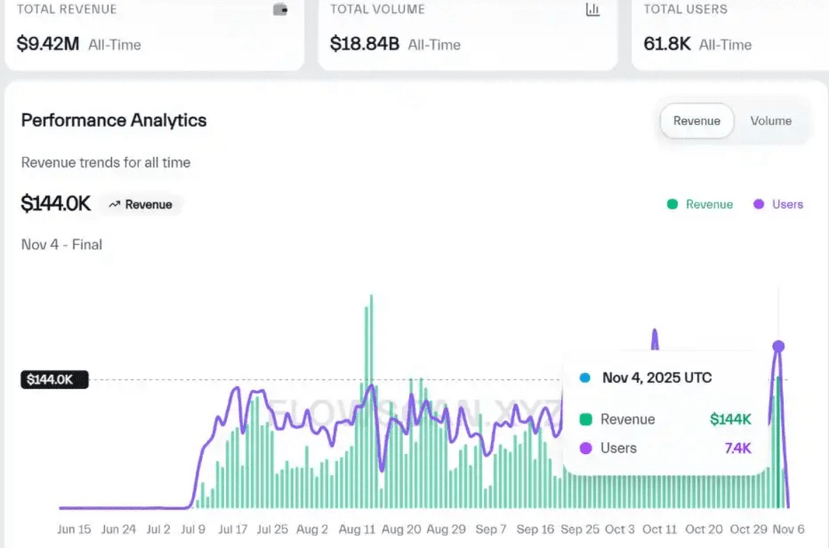
In July of this year, Phantom added support for perpetual contract trading through Hyperliquid builder tokens, a decision that currently brings them about $100,000 in daily revenue.
The way it works is by allowing users to transfer funds to a separate perpetual contract account and participate directly in long and short trades within the mobile application.
For each request, Phantom attaches its builder token and charges users a fee of 0.05% - these fees are recorded through the on-chain attribution system and can be claimed in USDC.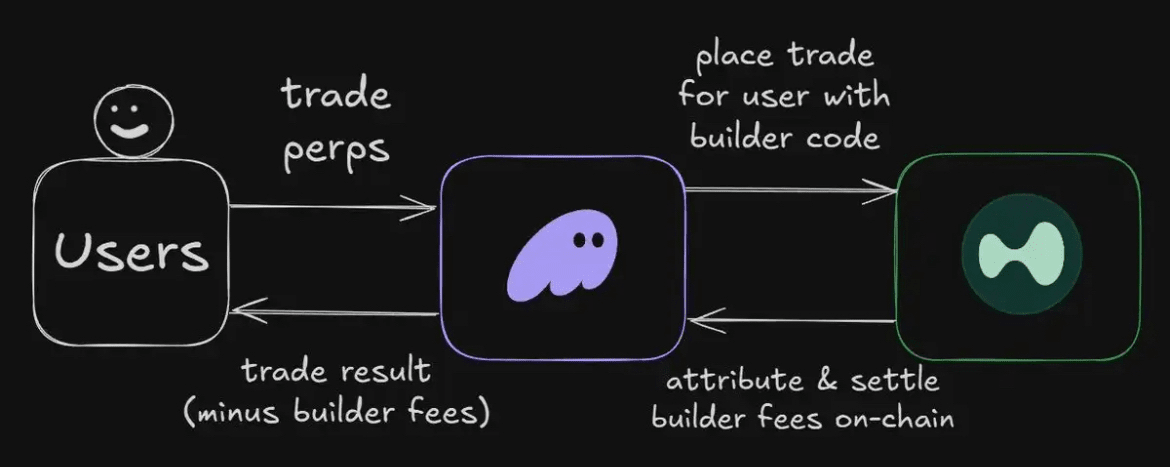
It is worth noting that all this relies on an external API provided by Hyperliquid, making the building process extremely easy and much less costly than developing similar complex functionalities in-house.
Phantom's perpetual contract business has already shown an astonishing return on investment (ROI) - since its launch in July, the trading volume of Phantom perpetual contracts has approached $20 billion, generating nearly $10 million in revenue in less than 6 months.
Interestingly, the top perpetual contract user on Phantom performed very poorly:
· They lost 99% of their investment portfolio in perpetual contracts amounting to around $2 million;
· PNL is -1.8 million dollars;
· Paid about $191,000 in fees to Phantom through the builder token. Currently, the user's only position is 25x long ETH (how to interpret this information is left to you).
Unless everyone loses their money like this user, Hyperliquid will continue to generate massive profits for developers like Phantom who bring trading volume to their platform.
As of now, the Hyperliquid creator token has achieved the following:
· Earned nearly $40 million in revenue for app developers;
· Providing a more user-friendly interface for trading perpetual contracts;
· Generated over $1 trillion in trading volume for Hyperliquid perpetual contracts.
The success of this model was quickly validated, attracting many prominent app developers to build high-quality applications on Hyperliquid.
The next Polymarket lawsuit
Polymarket announced this week a similar design with a builder program aimed at rewarding app developers for bringing volume to its prediction markets.
To drive the integration of builder tokens, Polymarket launched a weekly USDC reward plan based on integrated volume.
While the current volume of third-party Polymarket applications is much lower than Hyperliquid, their builder tokens have already attracted some teams to develop user interfaces, providing users with a unique way to participate in predictions.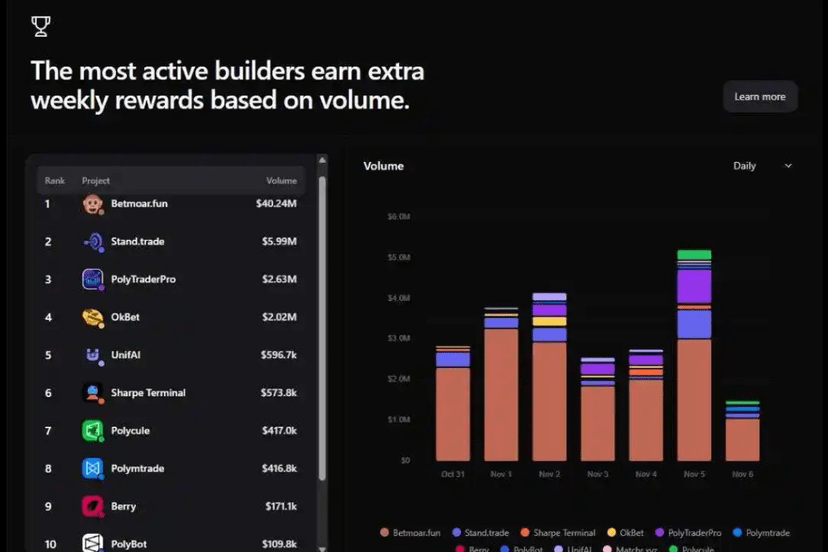
Polymarket appears to be helping to scale builder applications, from trading terminals to AI assistants, and has created a similar dashboard for Hyperliquid to showcase top builders and their rewards.
Other prediction markets are expected to launch similar programs to participate in the competition, and there may be a more widespread application ecosystem mimicking this successful referral system model.
However, Ethereum has the opportunity to elevate this model to new heights by encouraging high-quality app developers to create innovative user interfaces on the mature and reliable Ethereum platform.
ERC-8021 Ethereum Opportunity
Ethereum now has the opportunity to natively integrate builder tokens into L2 and L1 layers, and a recent proposal has been put forward for an interesting implementation.
ERC-8021 proposes including creator tokens directly in transactions, along with a registry where developers can provide a wallet address to receive rewards.
Implementing this proposal would provide a standardized way to add builder tokens to any transaction, establishing a universal mechanism for platforms to reward app developers for the volume they generate.
ERC-8021 has two main components:
1. New transaction suffix: Developers can append small data to the end of the transaction to include their creator token, such as "phantom" or "my-app" or "jarrod".
2. Code registry: A smart contract where developers can assign their creator token to a wallet address to receive platform fee distributions.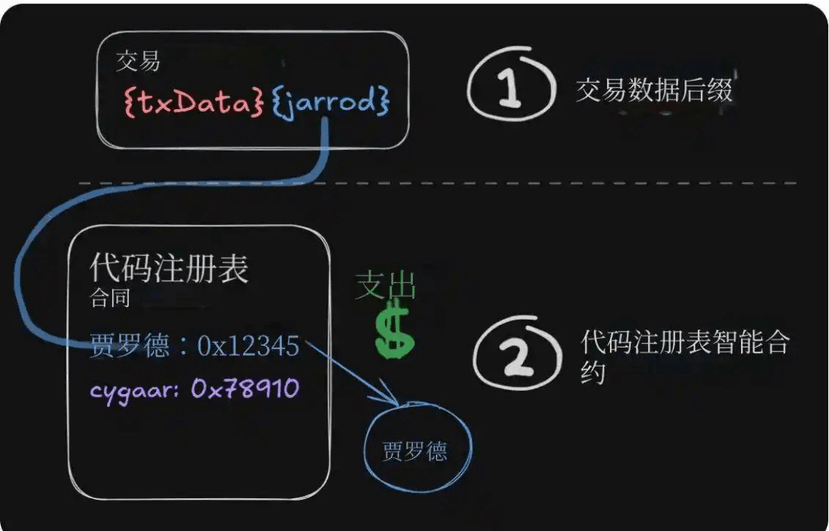
Creator tokens can be appended to the end of transaction data and optionally assigned to a wallet address to receive fees.
This will enable any platform to attribute on-chain activity to the original application and distribute revenues efficiently to those developers in a transparent and programmable manner.
Conclusion
While Hyperliquid users may already be familiar with builder tokens, a deeper dive reveals astonishing widespread adoption in a short period.
The reason for its success is clear: builders are rewarded for creating high-quality consumer applications based on solid primitives in the crypto space.
Ethereum has a large array of high-quality platforms that can be integrated into a unified creator token system to drive a new wave of consumer-facing applications.
Builder tokens open new revenue streams for high-quality app developers, revenue streams that are not reliant on grants obtained at cocktail parties but are based on the value they provide to users.

