
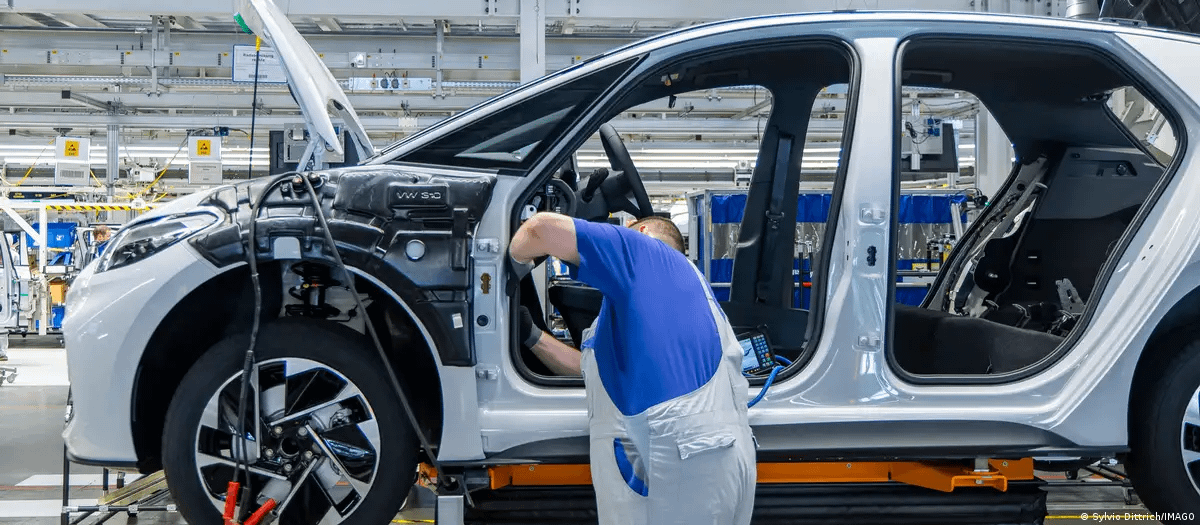
The German auto industry is set to lose more jobs in the coming years than previously anticipated. By 2035, German car manufacturers and their suppliers will have to cut around 125,000 jobs, stated Hildegard Müller, chair of the German Automotive Industry Association (VDA), to the Redaktionsnetzwerk Deutschland (RND) on Wednesday, May 13, based on the latest calculations.
Previously, it was estimated that from 2019 to 2035, the automotive industry in Germany would need to cut a total of 190 thousand jobs; this figure has now been revised to 225 thousand, Müller noted. About 100 thousand employees had already been laid off between 2019 and 2025, it was further reported.
Component manufacturers will be particularly affected.
In particular, component manufacturers for car builders will be especially hard hit. Many jobs in supplier companies will be lost due to the transition from internal combustion engines to electric vehicles, explained the head of VDA.
At the same time, she said, the business conditions in Germany and Europe continue to deteriorate significantly. 'High taxes and fees, expensive energy, high labor costs, excessive bureaucracy - the list of problems goes on,' Müller further explained.
Easing EU measures would preserve 50 thousand jobs in Germany.
The industry association urges the EU to change its course regarding the transition to electromobility to save jobs in the German automotive industry. Among other things, there is a need for 'greater flexibility and technological openness on the path to achieving climate neutrality.'
In particular, it should be made possible to sell ICE vehicles or those with extended ranges in the EU even after 2035, which would 'save around 50,000 jobs in Germany,' calculated VDA.
The European Commission suggests changing measures for the transition to electric vehicles.
Back in 2022, 27 EU countries reached an agreement on an effective ban on the sale of new ICE vehicles, agreeing to stop their registration by 2035. The goal was to reduce the high level of CO₂ emissions from the automotive sector as part of the EU's strategy to achieve climate neutrality by 2050. In recent years, European car manufacturers have faced several serious challenges, battling technological hurdles related to the shift to electric drive and an intensifying competition from electric vehicle manufacturers from China.
In December 2025, the European Commission proposed to ease climate requirements for car manufacturers and abandon the complete ban on the sale of new internal combustion engine (ICE) vehicles by 2035. Instead of requiring carbon dioxide (CO₂) emissions to reach zero, the plan aims for a 90 percent reduction compared to 2021. This would allow for the registration of new hybrid vehicles even after 2035.
According to a report from the auditing firm EY, the revenue of the German automotive industry dropped by 1.6% to €528 billion in 2025, and the number of jobs has shrunk by almost 50 thousand. Currently, around 725 thousand people are employed in the sector, the lowest figure in the last 14 years. The crisis hit component suppliers the hardest - in this sector, revenue fell by 4% in 2025, and employment decreased by more than 10%.