


DeFi has matured from a niche experiment into a global, multibillion-dollar market. The total value locked (TVL) across protocols regularly sits above 150 billion, as per DeFi Lllama. Yet for all this progress, DeFi still struggles with a fundamental design flaw: fragmentation. Liquidity is the capital that fuels these protocols, but it remains scattered across dozens of blockchains and hundreds of pools that rarely interact.
The illusion of depth is real. While total TVL looks impressive, research from Ainvest suggests that nearly 50% of DeFi’s liquidity is functionally isolated, sitting on chains that don’t communicate or share volume efficiently. What should function as an interconnected financial network instead behaves like a collection of islands.
The Cost of Fragmentation
Fragmented liquidity doesn’t just create inefficiency; it directly impacts user experience and market health. A 2025 report by CoinLaw found that DEX liquidity pools grew by 42% year-over-year, but most of that growth occurred within individual ecosystems rather than across them. That means traders face higher slippage, thin order books, and inconsistent pricing between chains. For institutional participants, this fragmentation translates to poor execution and compliance risk: two major reasons traditional finance remains cautious about entering DeFi.
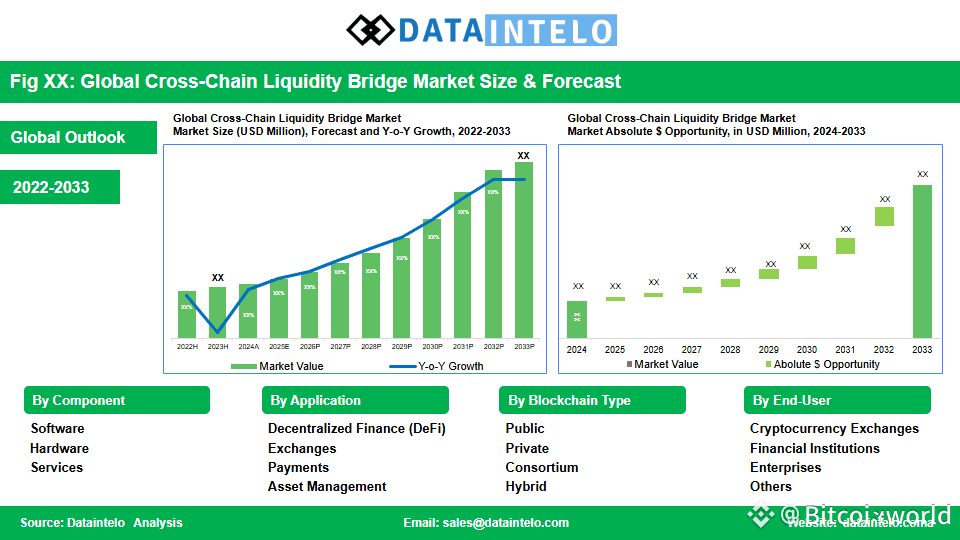
Cross-chain bridges were built to solve the problem, but they’ve proven both fragile and expensive. The bridge market itself was worth $1.43 billion in 2024 and is expected to grow to $12.7 billion by 2033, according to DataIntelo yet much of that growth is being driven by patchwork fixes rather than coordinated solutions.
Simply put, DeFi grew faster than its infrastructure could handle.
Why Liquidity Needs Infrastructure
Liquidity is the connective tissue of finance. Without efficient, verifiable liquidity, even the most sophisticated smart contracts can’t operate at scale.
This is why a growing segment of developers is shifting focus from building individual protocols to constructing liquidity infrastructure, the rails that let capital move securely and intelligently across networks. Among them is TransOcean Lab, a platform developing what it calls a unified liquidity layer for DeFi. Instead of creating another exchange or yield platform, TransOcean Lab is tackling the fragmentation problem at its root: how liquidity is verified, routed, and balanced between ecosystems.
Inside TransOcean Lab’s Framework
TransOcean Lab’s system combines several technologies that, together, make liquidity both portable and verifiable.
Validator-backed verification: Liquidity is secured and validated by independent nodes, reducing single points of failure and improving accountability.
Cross-chain routing: Assets can move between DeFi protocols and chains seamlessly without relying on custodial bridges.
AI-driven calibration: An algorithmic engine monitors market conditions in real time, adjusting liquidity flows to maintain stability and minimize slippage.
Data intelligence: Real-time analytics provide insight into risk, performance, and market depth key tools for institutional-grade liquidity management.
By separating flow (where trades occur) from control (how rules are enforced), TransOcean Lab creates a structure where liquidity remains on-chain and transparent but still flexible enough to move when demand shifts. It’s less about replacing existing DeFi systems and more about giving them a common infrastructure layer to connect through.
The Bigger Picture: From Isolation to Interconnection
When DeFi was small, fragmentation was a tolerable side effect of innovation. But as on-chain markets begin to attract institutional capital, tokenized assets, and stablecoin settlements, those inefficiencies have become impossible to ignore.
Tokenized RWAs, for example, are projected to represent over $10 trillion in market value by 2030, according to Boston Consulting Group. That scale demands reliable liquidity networks capable of connecting multiple markets and chains without breaking compliance or transparency.
TransOcean Lab’s approach is programmable, verifiable, and AI-enhanced liquidity, represents one possible foundation for that future. If DeFi is ever to evolve into a genuine global financial system, it will need infrastructure that unifies rather than divides. And that starts with liquidity that can think, adapt, and move freely.
A Foundation for DeFi’s Next Chapter
DeFi’s early years proved that open finance could exist outside traditional systems. The next phase will prove whether it can operate efficiently. Projects like TransOcean Lab are quietly building the systems that could make that possible, turning isolated networks into an interconnected ecosystem where capital finally moves as freely as information does online.
In a market that’s long been driven by speculation, building something stable might be the most radical idea yet.