
With the rapid development of global on-chain finance, the ReFi (Regenerative Finance) track has once again become the market focus. Recently, the structured ReFi protocol ORA has officially launched, sparking ongoing discussions in multiple communities due to its highly transparent and on-chain verifiable design. From public on-chain data, solidified deflationary mechanisms, clear cash flow paths, to unmodifiable contract parameters, ORA is regarded as one of the representative projects of the new generation of ReFi.
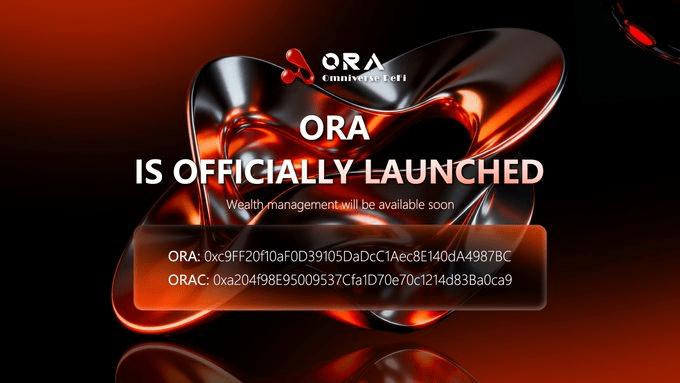
Transparency has become the core label of ORA
Over the past year, the ReFi track has expanded rapidly, but it has also exposed structural shortcomings in traditional models, including opaque fund flows, verification difficulties in distribution, reliance on announcements for explanations, and other issues that limit further industry development. The launch of ORA is precisely a response to the aforementioned pain points.
The official ORA has simultaneously launched a transparent dashboard, publicly including key indicators such as tax paths, transaction distribution, profit tax directions, main coin destruction records, and daily burn data of the sub-coin ORAC. Users do not need to rely on announcements but can independently verify the operation of the mechanism through on-chain data. This 'on-chain verifiable' feature has become one of the most recognized highlights in the industry.
The cash flow model provides quantifiable evidence for the market.
The cash flow structure of ORA consists of transaction tax and profit tax, all of which are written into the contract and are publicly verifiable. Among them, the transaction tax is used to maintain the deflation of the main coin, marketing, and ecology; the profit tax is automatically allocated according to a predetermined ratio, injected into LP, and used for ecological construction. Researchers point out that a verifiable cash flow model not only enhances transparency but also provides professional investors with a basis for long-term evaluation.
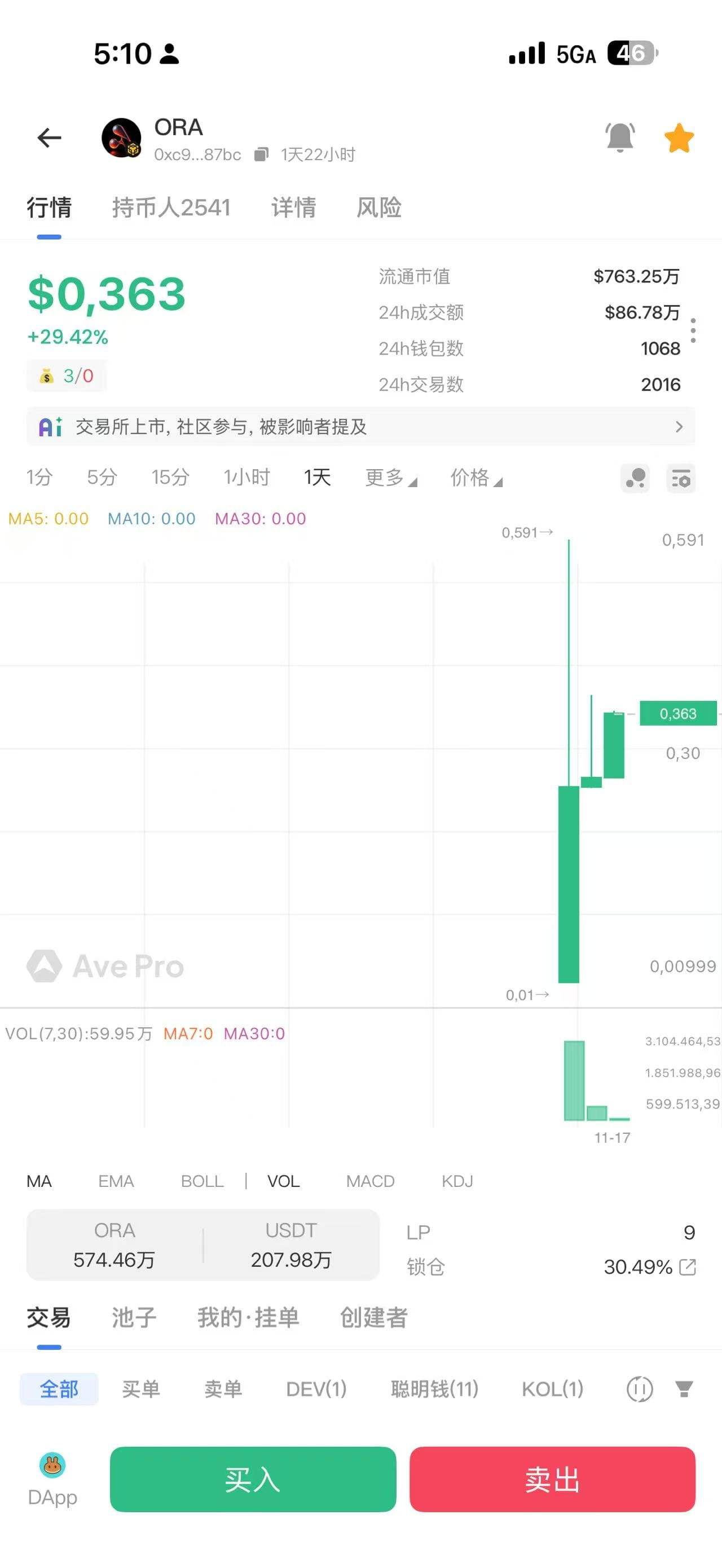
The deflation structure of the sub-coin ORAC has attracted industry attention.
As the growth incentive layer of ORA, ORAC adopts a structure of 'pure output, cannot be bought in secondary markets, destroys upon selling' and sets a daily fixed burn rate of 0.25%. Industry research institutions believe that the supply-side design of ORAC shows strong deflation characteristics, theoretically able to form stable scarcity in the long term. However, it is also necessary to observe the subsequent speed of ecological demand and application scenario expansion to assess its long-term value-bearing capacity.
Contract autonomy reduces human risks.
ORA directly writes core parameters into the contract, which cannot be modified, including the transaction tax ratio, profit tax allocation, and burn ratio. Analysts believe that in the context of increasing industry regulation and audit requirements, contract autonomy reduces the risk of human intervention, which is one of the important trends for ReFi towards compliance.

Summary: Structured design makes ORA a model for the next stage of ReFi.
From transparency, deflation models to public cash flow, the structured design of ORA is considered suitable for medium to long-term observation. Industry experts point out that the future value of ReFi will shift from 'incentive-driven' to 'structure-driven', and ORA provides a verifiable structured practical case.
