In the current cryptocurrency market, if there is anything that can drive capital crazy, it must be the combination of AI (Artificial Intelligence) + RWA (Real World Assets). Today we are going to talk about the project @gaib_ai, which is right in the eye of this storm.
🧐 What is GAIB? Simply understanding GAIB's core vision is very grand: to tokenize and bring the AI infrastructure of the real world (such as GPU computing power) on-chain. This is not just about issuing a token; it attempts to bridge the barriers between AI, RWA, and DeFi. By introducing a brand new asset class, it allows ordinary investors to participate in expensive AI computing power investments.
💡 Core Mechanism: The dual-driven approach of AID and sAID. According to official disclosures, GAIB's economic model has two key pillars:
AI Dollar (AID): This is a synthetic dollar. Its uniqueness lies in the fact that it is backed by US Treasury bonds and stable assets. This means its underlying value is resilient and has traditional financial credit backing.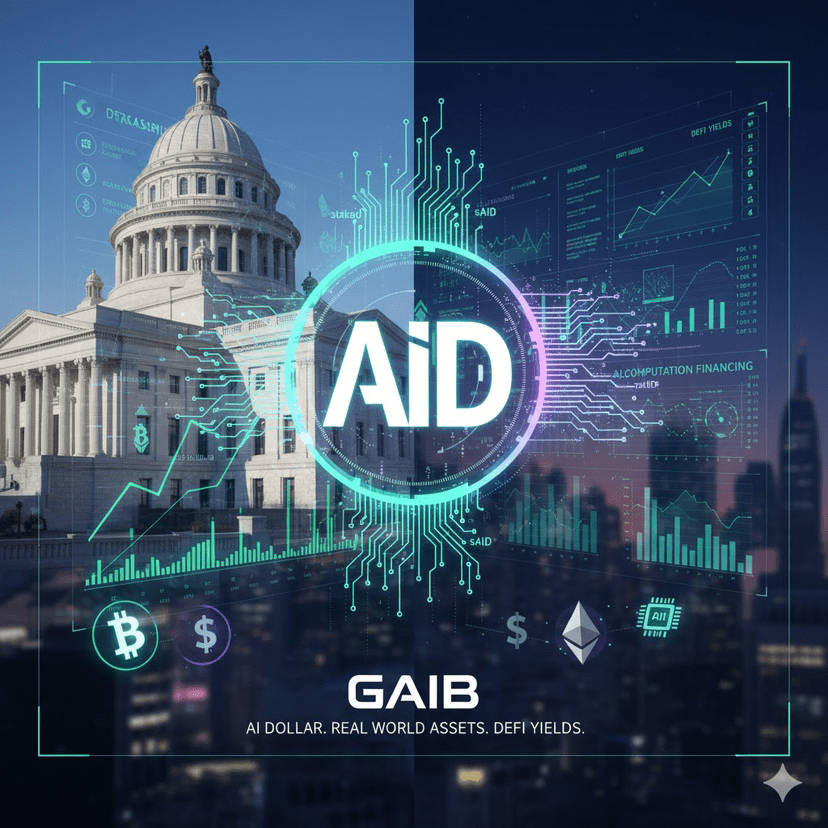
sAID (Staked AID): This is the staked version of AID, and it is the source of returns. When you hold sAID, you are actually providing liquidity for AI computing and robotics financing.
✅ Advantages Analysis: Why is it worth paying attention to?
The narrative ceiling is extremely high: Computing power is currency. In the AI era, GPUs are the new oil. GAIB is essentially doing 'financialization of computing power assets'; this story is much sexier than just a simple meme or governance token.
Sustainable Real Yield: Unlike traditional DeFi mining, the yield logic of sAID comes from the financing demand of the AI computing power market. As long as there is demand for computing power in the AI industry, this yield truly exists, rather than being pure token inflation.
Solving liquidity pain points: The investment threshold for physical GPUs is high and liquidity is poor. GAIB allows funds to flow like water into computing power construction through RWA, enabling investors to enter and exit at any time.
⚠️ Risks and Challenges (DYOR)
Execution difficulty of RWA: Bringing offline assets (GPUs) on-chain involves complex legal rights confirmation, custody, and audit issues. How to ensure the safety of off-chain assets and the anchoring of on-chain tokens is a key point that the project team needs to prove.
Competition in the field: The AI + DePIN field currently has many giants (such as io.net, Render, etc.), and GAIB, as a latecomer focusing on DeFi attributes, needs to quickly establish its own liquidity moat.