


When i read about morpho these days, i dont feel like i am reading about a small protocol anymore, it feels more like something that already sit deep inside the industry and slowly turn into the machine that other teams rely on. People used to call it a clever matching tool, or some optimizer sitting next to Aave and Compound, but now the whole thing look totally different. It is not a tool anymore, it is starting to act like the fabric behind credit flows, behind RWA lending, behind the next generation of borrowing systems that want smart risk and not crazy degen loops.
@Morpho Labs 🦋 #Morpho $MORPHO


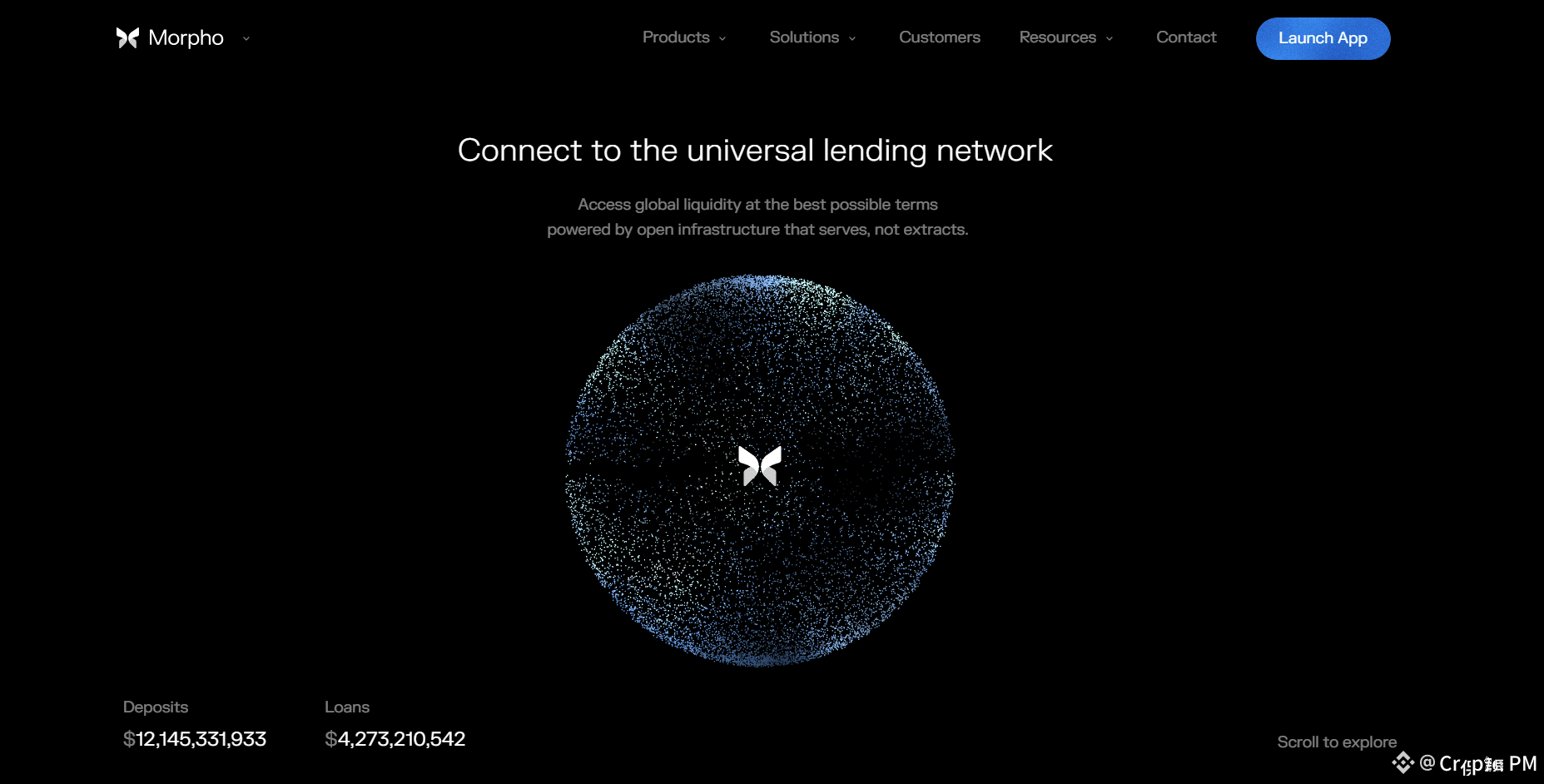
where the shift actually happen
This change did not come from hype, it came from v2. When morpho pushed v2, suddenly the protocol looked like something that can handle real credit logic. The intent based thing, the modular loans, the programmable terms, the mixed collateral structure, all that stuff is more like the structure you see in institutional credit not something from a weekend hackathon. Before, people would experiment with it, now people start to trust it with actual flows because it is built like something that expected to survive and not explode.
integrations that prove the point
The moment coinbase pushed USDC lending flows into morpho, that was basically the reality check. A centralized exchange with thousands of regulated users dont take risks for fun, and they dont touch systems that feel unstable or risky. When they move volume into morpho, it is not a marketing line, it is a signal that big entities see morpho as safe enough, steady enough, boring in the good way. And this kind of adoption forces morpho to move at a higher maturity level because now it need to handle institutional grade traffic and not just degen traffic.
builders using morpho like an engine
The sdk is another part of this story because builders dont want to rebuild liquidation logic and risk engines every time. The sdk give them shortcuts, and teams can build credit things on top without doing the heavy stuff. This makes the entire ecosystem more active because more people can deploy lending ideas without burning six months of research. And when teams like Seamless migrate from Aave fork to morpho, that tell a lot, because migrating a lending engine is painful, costly, and nobody do it unless the new system is clearly better built.
governance catching up too
The wrapped morpho token proposal might look boring but it actually matter because clean vote accounting and transferable governance are things needed for institutional governance later. It make the protocol easier to coordinate and align, even if it dont look like a hype feature.
the bigger asymmetry forming quietly
If morpho keeps doing what it doing like onboarding exchanges, capturing RWA flow, expanding vault infrastructure, making safer credit rails, then it becomes infrastructure by default. Liquidity deepen, integrations increase, builders keep stacking on it, and at some point people stop thinking about morpho as a protocol, they think about it as the default lending engine underneath everything. Risks still exist, like oracle failures or liquidity stress or composability bugs, but morpho tries to move carefully not fast in the chaotic way so the danger is less crazy.
what the user actually feels
For users, it is simple. Lenders get better yields, less spread waste, more predictable outcomes. Borrowers get lower cost credit and smarter liquidations. Builders get a standard base layer. Institutions get something they can justify to risk teams. All that is the reason morpho is now treated more like an infrastructure piece and not like an app.
my take
When i look at morpho now, i feel like the protocol already walk into the stage where it does not need to scream about anything. It just work. It grow slow but strong. And usually this kind of slow strong growth is the type that outlive all the hype stuff. If morpho keep this path, it might end up being the silent backbone of DeFi credit, the part nobody sees but everybody uses.