
I have been trading cryptocurrencies for ten years and made 30 million, but the biggest secret is: I spent most of my time 'not trading'. In this hype
In the 'diligence leads to wealth' market, 90% of people are heading towards poverty due to excessive effort.
Today, I want to tell you how to defeat the market in the crazy cryptocurrency world with 'laziness'.
If you expect to get rich immediately after reading this article, then you can close it now. I have no 'wealth code' here.
There is only one set of 'survival rules' that allowed me to survive three bull and bear markets and accumulate 30 million in assets.
This is not a feel-good article, but a 'health report' that will diagnose the most fatal problems in your investment system.

The following eight iron rules are the ones I use the most and have been very helpful; today I share them with all my fans and friends! Currency.
Survival rules: Eight trading iron rules that seasoned traders never share!
One, it is better to miss opportunities than to misstep on timing.
The market is never short of investment opportunities, but the principal is only available once. In the face of explosive market movements, do not blindly chase high prices; stay calm and wait for the timing that suits you. Remember: not incurring losses is a form of profit in itself.
Two, position control takes precedence over technical analysis.
Successful investors always prioritize position management. It is recommended that a single trade position does not exceed 5% of total funds, and overall positions do not exceed 20%. Reserve sufficient funds to actively position when good opportunities arise in the market.
Three, stop-loss must be decisive, while take-profit should be gradual.
Set a strict stop-loss line of 5%-8%; once the stop-loss level is triggered, decisively exit. When profitable, let profits continue to grow by adopting a moving stop-loss strategy, which locks in existing gains while not missing out on subsequent market movements.
Four, find exit timing from news, and look for entry signals from technical analysis.
Positive news releases are often the best window for exiting positions, and only when prices break through key resistance levels is it truly a buying signal. Learn to think in reverse to avoid becoming a victim of market news.
Five, mainstream coins steadily consolidate, while altcoins can be gambled with light positions.
Reasonable allocation of funds: Mainstream coins like BTC and ETH are suitable as 'ballast' for asset allocation, pursuing stability; small-cap coins can only be used with small positions to seek high returns, do not place all hopes on altcoins.
Six, maintain quality assets in a bull market and hold stablecoins in a bear market.
Different market cycles require differentiated strategies: in a bull market, endure loneliness and firmly hold quality assets; in a bear market, maintain a high proportion of stablecoin holdings and wait for bottom-fishing opportunities. There is no need to force profits in every phase.
Seven, market sentiment is superior to technical indicators.
When the market is in extreme greed, one must be cautious; when extreme fear occurs, it is worth paying close attention. Investor sentiment is often the best contrarian indicator, and one must learn to 'be greedy when others are fearful and be fearful when others are greedy.'
Eight, continuous learning is essential for sustained stability.
The blockchain industry is rapidly iterating, with new projects and new plays continuously emerging. Only by maintaining a beginner's mindset and committing to continuous learning can one stand firm in a rapidly changing market.
Insights from trading in the cryptocurrency market: long-term survival outweighs quick profits. Improve slightly every day, maintain a good mindset and strict discipline, and time will eventually become your solid backing.

[Useful information] In cryptocurrency trading, MA (Moving Average +) is the core tool for judging trends and capturing buy and sell signals.
Especially suitable for filtering out short-term fluctuations and locking in medium-term trends. Just remember the content from today, and even beginners can profit.
Profitable! The single moving average 'trend anchoring' method: set direction using key periods.
Choose three core moving averages commonly used in the cryptocurrency market, corresponding to short-term, medium-term, and long-term trends, avoiding frequent switching of periods that lead to misjudgments.
End chaos:
Short-term (20-day moving average): capture wave opportunities.
When the coin price consistently stays above the 20-day moving average, and the moving averages diverge upwards, it is considered a short-term bullish trend, and small positions can be used to chase gains (single positions do not exceed).
More than 3%):
If the coin price falls below the 20-day moving average, and the moving average turns downwards, immediately stop-loss (refer to the 5%-8% stop-loss level), to avoid being trapped in the waves.
Note: Suitable for mainstream coins like BTC and ETH; altcoins have large short-term fluctuations, and 20-day moving average signals need to be verified with trading volume.
Medium-term (50-day moving average): determine trend strength.
The 50-day moving average is the 'short-term line dividing bulls and bears': in a bull market, if a pullback does not fall below the 50-day moving average, it is viewed as a trend continuation, and positions can be added on dips (overall holdings do not exceed 20%);
In a bear market, rebounds that do not surpass the 50-day moving average are weak rebounds; do not attempt to catch the bottom, continue holding stablecoins.
Long-term (120-day moving average): prevent trend reversals.
The 120-day moving average is the 'long-term trend lifeline': if mainstream coins fall below the 120-day moving average and remain there for more than three days, caution is advised as a bear market may be approaching; decisively reduce positions to a light level.
If it rises above the 120-day moving average from below, and the moving average turns from flat to upward, it can be viewed as a long-term bullish initiation, gradually adding positions in mainstream coins.
Two, dual moving average 'golden cross death cross +' strategy: precisely capture buying and selling points.
Choose a combination of 'short-term moving averages + medium-term moving averages' to filter out false signals from a single moving average, suitable for wave trading.
Classic combination: 5-day moving average (short-term) + 20-day moving average (medium-term).
Golden cross buy: When the 5-day moving average crosses above the 20-day moving average from below, and both moving averages are diverging upwards, while the coin price is above the moving averages, it is considered a buy signal (in conjunction with the 'do not chase prices after good news' principle, avoiding golden crosses after positive news):
Death cross sell: When the 5-day moving average crosses below the 20-day moving average, and both moving averages are turning downwards, regardless of whether there is a profit or not, a stop-loss must be triggered (if already profitable, it can be combined with 'moving stop-loss' to retain part of the position).
Stable combination: 20-day moving average (short-term) + 50-day moving average (medium-term).
Suitable for investors with low risk tolerance: only when the 20-day line crosses above the 50-day line forming a 'golden cross', accompanied by increased trading volume.
(Increase by more than 30% compared to the previous day) before entering the market;
Death cross signals are stricter: the 20-day line must fall below the 50-day line first, and then if the price pulls back to the 50-day line without breaking through, it confirms a sell, avoiding misjudging short-term pullbacks.
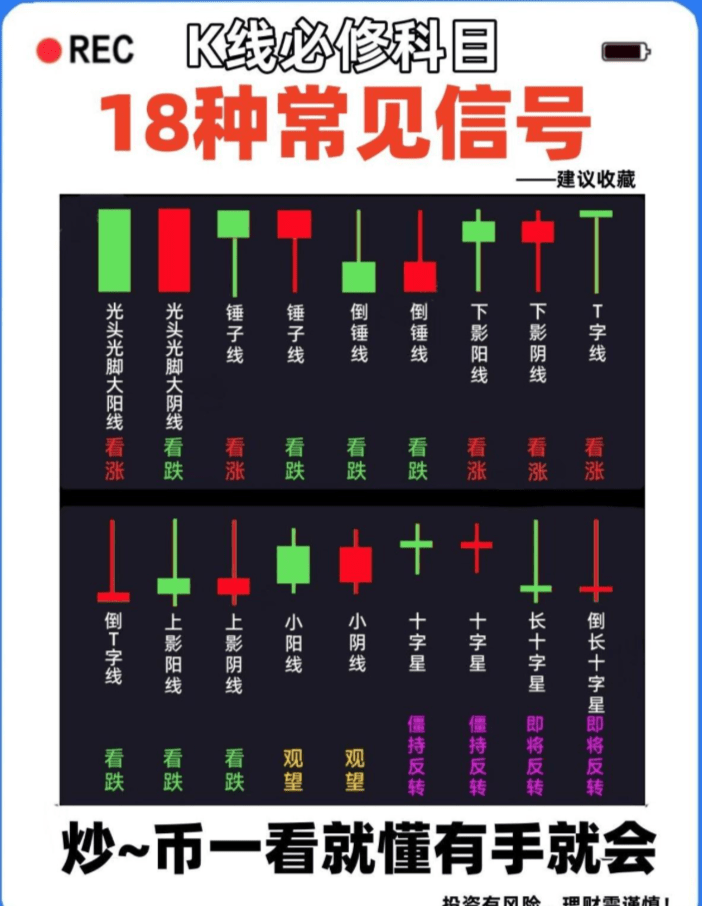
Three, multi-moving average 'arrangement + convergence' strategy: catch trend initiation and reversals.
Use three or more moving averages to assess trend strength, suitable for capturing large-scale market movements:
Moving average bullish arrangement+: bull market add position signal.
When the 10-day, 20-day, and 50-day moving averages are arranged from top to bottom, and all diverging upwards (moving averages evenly spaced, with no obvious deviations), it is considered a strong bullish trend, and positions can be added when the price pulls back to the 20-day moving average (limited to bull markets, refer to the 'hold coins in a bull market' principle):
Example: BTC in the 2021 bull market maintained a '10-day > 20-day > 50-day' arrangement for a long time; each time it pulled back to the 20-day line was a good opportunity to add positions.
Moving average convergence breakout+: trend initiation signal.
When the 10-day, 20-day, and 50-day moving averages are close to each other (price difference less than 3%), it indicates that the market is in a consolidation phase, and we need to wait.
Breakthrough direction:
Upward breakout: If the price of the coin stabilizes above the converging moving averages and trading volume increases, it is seen as a bullish initiation, and entry is allowed (in conjunction with the 'technical buy' principle, avoiding news-driven breakouts).
Downward breakthrough: If the price of the coin falls below the converging moving average, it is considered the start of a bearish trend, and immediate reduction of positions is required (refer to the 'hold stablecoins in a bear market' principle).
Four, MA moving average ++ stop-loss: avoid the 'false breakout' trap in the cryptocurrency market.
In the cryptocurrency market, 'moving average breakthroughs followed by quick reversals' often occur, requiring stop-loss to lock in risks:
Stop-loss for buy during breakout: if entering based on moving average breakouts, set the stop-loss at '2% below the breakout moving average' (for instance, if buying on a breakthrough of the 20-day moving average, set the stop-loss at 20-day line - 2%), to avoid being trapped by false breakouts.
Stop-loss when holding along the moving average: when holding along the moving average, the stop-loss level can be adjusted upwards with the moving average (for example, if the 20-day moving average is rising, adjust the stop-loss level daily based on the moving average price), this is 'moving average following stop-loss', which preserves profits while not exiting early.

Five, taboos of using MA in cryptocurrency markets.
Do not rely solely on moving averages: altcoins are highly volatile, and moving average signals are lagging; they must be combined with the 'pursue stability in mainstream coins' principle, using moving averages only as a reference.
Analyze mainstream coins like BTC and ETH;
Avoid extreme market conditions: during early hours (2-4 AM) or when major positive/negative news is released, moving averages can easily fail; at this time, it is necessary to suspend moving average crossings.
Easy, return to 'emotional indicators' for judgment;
Avoid frequently switching periods: choose '4-hour line + daily line' for analysis (4-hour for short-term signals, daily line for long-term trends).
Avoid being disturbed by short-term fluctuations of the 15-minute and 1-hour lines.
Combination of moving average strategies and trading iron rules is recommended.
Use 'moving average trends' to determine direction: when moving averages are in a bullish arrangement, practice 'hold coins in a bull market'; when in a bearish arrangement, execute.
'Hold stablecoins in a bear market':
Use 'moving average signals' to control positions: when buying on a golden cross, single positions should not exceed 5% (in line with the 'position control' iron rule); on death cross sell, strictly implement stop-loss (responding to the 'stop-loss must be quick' principle).
When selling on a death cross, strictly execute stop-loss (echoing the 'stop-loss must be quick' principle).

