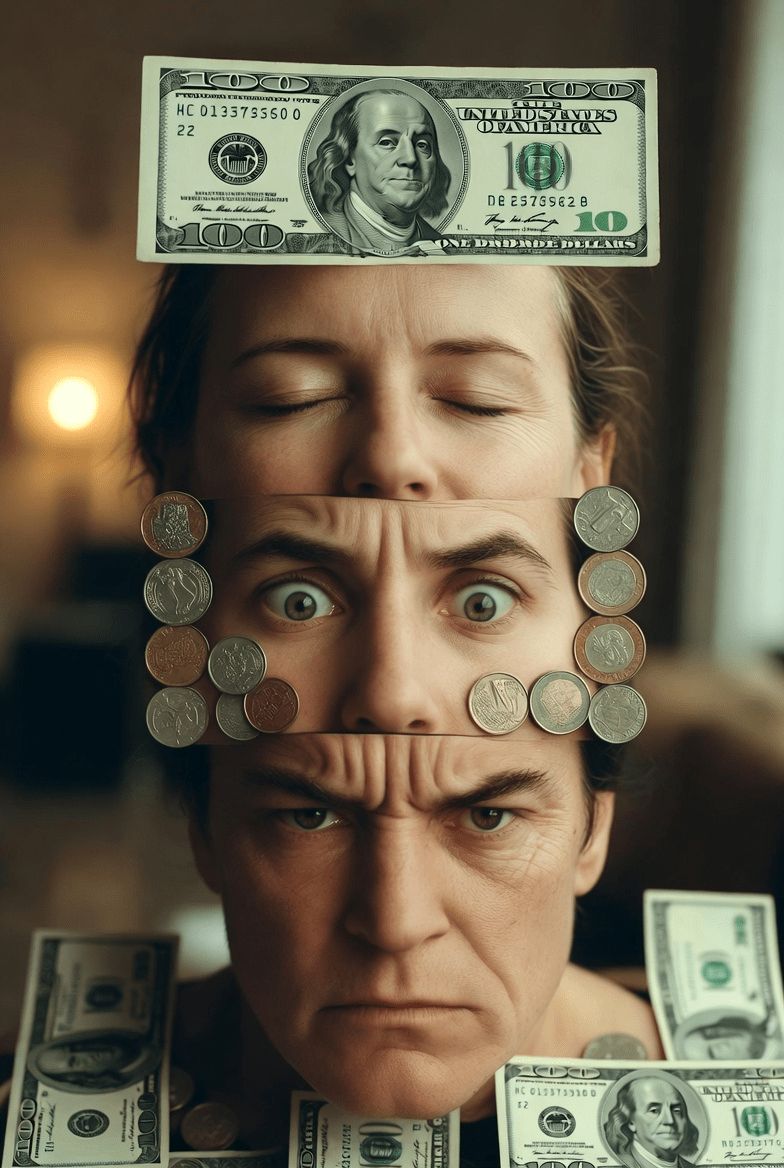
Money does not only speak in numbers, it also speaks in emotions. Every time you receive, spend, pay, save, or invest, something inside you reacts. It can be fear, guilt, anxiety, pride, relief, or even euphoria. And even if you don't notice it, those emotions are the true language that guides your financial decisions. That's why, before wanting to earn more, it is vital to learn to listen to yourself.
Start by observing what you feel when you pay bills:
do you do it with anger because your money is going away?
or do you do it with gratitude because you are fulfilling your responsibilities?
That small difference reveals whether your mind operates from scarcity or from responsibility.
When you save, do you feel sacrifice or do you feel progress?
If you feel sacrifice, your mind still believes that money is hard to obtain or that you do not deserve to keep it. If you feel progress, you are building internal security, not just financial.
When investing, does fear dominate you?
Fear does not come from money; it comes from not knowing yourself.
If your main emotion is panic, your internal language says: 'this is not for me.'
If you feel calm, even with nerves, your mind is starting to trust your vision for the future.
Even when you run out of cash, your emotion is crucial.
Do you despair or do you seek solutions?
A person with a scarcity mindset falls into chaos.
A person with a responsibility mindset learns from the moment.
Your emotions are your teacher.
If the dominant feeling is fear or guilt, your financial language is full of limitations that block your growth.
If you feel calm, clarity, and responsibility, you are building a path of abundance.
Money does not change until your emotional relationship with it changes.
Start by observing.
Then you will understand.
And finally, you will transform.
When you transform your emotion... you transform your economy