Bitcoin investor groups' losses have surged to new highs: Can traders defend the $60,000 mark?
Bitcoin (BTC) dropping below $67,000 triggered the strongest short-term loss wave since February, while Binance noted a significant influx of funds from retail and mid-sized investors.
This combo has sparked concerns that selling pressure is entering another capitulation phase, with BTC traders keeping an eye on whether Bitcoin can stabilize around key liquidity zones near this year's lows at $60,000.
BITCOIN HOLDERS' LOSS LEVEL REACHED THE HIGHEST IN FEBRUARY
CryptoQuant analyst Amr Taha noted that short-term holders are realizing losses at the fastest rate since February 6.
On Binance, the amount of BTC held by short-term holders (STH) has decreased to -16,400 BTC as of June 2, marking the lowest since early February. Across all exchanges, the STH loss has dropped to -38,700 BTC, from -41,300 BTC on May 28.
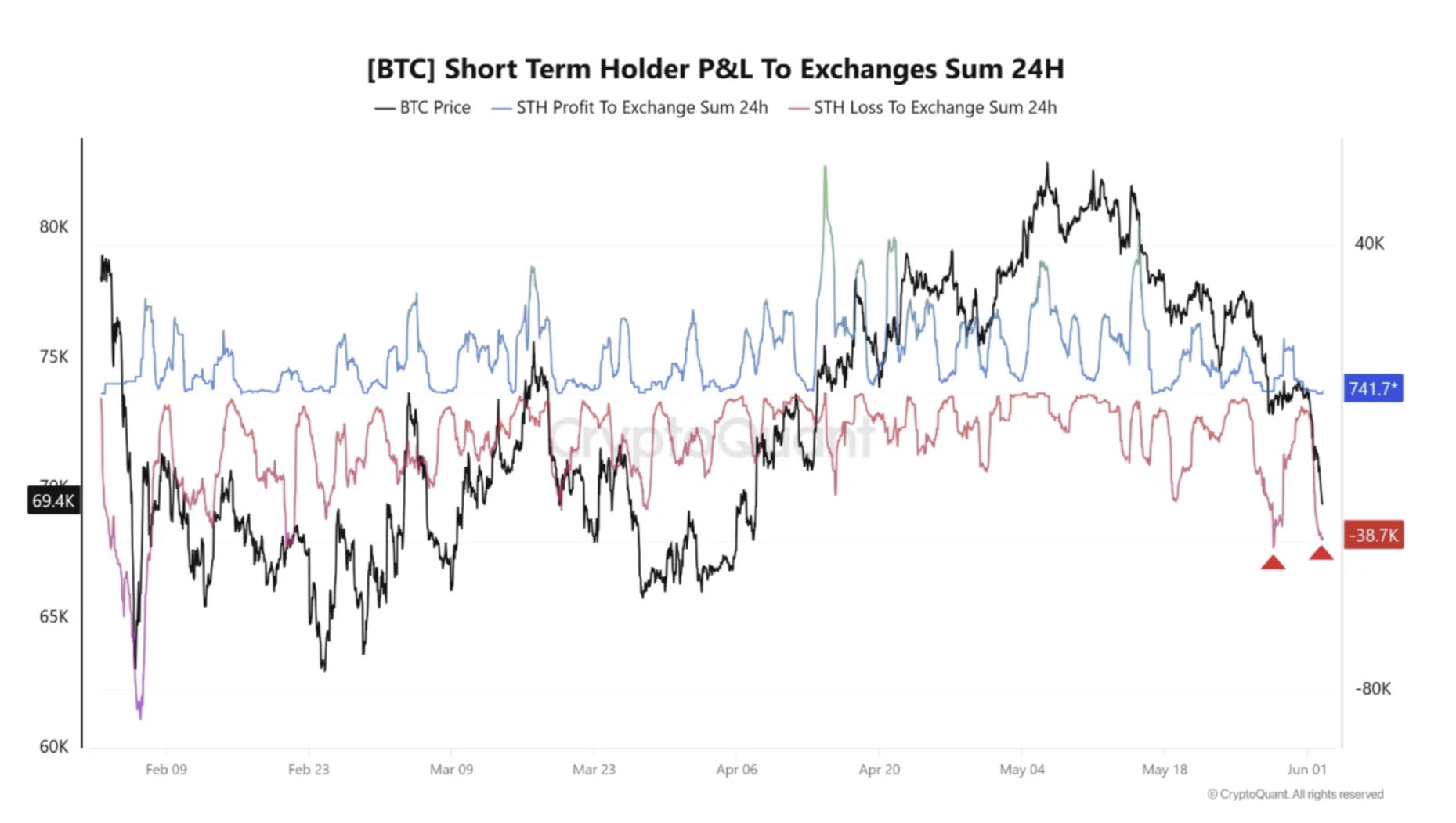
Data shows that recent BTC buyers are exiting positions at a loss. Large loss realization events often occur during panic sell-offs, especially when traders exit positions after significant price drops.
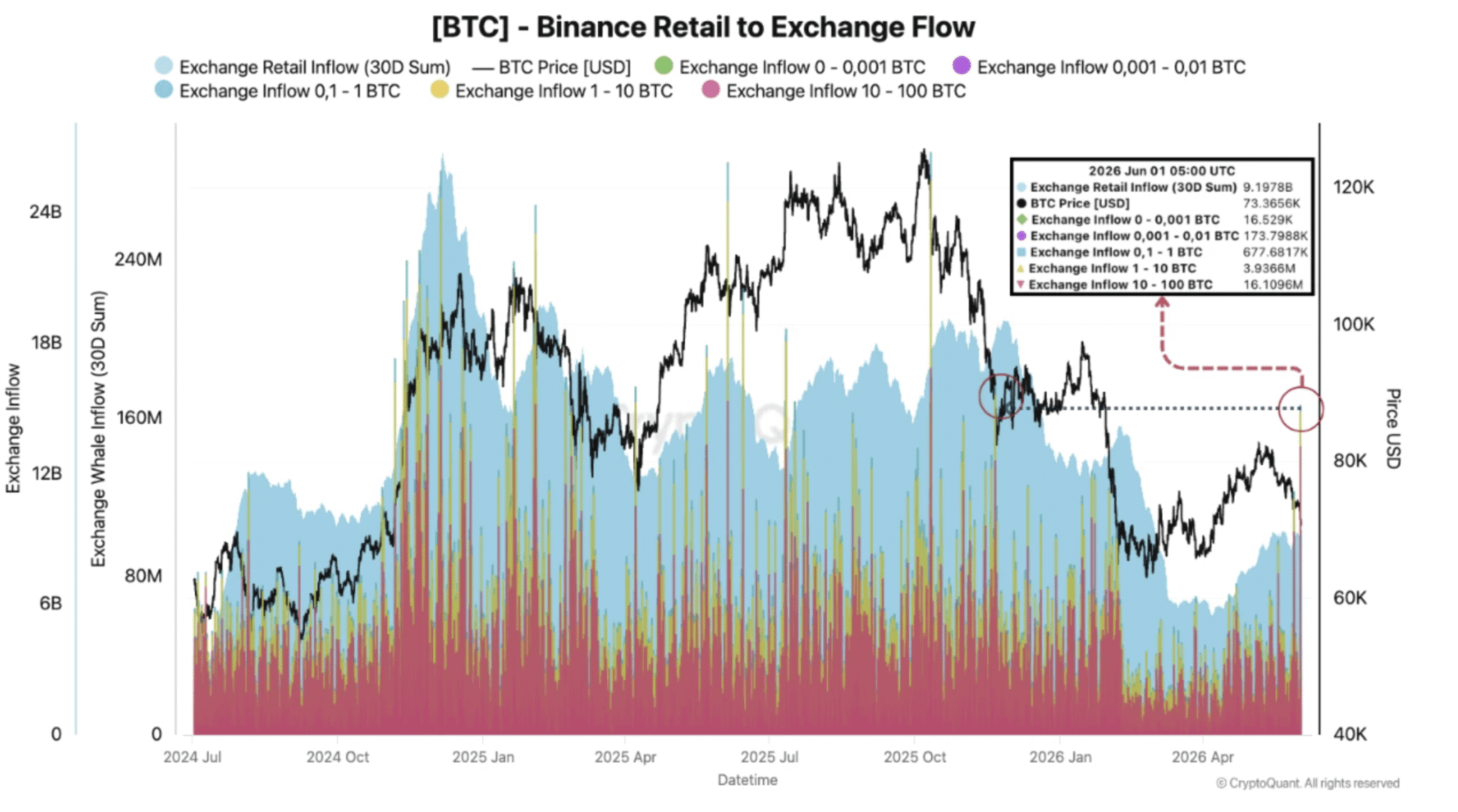
Large and mid-sized investors are also becoming more active. Binance recorded about 8,400 BTC inflow from mid-sized investors on June 2, the highest since February 6.
Another insight from analyst MorenoDV highlights the increasing participation of retail investors. The total capital inflow into Binance from retail investors over the past 30 days has surged to $9.2 billion as of June 1, the highest since November 20, 2025.
Analysts noted that while the inflows into the forex market do not automatically signal sell-offs, they can precede periods of heightened volatility.
MorenoDV added:
If demand absorbs the influx of BTC, the price of BTC could stabilize and turn this into a local exhaustion signal. However, if selling pressure prevails, this surge could become the first sign of distribution back from weaker holders.
BTC LIQUIDITY ZONES NEAR $60,000 ATTRACTING ATTENTION
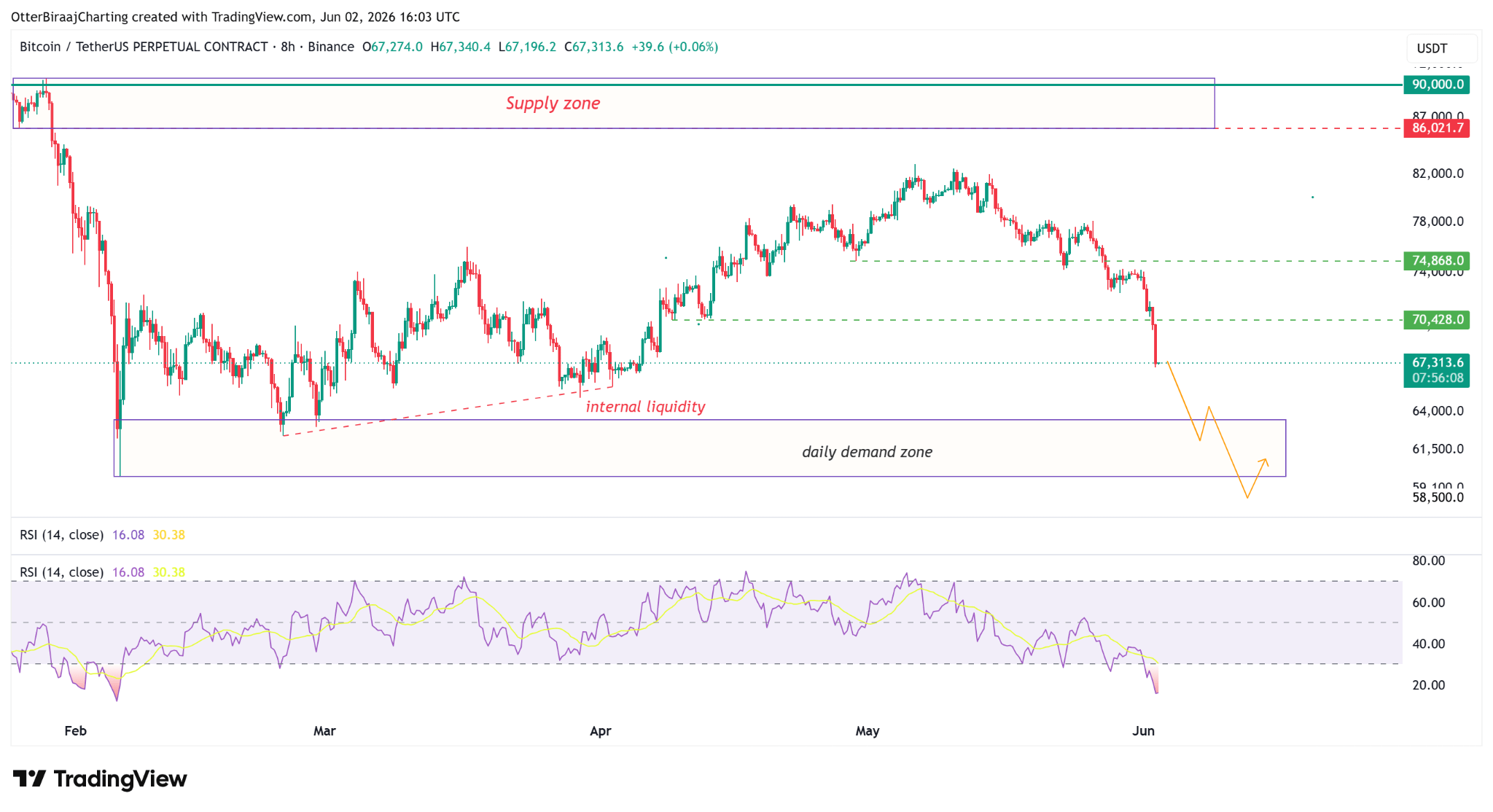
Technically, Bitcoin's market position has weakened after losing support levels at $74,800 and $70,400. The price has recently traded around $67,000, while the 8-hour Relative Strength Index (RSI) has fallen to 30.4, the lowest since February 6, indicating strong downward pressure and oversold conditions.
The next key liquidity zone lies between $62,300 and $65,600. This area coincides with the daily demand zone extending to $60,000, forming an important support region.
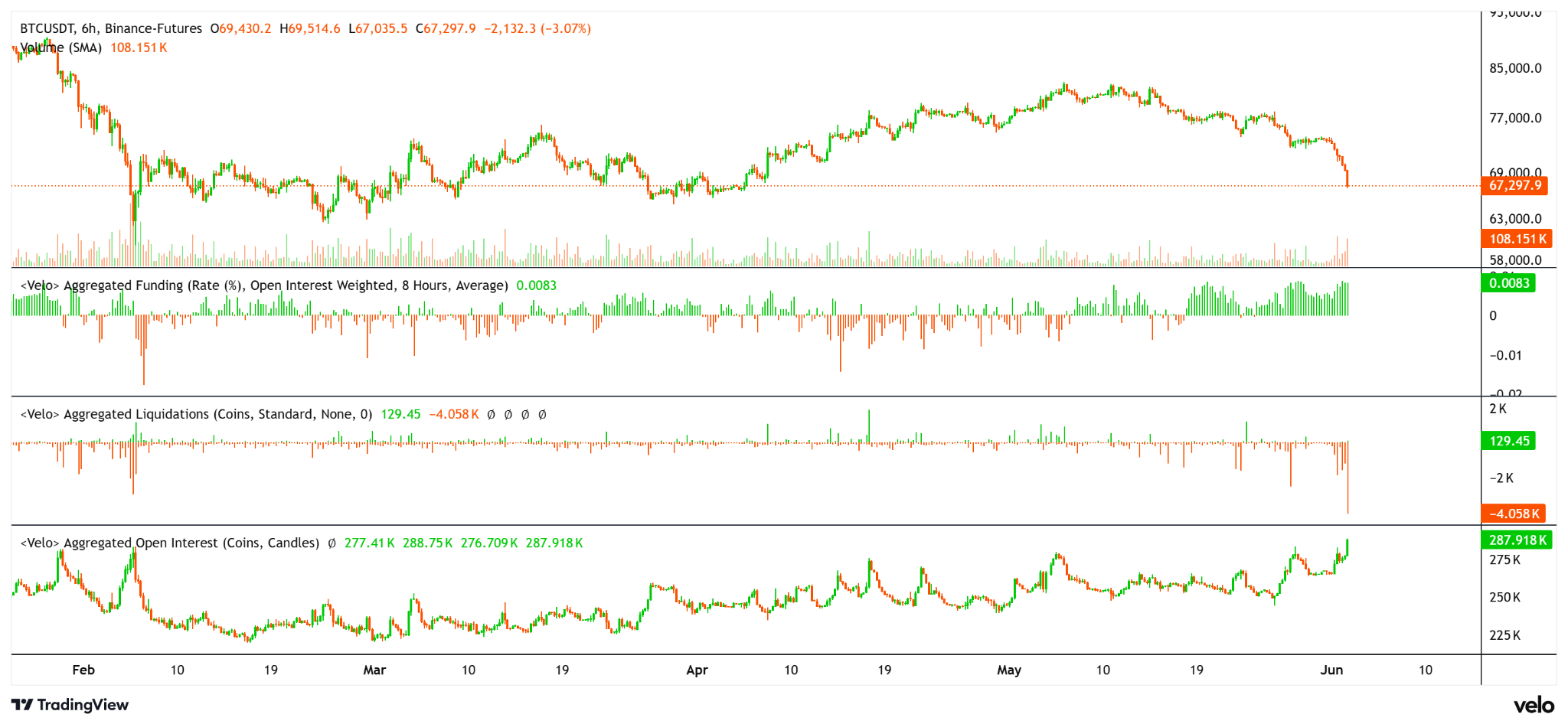
Futures data further adds to the pressure. Bitcoin has recorded about $672 million in liquidations over the past 24 hours, the sharpest drop since February 5. The open interest for BTC has risen to around 288,000 BTC even as prices declined, while the funding rate remains positive at 0.083%.
This indicates that long positions are not fully stabilized, making the market vulnerable to further liquidations if selling pressure continues.
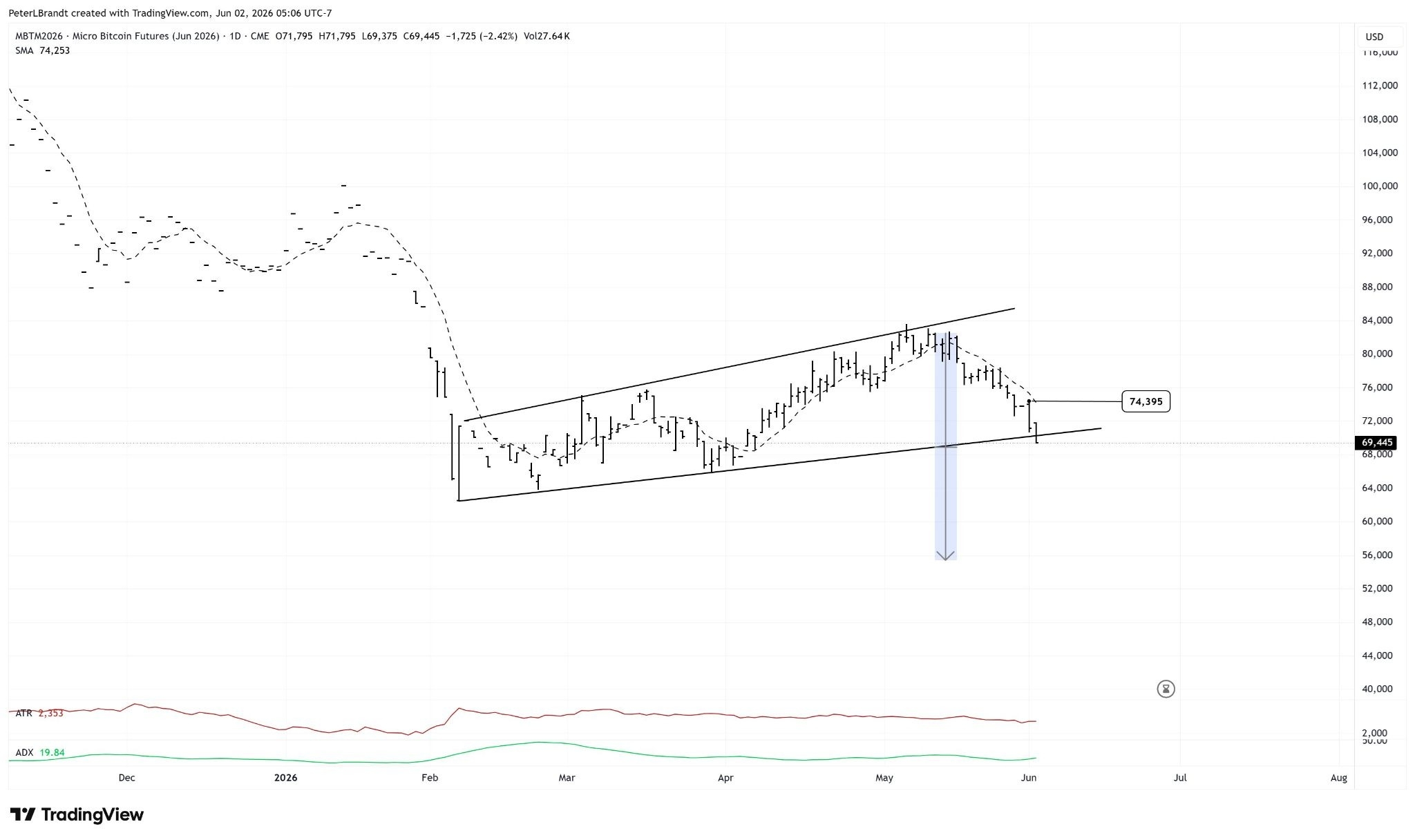
Meanwhile, veteran trader Peter Brandt observed that Bitcoin is forming an expanding triangle pattern. Based on the measured movement of the pattern, Brandt identified a potential drop around $56,000, while a recovery above $75,000 would invalidate that view.