
When traders talk about crypto, they talk charts, liquidity, hype—but increasingly, one macro factor moves the market: interest rates. Understanding their impact is key if you want to trade smarter and stay ahead of volatility.
Interest Rates vs Crypto: How the Fed Moves Markets

What Are Interest Rates, and Why Does the Fed Control Them?
The Federal Reserve (the Fed) is the U.S. central bank, created in 1913 to stabilize the economy. One of its main tools is controlling interest rates, which dictate how expensive it is to borrow money.
High rates → borrowing is costly, bonds become attractive, riskier assets like crypto see less inflow.
Low rates → borrowing is cheap, liquidity increases, investors chase higher returns in crypto.
Why Does the Fed Raise or Cut Rates?
The Fed adjusts rates based on inflation, GDP growth, and unemployment. Meetings of the Federal Open Market Committee (FOMC) guide these decisions. Rate hikes slow an overheating economy; rate cuts stimulate investment.
Why Crypto Can Crash After a Rate Cut
It may seem counterintuitive: rate cuts should boost risky assets, right?
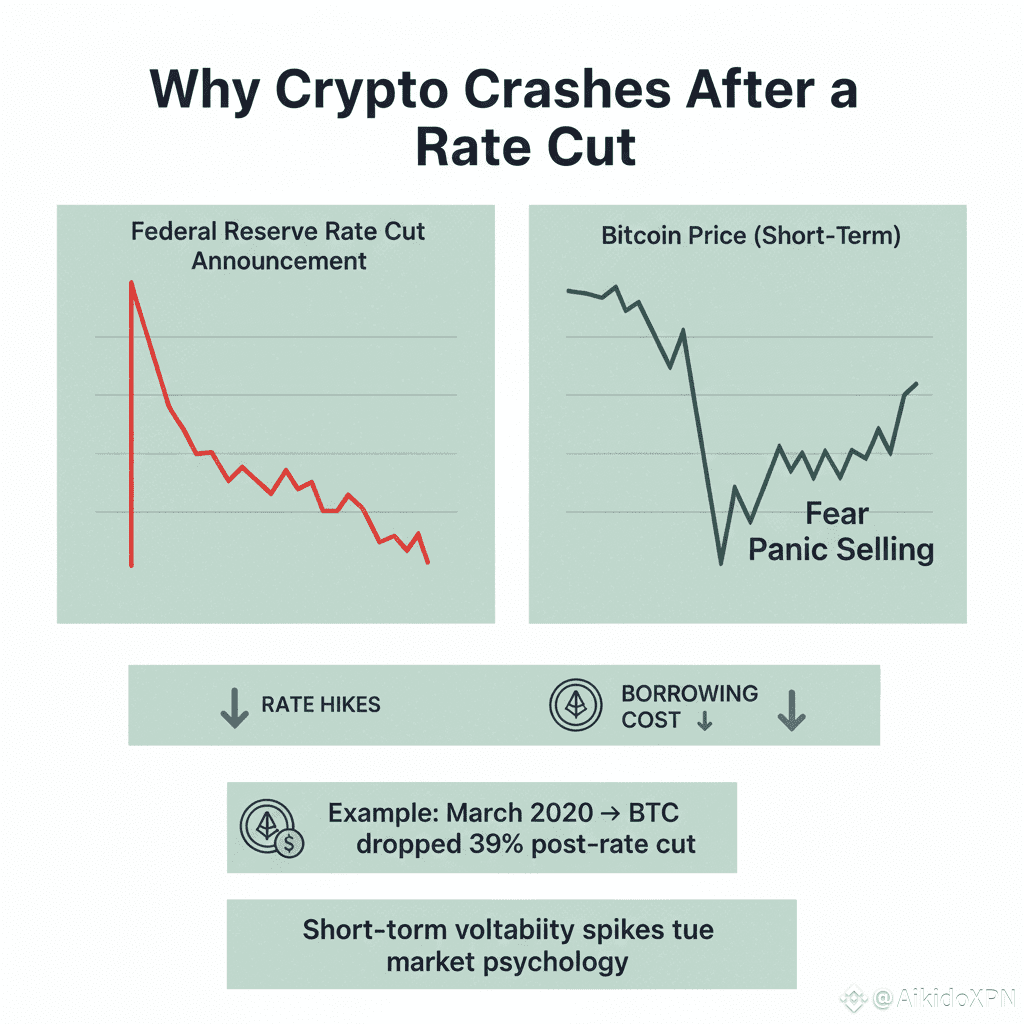
Short-term fear: A rate cut signals economic weakness, triggering panic selling even though long-term liquidity improves.
Example: March 2020, the Fed slashed rates near zero—yet Bitcoin dropped nearly 39% before rebounding.
The key is understanding that short-term volatility reflects fear, not fundamentals.
Short-Term Effects of Rate Cuts on Crypto
Volatility spikes – traders react to news before digesting implications.
Panic selling – crypto is considered speculative, so risk-off behavior hits hard.
Whale repositioning – large holders often buy into dips after the initial shock.
Long-Term Impacts: Why Rate Cuts Can Boost Crypto
Over time, rate cuts generally favor crypto:
More liquidity – cheap money floods markets.
Higher risk appetite – low bond yields drive capital toward crypto.
Innovation growth – April 2020, Andreessen Horowitz launched a $515M crypto fund post-cut.
Weaker USD – strengthens Bitcoin as a store of value.
Other factors—regulatory news, geopolitical events, and recession fears—can override these trends, so stay vigilant.
Smart Investing During Rate Changes
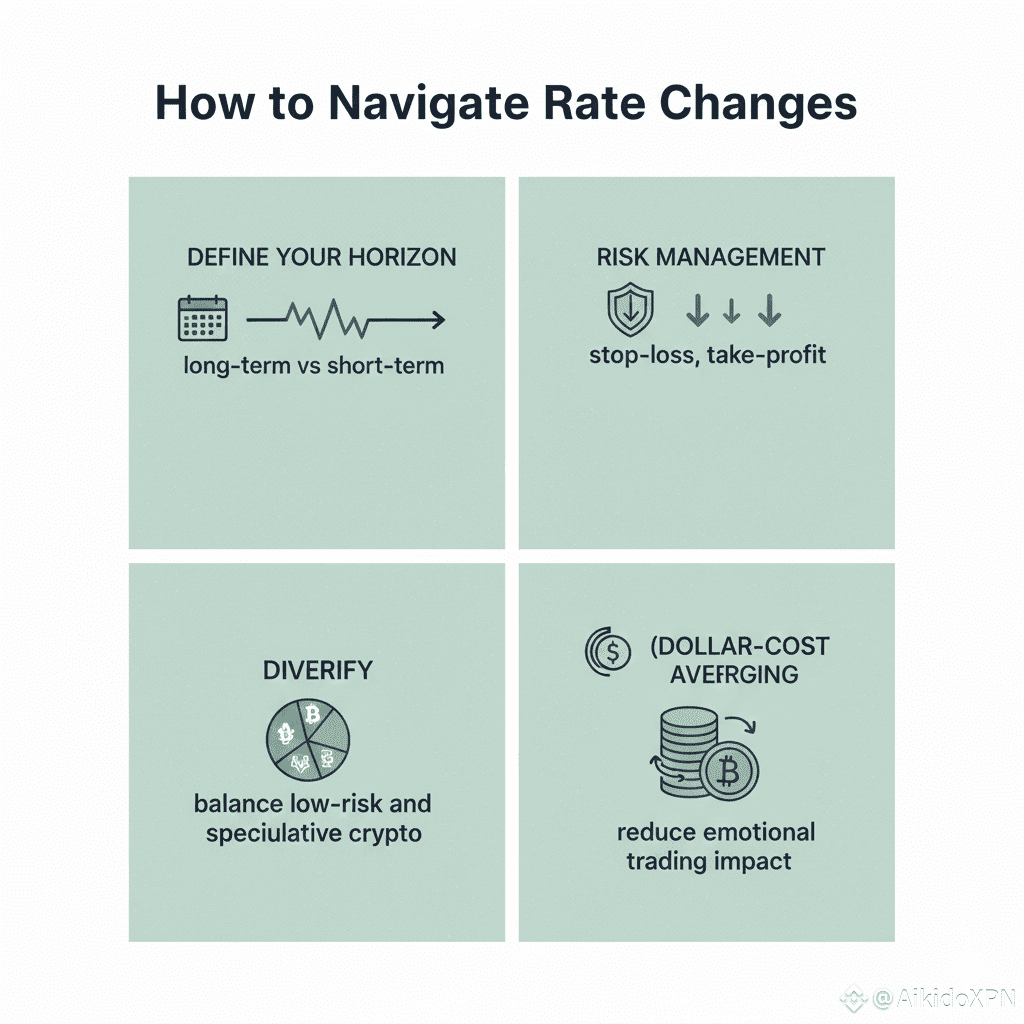
Define your horizon – long-term investors focus on fundamentals; short-term traders track volatility.
Use risk tools – stop-losses, take-profit levels, and careful leverage management.
Diversify – mix low- and high-risk assets to thrive in any interest rate environment.
Avoid timing the market – dollar-cost averaging (DCA) smooths out fluctuations.
How to Predict Fed Moves
Monitor economic indicators: inflation, GDP, unemployment.
Follow FOMC reports and minutes – provides insight into rate outlook.
Check expert forecasts – like the Blue Chip consensus for broader economic expectations.
Global Impact
Interest rate changes ripple globally. Example: China’s 2021 crypto ban caused $BTC to drop 8% in 24 hours. Market psychology and herd behavior amplify the impact of rate shifts.
Final Thoughts
Interest rates are a core driver of crypto volatility. While rate cuts often trigger short-term crashes due to fear, they tend to support long-term growth by boosting liquidity and investor appetite. The key is to stay informed, watch macro signals, and invest strategically.
Link:
🔗 Track live crypto prices to stay ahead of volatility here:
#CryptoMarket #Bitcoin #Ethereum #FederalReserve