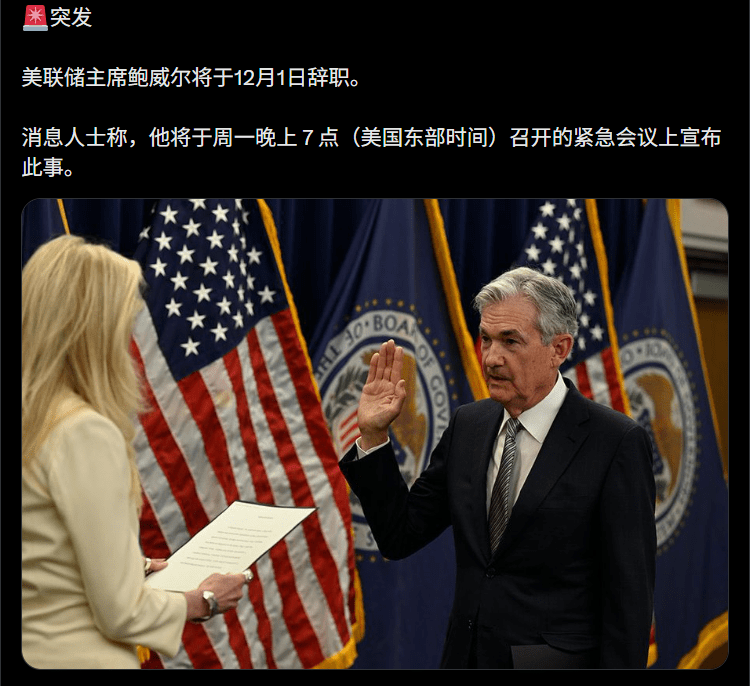
Powell's current term lasts until 2028, and his potential departure is more a risk event under pressure from Trump. If he leaves early, the impact on the Federal Reserve would focus on independence, the direction of monetary policy, institutional credibility, and other core areas, which could trigger a chain reaction through the policy transmission effect of the Federal Reserve, as detailed below:
Impact on the core principle of the Federal Reserve's independence: The independence of the Federal Reserve is the cornerstone of its effective monetary policy, and if Powell is forced to leave due to political pressure, it would be seen as a symbolic event of White House intervention in central bank operations. Previously, Trump publicly criticized and threatened to fire Powell multiple times to push for interest rate cuts to ease fiscal interest payment pressures and serve his political agenda. A departure under such circumstances would break the implicit rule that the president does not casually interfere with the Federal Reserve, and even if a new chair is appointed, the White House may continue to intervene in Federal Reserve decision-making based on this precedent. More seriously, Trump may take the opportunity to gradually install loyalists to replace other members of the Federal Reserve, or even replace non-compliant regional Federal Reserve presidents, fundamentally changing the Federal Reserve's decision-making landscape and turning it from an independent institution that checks government power into a tool serving the executive branch. Severe confusion in the direction of monetary policy: During Powell's tenure, decisive interest rate hikes were taken to respond to inflation, and his policy style relatively emphasized stabilizing inflation expectations. However, Trump's core demand for him to leave is to push for interest rate cuts; if Powell departs, his successor is likely to be someone inclined towards lowering rates. However, monetary policy is decided by a majority vote of the Federal Open Market Committee, and the new chair may not be able to smoothly promote interest rate cuts, leading to significant internal disagreements during the policy-making process. At the same time, the market may lose judgment on the long-term coherence of monetary policy, disrupting the investments and market layouts originally based on Powell's policy logic, causing businesses and investors to delay investment and consumption decisions due to the inability to predict interest rate trends, further exacerbating economic fluctuations. Moreover, from historical experience, such policy shifts due to political interference may also lead to uncontrollable inflation. Goldman Sachs research shows that after sudden leadership changes in central banks, inflation rates typically rise an additional 1-2 percentage points within two years. Heavy blow to the market credibility of the Federal Reserve: The effectiveness of the Federal Reserve's policies largely relies on market trust. If Powell is forced to leave, the market will believe that the Federal Reserve can no longer maintain its core goals of stabilizing prices and ensuring economic stability, but rather is compromising to political demands. Deutsche Bank has warned that such a move may trigger a severe sell-off of the dollar and U.S. Treasury bonds, with the dollar trade-weighted index potentially plunging 3%-4% within 24 hours, and the U.S. fixed income market facing a sell-off pressure with yields sharply rising by 30-40 basis points. Additionally, investors and the public will no longer believe in the Federal Reserve's long-term commitment to low inflation, and since inflation expectations have self-fulfilling characteristics, this loss of trust will in turn drive inflation to continue rising, creating a vicious cycle. Disruption of the internal operational order of the Federal Reserve: Powell holds three positions as a member of the Federal Reserve Board, Chair of the Board, and Chair of the Federal Open Market Committee, and his departure would trigger a series of issues regarding position and power adjustments. From a legal perspective, whether through forced dismissal or voluntary resignation, the subsequent processes are full of variables. If Powell sues for being forcibly dismissed, it would lead to a protracted legal battle, during which the Federal Reserve's daily decision-making and policy execution would be severely disrupted. Meanwhile, internal staff of the Federal Reserve may also waver due to this external political shock; some officials may become more conservative in their decision-making due to concerns over their job stability, making it difficult to adhere to professional judgments, which would further affect the overall operational efficiency and decision-making quality of the Federal Reserve.