
┈➤ Let's start with qualitative analysis: overturning the 35000 expectation.
Soul-searching question: if it drops from 60000 to 35000, who's doing the selling?
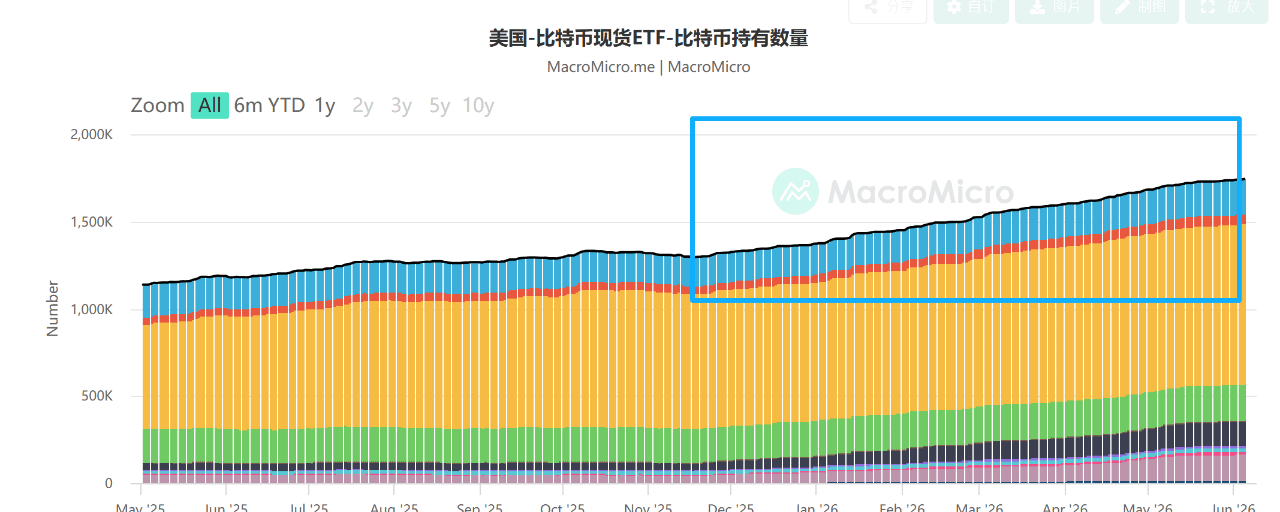
2018 was a gradual decline.
In June 2022, it plummeted directly to around 17000, then by the end of the year it fell to around 15000. This was due to the market consensus on the bear market of 2022, so people started selling before June.
By 2026, the consensus on the bear market is stronger, so in February it dropped to 60000.
If we assume the bottom in 2026 is 35000, I want to ask, who sold BTC from 60000 down to 35000?
First, most people are aware of the bear market in 2026; I personally didn't think so at first, but I woke up in January and basically liquidated my positions.
Secondly, even if some people didn't sell before February, when BTC rebounds above 80000, wouldn't those people sell?
Thirdly, we must admit that some young retail investors didn't sell at 60000 or 80000, and in the end, they panicked and sold during the decline. But are there many such people? Basically, the new funds and retail investors entering in 2025 are noticeably fewer, so can these people push BTC from 60000 down to 35000?
Is everyone seeing the logic this way?
In 2026, with fewer new retail investors and more seasoned ones, the bear market was quickly confirmed and they sold off, leading to a first bottom after just 4 months. Very few people would create selling pressure later, and this selling pressure isn't enough to bring BTC down significantly.
┈➤ Let's do some quantitative analysis: first, mark the boat looking for the sword
╰✦Marking the boat for 2022
Because this round of decline is quite similar to 2022, both not less than 2 bottom tests, let's mark it as 2022.
1st dip: In 2022, it dropped from 69000 to around 17600, a decline of 51400.
2nd dip: At the end of 2022, it fell to around 15500, dropping again from 17600 to 15500 by 2100.
The 1st dip is a bear market expectation, and it's actually one step completed. The 2nd dip was due to the FTX bankruptcy, which was a liquidity black swan, not just emotional; FTX had to sell coins to prevent a bank run.
So the drop of the 2nd dip accounts for the 1st dip ratio, which is 2100/51400=4.0856%
╰✦Looking for a sword in 2026
1st dip: 126000 down to 60000 = 66000
2nd dip: 66000 * 4.0856% ≈ 2700
60000 - 2700 = 57300
╰✦Logic correction
Marking the boat without logical correction has limited reference significance; the 1st and 2nd dips are in the same environmental cycle, so this ratio is meaningful.
However, we can't simply compare 2022 and 2026; after all, the environments are different.
Positive correction: The bear market consensus for 2026 is stronger; during the 1st dip, selling pressure was greater, and the likelihood of a one-step completion is higher, so the ratio of 2nd dip to 1st dip could be lower.
Negative correction: The black swan at the end of 2022 was FTX, while the black swan in 2026 could be rate hikes and high oil prices triggering a global economic slowdown or even recession. So the ratio of 2nd dip to 1st dip could be higher.
As for whether the negative or positive impacts are greater, it really depends on the macro environment. In June, there are also major events like CPI data and the first dot plot after Lively takes office, so it can't be confirmed if this 2nd dip in June has bottomed out.
According to Brother Bee's previous calculations, the bottom of the 2nd dip is around 55000, and if there are macro negative factors, it shouldn't dip below 50000.
┈➤ Possibility of a 3rd dip
In 2017, there was 1 attack, and in 2018, there was just 1 bottom test (the 2nd dip actually happened in March 2020);
In 2021, there were 2 attacks; in 2022, there were also 2 bottom tests.
In 2025, there were 3 attacks, so it's speculated that there might be 3 bottom tests.
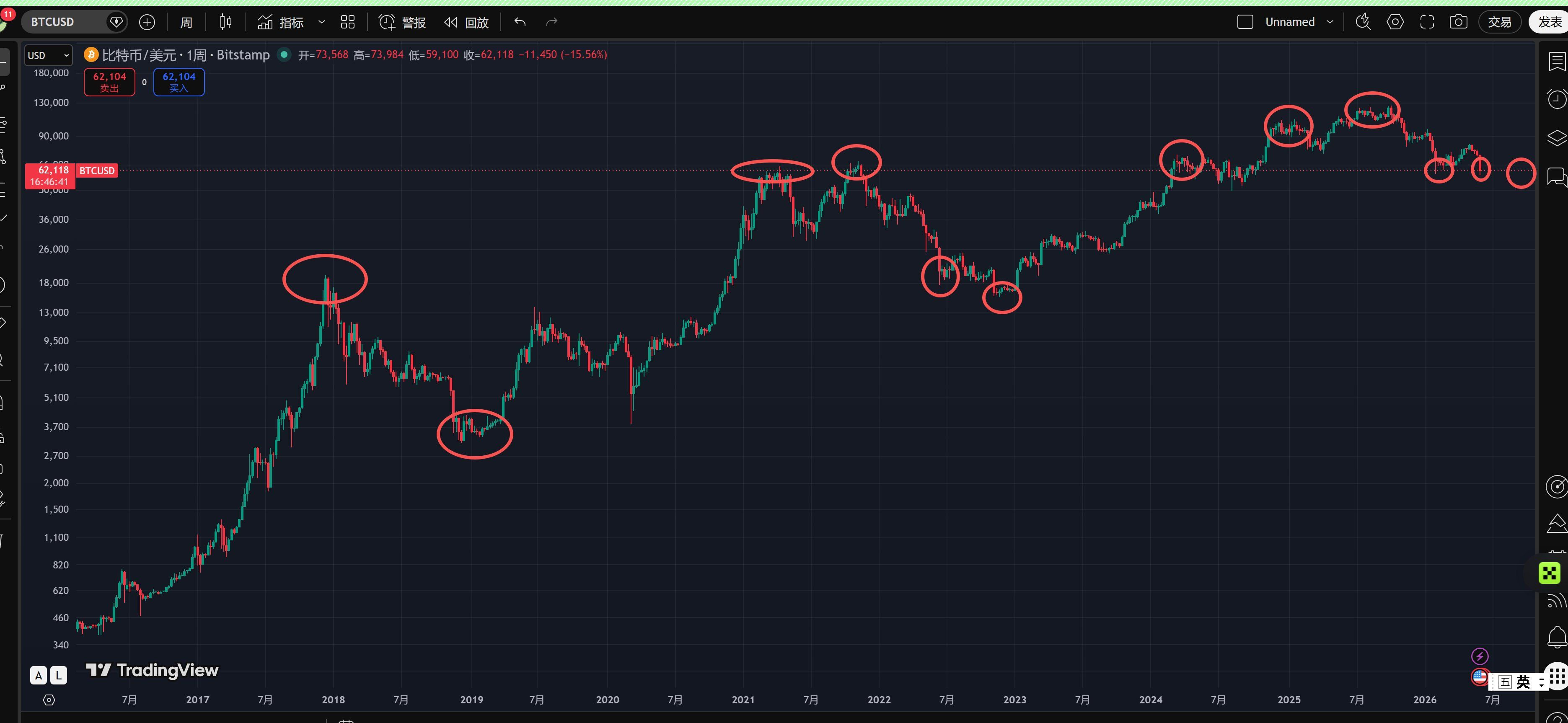
This isn't just marking the boat looking for the sword; it should be the fluctuation of market sentiment.
Additionally, regarding events, there's a dot plot in September and mid-term elections in November, so there are indeed potential events that could trigger a decline between September and October.
If there are 3 dips this time, the bottom of the 3rd dip is hard to say and mainly depends on macro events.
However, theoretically, the drop in the 3rd dip might be smaller because those who should have sold in the first two dips have already done so. Optimistically, the bottom of the 3rd dip could be similar to the 2nd dip.
Even if there's a black swan, it doesn't necessarily mean BTC will drop from 50000 to very low levels.
So Brother Bee believes the pessimistic expectation for the 3rd dip is around 45000, but that’s still early to say. The US-Iran agreement, the Strait, and the influence of Wash at the Federal Reserve all need to be observed further.
┈➤ Adding a logic: Is there anyone buying?
Some buddies pointed out that the drop from 60000 isn't about who is selling, but whether anyone is buying.
Isn't it a coincidence? Brother Bee's other article has the answer.
https://x.com/blockTVBee/status/2062415576480547300
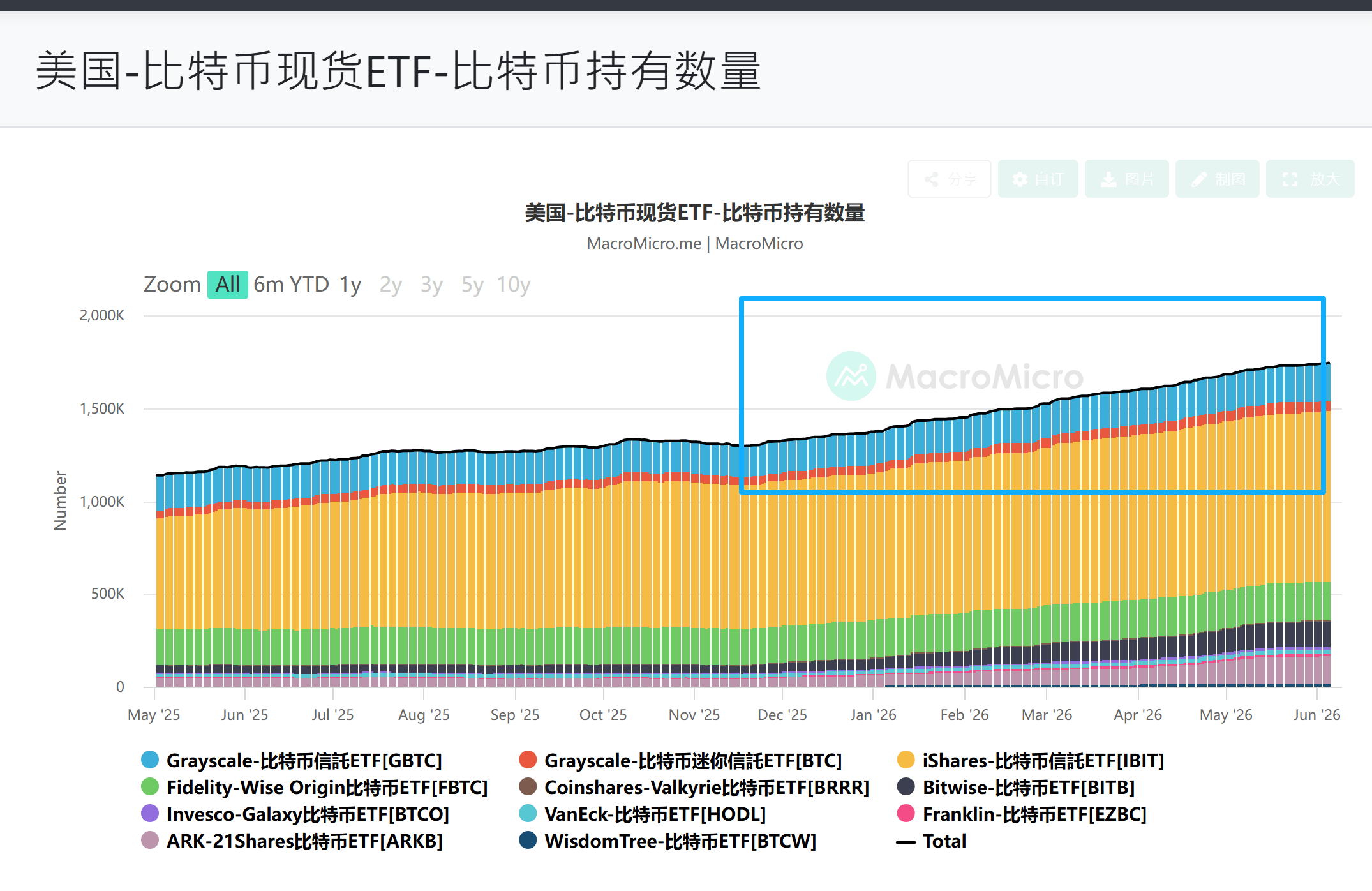
On one hand, the long-term trend of BTC on CEX is decreasing, indicating that BTC holders might be increasing. Of course, it could also be due to the entry into ETFs.
However, on the other hand, that screenshot wasn't captured well; Brother Bee will take another one. After December, it became very clear that during the BTC decline, the BTC held by ETFs was increasing.
So it's obvious who would buy BTC.
Conclusion: So Brother Bee's judgment for this year's BTC bottom is likely around 55000, with a small probability around 45000, and the chances of it going lower are extremely low.