

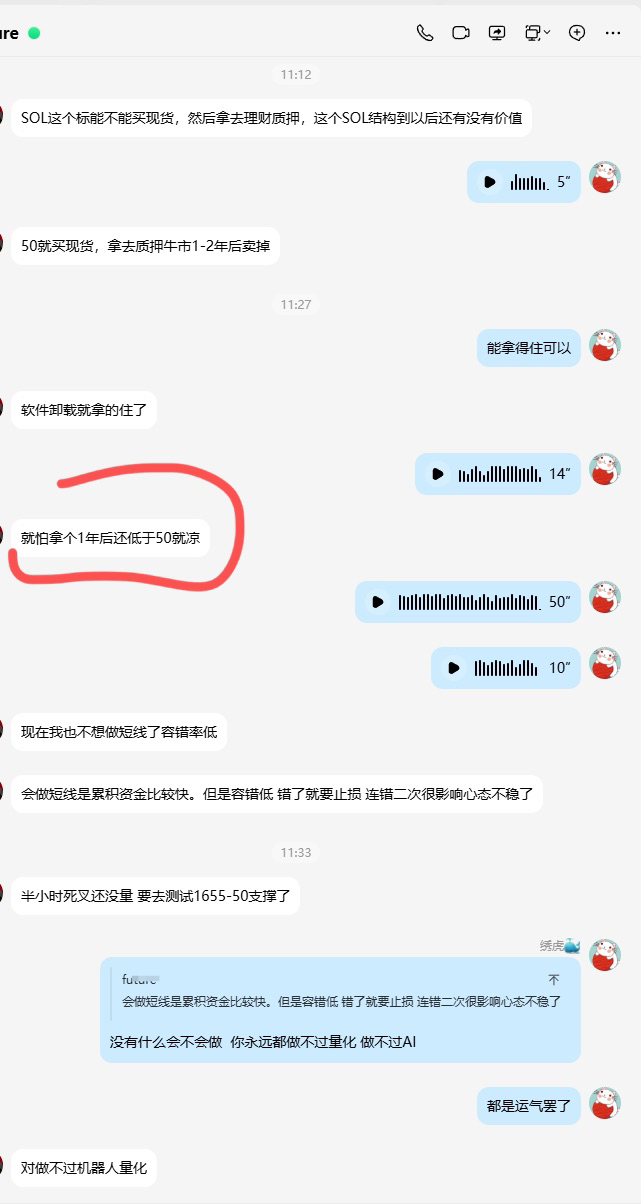
Just chatted with a buddy in the group; he had questions about SOL!
We don’t create problems; we solve them. Let’s see how many we can tackle.
Buy $50 worth of SOL, stake it for one to two years, then sell. If it drops below 50 after one to two years, just let it go.
The core of staking is to hold, but also to earn. I know him well; he’s the type with shaky holding sentiment.
So, after two years, if it’s below 50, it’s a bust. I’m worried about the price dipping below 50 and taking a loss.
Alright, let’s break down how to play this.
First, we need to do some macro research on the future outlook for one to two years, and make a call!
Let’s not talk about macro policies; it sounds a bit pretentious, and nobody on the floor wants to chat about macro.
When we talk about the Fed, what will their policy look like in the next one to two years? Will they cut rates? Why is this crucial? Because it governs not just the crypto space, but serves as a focal point for global markets.
The era of independent bull markets in crypto is over; don’t expect it to be like the past few years. Let go of fantasies and face reality.
To meet the conditions of this strategy, what do we need to do upfront?
1: When SOL hits 50 bucks,
Assess whether the situation in the Middle East completely shifts, inflation trends downward, and the Fed's policy changes to initiate a rate cut cycle.
No need to dig deep into the Fed's policies or overthink every day! You can't predict it, and even institutional investment banks can't figure it out.
Just keep an eye on market news. As long as the market is pricing it in, and mainstream institutions have a consistent expectation that a rate cut cycle will begin in the next year or so, that's the signal we need for a long-term entry. What we want is not the predictions of mainstream institutions, but their consensus.
For example, right now: there's not only a lack of consensus on rate cuts but rather a consensus on rate hikes. You should know how to react.
2: Which staking channel is that? (I’m not too familiar with staking.) Is it on-chain staking or CEX staking? We need to find a better match.
3: Should I stake my entire bag or just half? Should I keep some liquidity for risk hedging?
For instance, if there are fundamental issues with the SOL chain, like competition among public chains, ecosystem loss, or decreased daily active users, etc.
4: Always use funds you won’t need during the staking period (like two years), because the only certainty in the market is uncertainty. So, the money you use for this strategy should not affect your normal life.
Finally, put the risks upfront. You should have an expectation of losses before you take on this strategy. Don’t get anxious or frustrated when you’re in the red.
This time, what’s the loss you can accept—10 bucks, 20 bucks, or 30 bucks? Tell yourself in advance. #sol