
Vanguard Group has been breached: the US wealth management system has fully opened its doors to Bitcoin.
Cryptocurrency assets have been institutionalized, finally ushering in a true era of greatness!!!
1. Two shocking events that have shaken the world: the last bastion of traditional finance has been breached.
In the past 48 hours, two events have occurred in the crypto industry with significance comparable to the 'approval of Bitcoin ETF':
1) The second largest asset management company globally - Vanguard Group
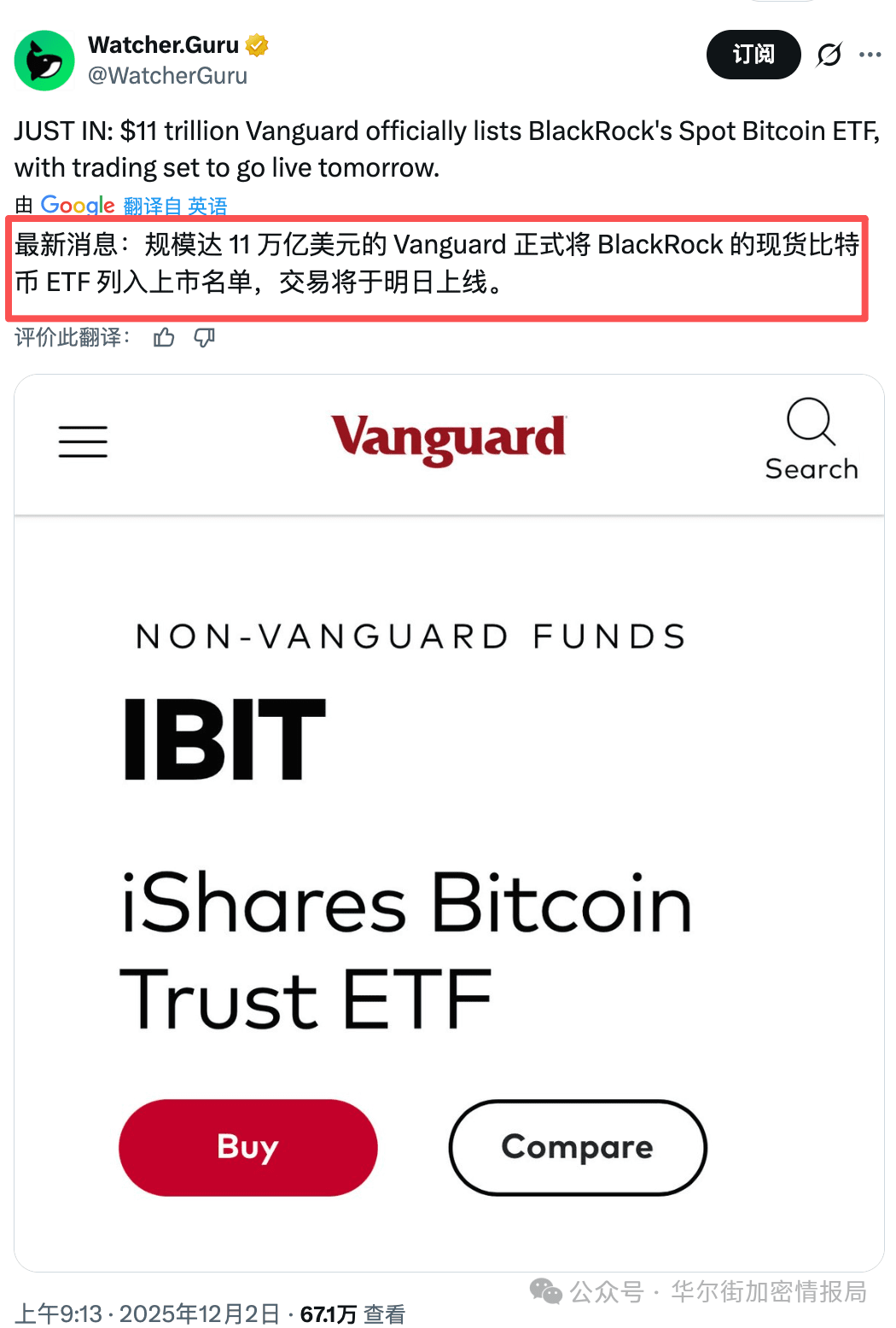
Officially allows the trading of Bitcoin ETF
The management scale is close to 11 trillion dollars
Second only to BlackRock globally
Once the strongest 'anti-crypto front' in the US
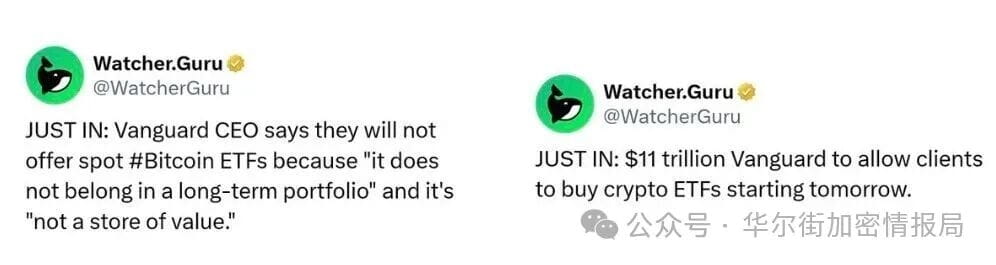
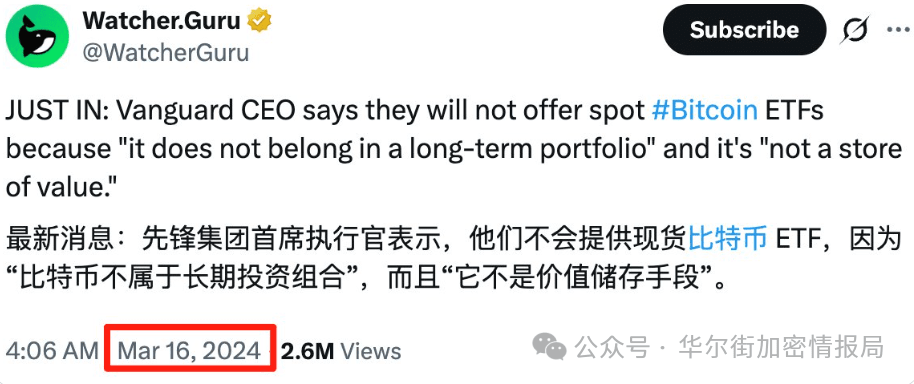
The CEO publicly stated last year that he does not recognize the long-term value of BTC
However, now - Vanguard has not only opened Bitcoin ETFs but has even included BlackRock's IBIT in the trading list and officially launched it.
Among the top asset management companies, only Vanguard has consistently held a negative attitude toward BTC and cryptocurrencies, and just last May, Vanguard's CEO clearly stated that they would not launch a BTC ETF, denying BTC's long-term value, and now suddenly making a 180-degree turn means they are preparing to bottom out!
This means: this is the most stubborn piece of iron in traditional finance, which has finally been pried open.
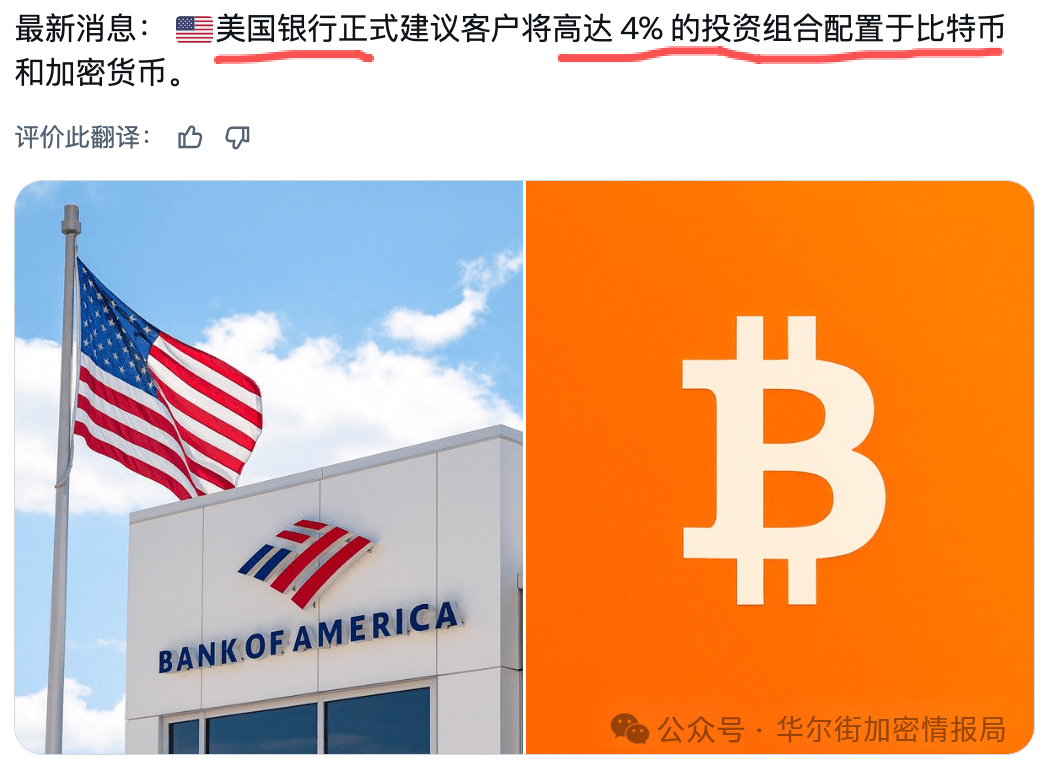
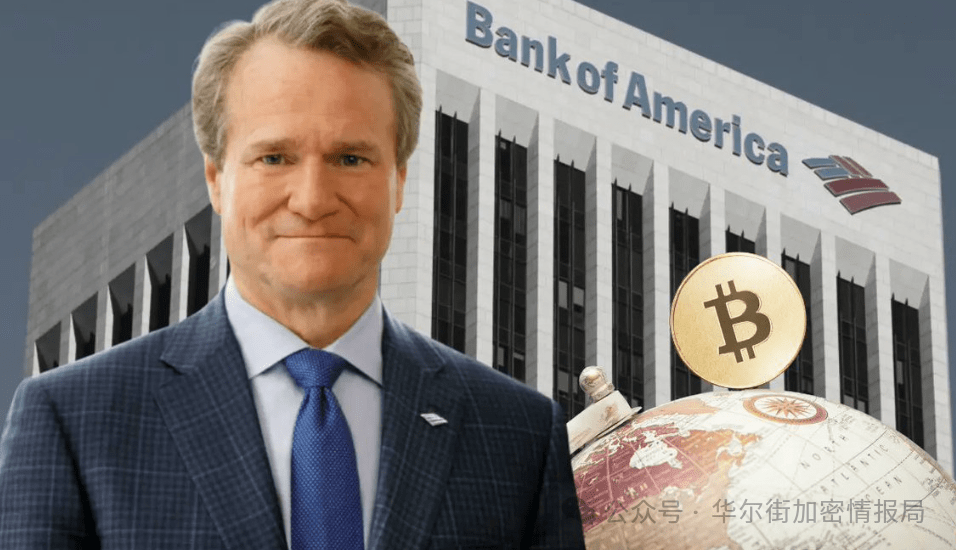
2) The largest commercial bank in the U.S. - Bank of America
Formally recommending clients allocate up to 4% to Bitcoin. This is not 'allowing access', but rather: in the past, banks kept their distance from crypto assets, but now they are beginning to encourage clients to buy in. Isn't this attitude change sudden?
Could last night's wave of violent rises be because of this???
Two, the global investment king: Vanguard is the second-largest asset management company in the world.
Vanguard, the king of global passive investment, is the second largest asset management company in the world. Founded in 1975 and headquartered in Malvern, Pennsylvania, USA, it stands alongside BlackRock as a 'financial twin tower'.
Managed asset scale: $11 trillion, covering index funds, ETFs, pension index funds, bond funds, asset allocation funds, retirement accounts, wealth management, and trust services.
The key point is - Vanguard's client base covers over 50 million investors across more than 160 countries, with many coming from pension and long-term passive strategy accounts.
Global layout:
With 17 offices worldwide, covering the Americas, Europe, Asia, and Australia.
Offering over 450 funds and ETFs, including 223 in the U.S. market and 229 in the international market.
Client types include individual investors, institutional investors, pension funds, corporate retirement plans, trust accounts, and long-term wealth management clients.
Core competitiveness:
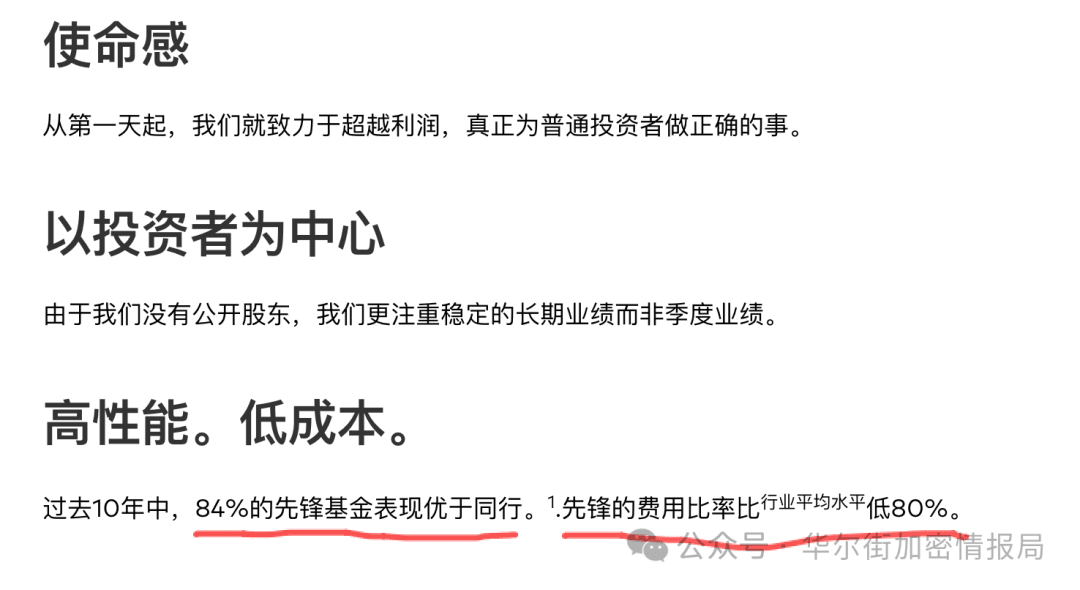
Low fees: The average fee rate is extremely low, which is a key reason why global investors choose its products.
Passive investment philosophy: Long-term layout, broad diversification, and avoidance of short-term speculation are the main themes of its products.
Complete product line: Stocks, bonds, international, mixed assets, pensions, and trust services are all available.
Massive scale advantage: Over $11 trillion in size brings cost reductions and stronger market bargaining power.
Special ownership structure: Not a publicly traded company, but 'jointly owned' by its fund holders, meaning it does not need to maximize profits for external shareholders, but rather has the sole goal of serving investors' interests.
In summary: Vanguard does not have 'more funds', but rather 'more people influencing money'. As long as it opens up a new asset class, the market structure may change accordingly.

Three, in fact, banks started to 'quietly open the door' two months ago.
① Morgan Stanley
Starting in October: opening crypto investment channels to all clients; covering all account types, including retirement accounts; wealth management advisors can actively promote crypto funds. This means that the underlying channels for institutional allocation have already loosened.
② Citibank
Plans to launch institutional-grade crypto custody services in early 2026 to prepare for large-scale asset allocation; custody is a prerequisite for institutions entering the market.
③ J.P. Morgan
Announcing that clients will 'soon be able to freely trade BTC and other cryptocurrencies' is a bank that has previously repeatedly downplayed Bitcoin. But it must now also adapt to client demands.
Looking at the actions of the three banks together leads to a clear and critical conclusion: the three core funding entrances in the U.S. are opening to the crypto market at the same time: channels, custody, trading - the unlocking of three key infrastructures.
Specifically:
Morgan Stanley → opens wealth management and retirement plan entry (fund flow)
Citibank → opens custody entry (institutional infrastructure)
J.P. Morgan → opens free trading entry (fund efficiency)
These three constitute the 'institutional triangle infrastructure'. The core reason for the blockage of the institutionalization process in the past crypto market was: no wealth management entry, no custody facilities, no bank-supported trading. Now each is being broken.
Four, the real door: the wealth management system has been opened.
How much money is there in the U.S. wealth management system?
Managed by 300,000 financial advisors. What does this mean? Pension money, retirement funds, long-term ETF allocations, assets of conservative clients, long-term funds from high-net-worth family offices, etc. have not entered the crypto market in the past 10 years.
Because: wealth management advisors cannot recommend 'products not approved by the company'. (For example, BTC ETFs were not allowed to be promoted in the past) and now the barriers are disappearing. The actions of Vanguard, Morgan Stanley, and Bank of America mean: if only 2% of funds are allocated to BTC ETFs?
This is the 'real institutional bull market'.

Five, why is this a 'historic benefit for Bitcoin'?
1) The ultimate bottleneck of traditional finance has been broken.
ETF approval ≠ institutions will buy; public companies buying BTC ≠ pension funds will buy. Pension funds, wealth management, and sovereign funds, which are the longest-term money, have always been stuck on: 'channels not allowed'.
The actions of Vanguard and Bank of America have officially opened the door.
2) The true full-process model of crypto institutionalization has finally taken shape.
Now is the third step, and it is the most critical step. Pensions (Step 4) have already been included in Trump's next policy goals. Sovereign funds (Step 5) usually follow the pension path.
This means: the institutionalization process has only just begun.
The entire institutionalization process of crypto assets:
From ETF approval - public companies purchasing - inclusion in wealth management systems - inclusion in pensions (401K) - sovereign funds.
Now we have just reached the stage of including it in the wealth management system, and before entering pension 401k, Trump had already proposed it, just waiting for the right time to implement it.
What does Vanguard's '180-degree turn' mean?
Last May, the Vanguard CEO claimed: 'We will not allow Bitcoin ETFs to launch; BTC does not have long-term value.'
But today Vanguard has: launched BlackRock's IBIT, opened up crypto ETF trading, and included it in the mainstream asset selection list.
Why is this?
① Clients will fall behind if they do not flow to BlackRock and Fidelity.
② Crypto ETFs have become the new norm for long-term asset allocation, no longer 'speculative currencies', but 'digital commodity assets'.
③ Vanguard must retain pension users, or else the risk exposure will become unbalanced.
④ Or... have they already finished the bottom buying?
The market will certainly be skeptical. Why is Vanguard's significance to crypto assets so great?
Once Vanguard supports a certain type of asset, it means that type of asset has officially entered the 'mainstream financial system'.
Vanguard's clients are mainly long-term allocation funds, including pensions, retirement funds, wealth management, and institutional assets, making it the most stable source of funds.
Low fees + long-term holding + indexation model means that as long as crypto asset ETFs enter Vanguard's product pool, decades-long continuous fund flows will be opened.
Vanguard's platform coverage is influenced by the $30 trillion wealth management channel; a few percentage points of allocation will bring huge inflows.
Vanguard's attitude towards crypto assets has shifted from resistance to acceptance, marking a significant event in the 'institutionalization' of asset classes.
Seven, where will the incremental funds come from in the future?
If you think institutions have already bought everything? Then you are too naive. None of these 'giants' have fully entered the market -
1) Pensions (401k)
Scale: Over $7 trillion, Trump has already proposed relevant policy signals.
2) Sovereign funds
Singapore GIC, Norway Oil Fund, Abu Dhabi ADIA, Qatar QIA, Kuwait KIA, Saudi PIF
The total scale of global sovereign funds: over $11 trillion.
3) Insurance companies
The most sensitive area for long-term assets, but once opened, it will lead to decades of allocations.
4) Global wealth management system (non-U.S.)
Europe, Japan, and Southeast Asia have all initiated regulatory processes.

Eight, this is an 'asset migration', not a bull-bear cycle.
What we are witnessing is not: a bull market? A market rebound? Another round of speculative cycles?
Rather, Vanguard and Bank of America are just 'the first call to action'.
In the coming years, we may see:
Pensions buying BTC, sovereign funds buying BTC, insurance companies buying BTC, wealth advisors listing BTC as a 5% standard, with a continuously stable incremental inflow each year. And all of this has just begun.
Finally, Yongqi summarizes:
Vanguard's button will change the crypto market for the next decade.
The remaining - pensions and sovereign funds will determine the logic of the next round of million-dollar BTC.
The breach of Vanguard is not news, but a signal:
The last barrier of traditional finance is collapsing. The real institutional cycle has already begun.

Deep observation · Independent thinking · Value is more than just price.
Star #Wall Street Crypto Intelligence Bureau, don't miss out on great content ⭐
In conclusion: many of the views in this article represent my personal understanding and judgment of the market and do not constitute advice for your investment.
