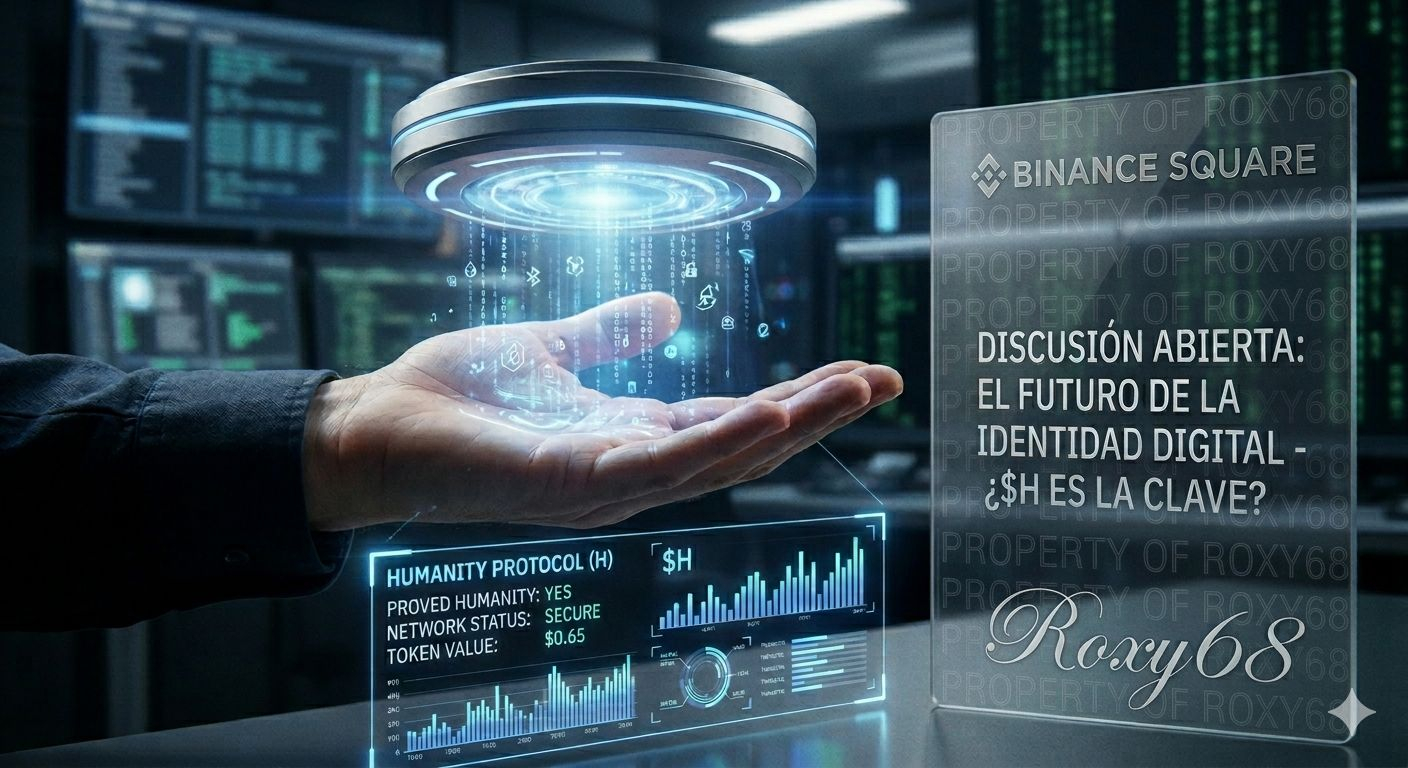
There's a lot of talk about Humanity Protocol as the "solution" against bots, but no one is discussing what we're giving up in return. Today, with market data in hand, we need to be honest.
The technical reality:
The sovereignty dilemma: We're handing over biometric data (palm scan) to a network that, while it promises decentralization, has faced significant technical vulnerabilities.
The price of "Proof of Humanity": If the value of our token $H is directly tied to our ability to be "verified" by the network, are we not creating a system where identity is not a right, but an asset subject to market rules?
The question that no one dares to answer:
If tomorrow the protocol experiences new breaches or decides to change its privacy policies, who is accountable for your biometric data?
We're obsessed with launches, but we ignore that in this race for "Humanity 2.0," we are the product. The question isn't whether the protocol is technologically advanced, but: Are we building a decentralized future or are we validating the most efficient surveillance system in history?
The debate is on:
Is it a fair price to pay to clean the network of bots?
What happens when biometrics become the only "token" for access to the crypto world?
I'm expecting your arguments (and critiques) in the comments. 👇
Disclaimer: This content is strictly for informational purposes and technical debate. It does not constitute financial advice, investment advice, or a recommendation to buy or sell. The crypto market is highly volatile; always do your own research (DYOR) before making any decisions.
#HumanityProtocol #privacidad #Web3 #DebateCrypto #BinanceSquare #DataSecurity