
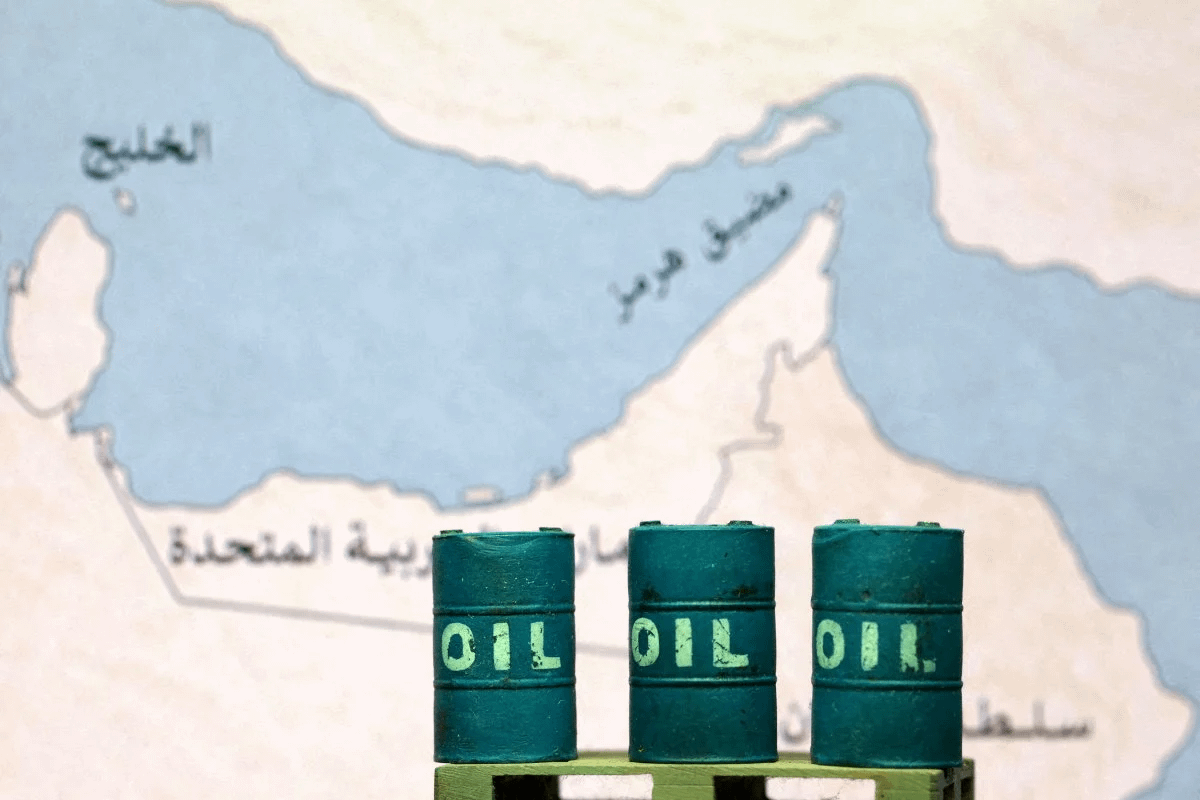
Iraq and the UAE are ramping up plans to expand pipelines, aiming to replace the capacity lost due to the closure of the Hormuz Strait, as new data reveals their heavy dependence on the Persian Gulf. This is reported by CNBC.
Last week, the Iraqi cabinet approved plans to accelerate oil exports through the Kurdistan-Turkey pipeline network, which will more than triple existing supplies, from 220,000 barrels per day to 770,000. This route leads to the Turkish Mediterranean port of Ceyhan and is set to support the oil-dependent Iraqi economy, which accounted for 53% of the country's real GDP in 2025, according to the World Bank.
Exclusive data provided to CNBC by economic analytics provider QuantCube Technology shows that Iraq's overall exports have nearly dried up since the war began due to the country's geographical dependence on Hormuz.
"Iraq is in a much tougher spot because we know that most of its oil, if not all, passes through Hormuz," said Alan Lemanyen, a senior economist at QuantCube, to CNBC.
At a press conference on May 16, Iraq reported that in April it exported 10 million barrels of oil through the strait compared to 93 million barrels before the war.
Meanwhile, Abu Dhabi is fast-tracking the construction of a new West-East pipeline to Fujairah, aiming to expand export capacity and bypass the bottleneck of the strait. The project, expected to be operational by 2027, will double the export capacity of the Abu Dhabi National Oil Company (ADNOC). The UAE can still export oil through other terminals, which mitigates the impact of the Hormuz closure.
"It's clear that Iraq is in a much more challenging situation due to its location and inability to reroute flows compared to the UAE or Saudi Arabia," added Lemanyen.
But even existing alternatives are under threat. The Saudi East-West pipeline was attacked by Iran in April, and Fujairah was hit by Iranian drones, disrupting oil loading. Together, these routes provide an available capacity of 3.5–5.5 million barrels per day, according to the IEA, but this is still significantly lower than the approximately 20 million barrels of oil and petroleum products that flowed through Hormuz daily before the war.
Developing alternative routes requires not only huge investments but also time. Vessels transiting through Hormuz remain significantly below pre-war levels: in May, traffic fell to the lowest point since the Iranian war, according to Lloyd’s List. Vessels stuck in the Gulf face the threat of attacks from Iranian forces without Tehran's approval for passage, as well as U.S. sanctions if they cooperate with Iran.
#RawMaterialsMarkets , #AttacksOnTheTankerFleet , #FreedomOfNavigation
There’s a lot of news out there. News can be quite varied.
There are many changes in the economies of states and policies, in high-tech fields, as well as in financial and crypto markets. But our subscribers have the opportunity to stay updated on all major market changes!!!
The main thing now is that they no longer have to monitor dozens of information and news websites themselves. It’s all gathered in one feed here.
Enjoy watching, everyone!