
The short-term oscillation pattern is difficult to break, and Wednesday's gold market perfectly illustrates the helplessness of 'having the intention to strike but lacking the power to change the situation.' On the chart, a long upper shadow candlestick stands out, as the bulls once attempted to test the area above 4220 USD/ounce with favorable ADP data, but were ultimately strongly suppressed by the bears, closing the session at 4203 USD/ounce, the same as Tuesday, barely holding the key psychological level of 4200 USD/ounce. It is not an exaggeration to say, 'The bulls are trying hard, but reality is harsh.'
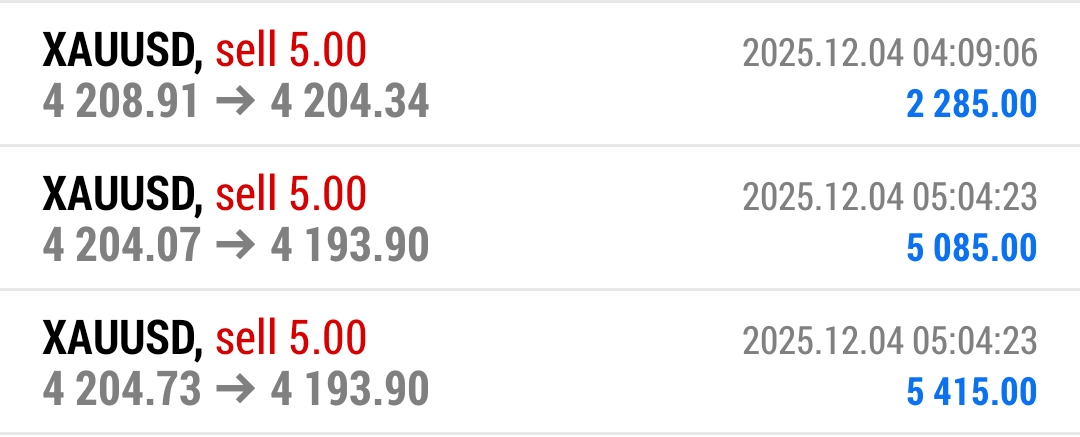
As of December 4th, the gold price opened with a declining trend, directly opening lower and reaching a minimum of 4199 USD/ounce. Although it later rebounded slightly to 4204 USD/ounce, the overall pressure pattern remains unchanged. From a technical perspective, the previous long position at 4208 USD/ounce during the Asian session has now completely transformed into a strong short-term resistance level, becoming the first obstacle for the bulls to move upwards; while the EMA/MA20 cycle moving average on the daily chart is located near 4149 USD/ounce, which is an important support for the current market. This level, combined with the previous oscillation platform, is likely to become the 'last line of defense' for the bulls. Considering the pressure pattern in the smaller time frames, the short-term strategy should obviously focus on short positions, with rebounds providing good entry opportunities. The support strength at the key level of 4200 USD/ounce should be monitored first, and if it is lost, a drop to the range of 4180-4149 may be expected.
The drastic fluctuations in market sentiment stem from the 'unexpected cold' ADP employment data released overnight. In November, private sector employment in the U.S. unexpectedly decreased by 32,000 jobs, which is not only vastly different from economists' expectation of an increase of 10,000 jobs but also marks the worst monthly performance since June 2020. Recruitment in key sectors such as manufacturing, construction, and information technology has slowed down significantly, with small businesses particularly showing a noticeable contraction in hiring, directly exposing the downward pressure on the U.S. labor market. After the data was released, market expectations for a shift in Federal Reserve monetary policy surged, with the CME FedTool indicating that the probability of a 25 basis point rate cut by the Federal Reserve next week has soared to 89%. The U.S. dollar index subsequently fell nearly 8 points, briefly breaching the 99 level, and gold also gained short-term upward momentum as a result.
However, in my view, the current gold market is caught between 'fundamental bullish' and 'technical pressure'. On one hand, expectations of interest rate cuts, continued gold purchases by global central banks (the People's Bank of China has increased its gold holdings for 12 consecutive months), and safe-haven demand driven by geopolitical tensions provide a medium to long-term bullish rationale for gold prices. Institutions even predict that gold prices may reach 4900-5000 USD / ounce by 2026; on the other hand, short-term gold prices have accumulated significant increases, leading to profit-taking pressure, and the 4220-4250 USD / ounce range is a previously dense trading area, where both trapped and liquidated positions may exert dual selling pressure, limiting upward space.
It is worth noting that although this ADP data significantly strengthens interest rate cut expectations, the official non-farm data has been delayed until December 16 due to the government shutdown. This means that in the coming week, the market will fall into a 'data vacuum period', making it susceptible to fluctuations from funding sentiment and speeches from Federal Reserve officials. If dovish Federal Reserve officials continue to release signals of easing, gold prices may stabilize around the 4200 USD / ounce level; conversely, if there are hawkish voices emphasizing inflation stickiness, the short-term pullback could exceed expectations.
