

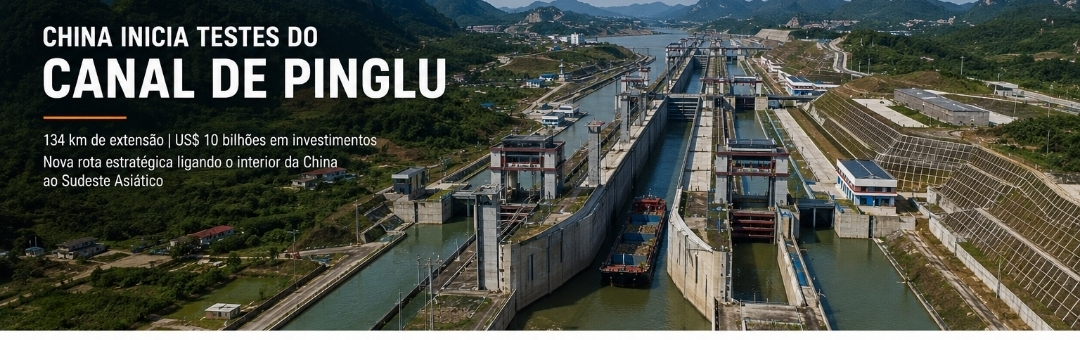
While the world keeps an eye on trade disputes and technological advancements, China is wrapping up a project that could have even deeper impacts on global trade. The Pinglu Canal, in the south of the country, has entered the testing phase and promises to transform logistics between inland China and Southeast Asian markets.
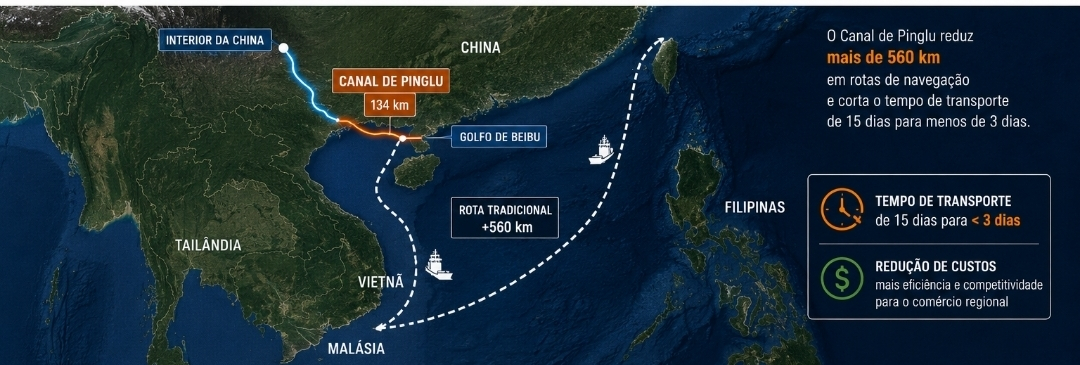
Stretching 134 kilometers with investments exceeding $10 billion, the project creates a direct link between the river system in southwestern China and the Beibu Gulf, eliminating longer routes and significantly reducing transportation costs.
The impact goes far beyond engineering. The ASEAN region is already among China's top trading partners, and the new waterway is designed to accelerate the flow of agricultural, industrial, and technological products. In some cases, delivery times could drop from two weeks to less than three days.
The project also reinforces an increasingly evident trend: the race for logistics efficiency. In a scenario where speed, costs, and regional integration define competitiveness, infrastructure has become a strategic asset as crucial as technology or energy.
Analysts are assessing that the Pinglu Canal could boost investments in ports, distribution centers, and trade corridors across the region, strengthening the connection between the Chinese economy and Southeast Asian countries.
More than just a canal, the project represents a new route for economic growth and a reminder that the major transformations in global trade continue to be built, literally, on infrastructure.