
Explanation of Equal Highs (EQHs)
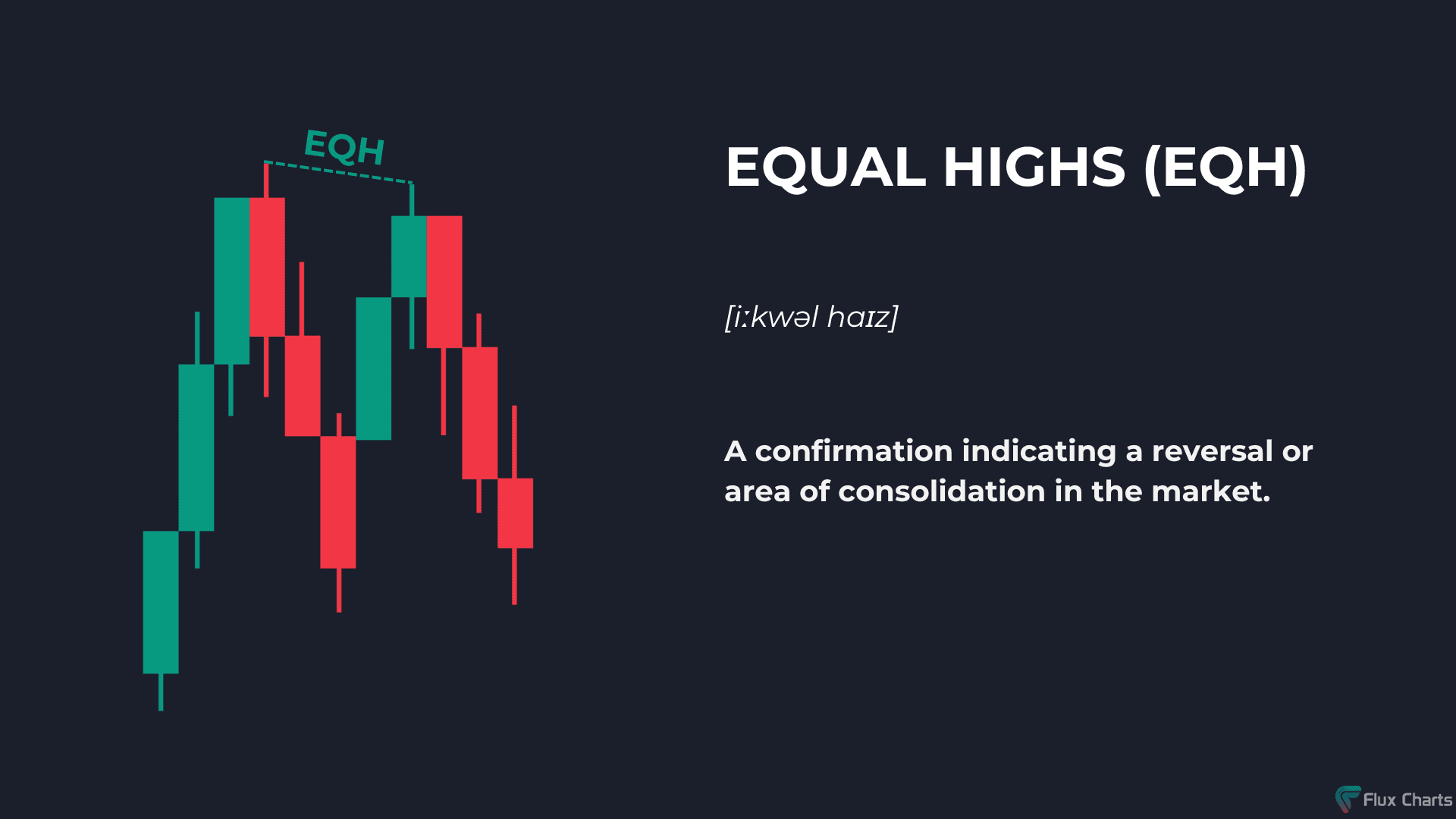
Equal High (EQH) is a trading concept used by price action traders (also known as SMC or ICT traders). EQH is a bearish indicator used to confirm a trend reversal or a consolidation area in the market.
How to identify the Equal High level (EQH)
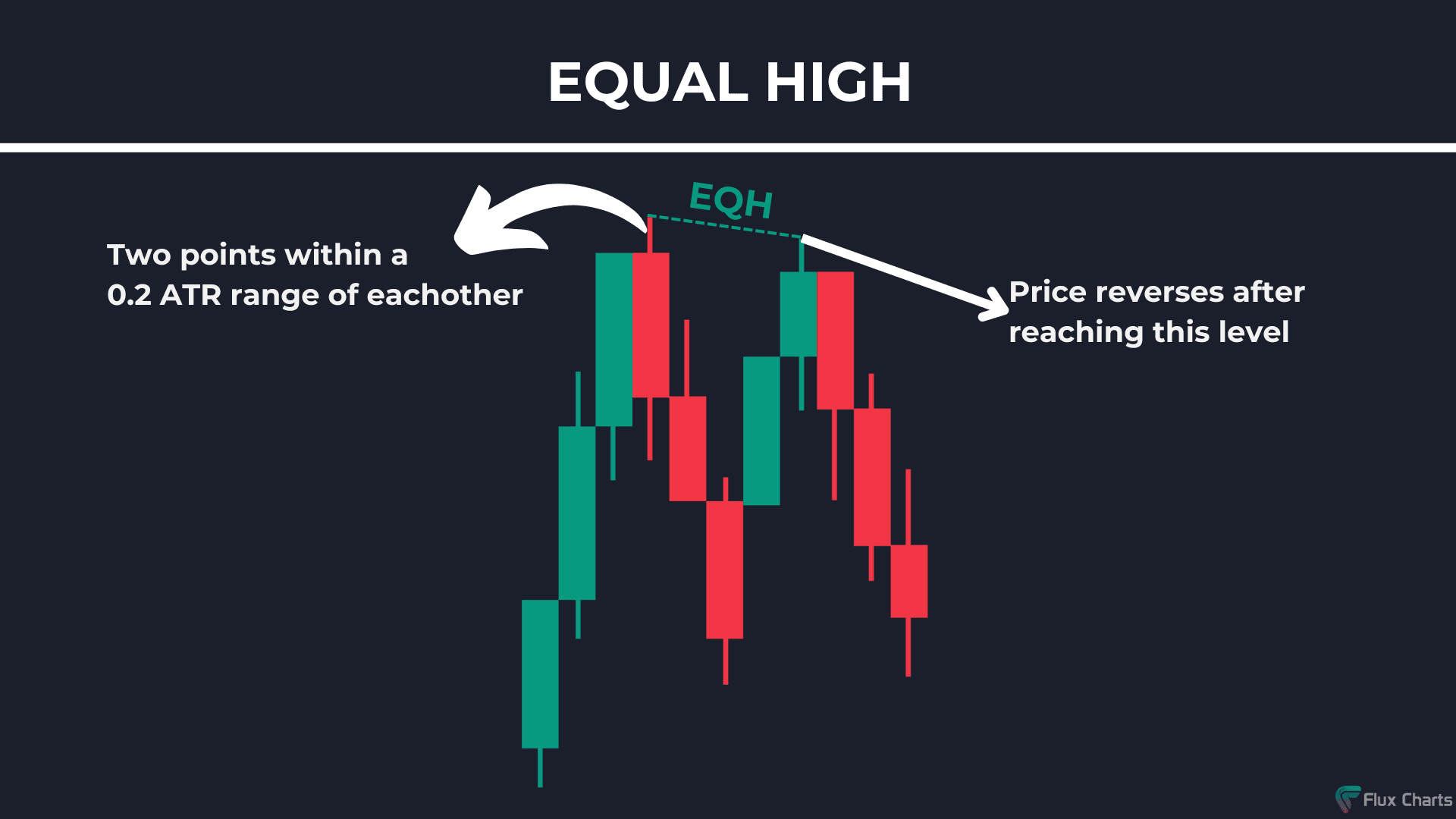
An Equal High level is determined by identifying a swing high level, then the price re-tests and later rejects it. The swing high level must be higher than the candle that is re-testing the level.
Trading using an equal high (EQH)
Equal highs are not used as entry and exit points but rather as confirmation of a reversal in the current market direction. This means that when an equal high forms on the chart, traders can adopt a bearish bias and only look for short-term entry opportunities.
A common strategy using equal highs (EQHs)
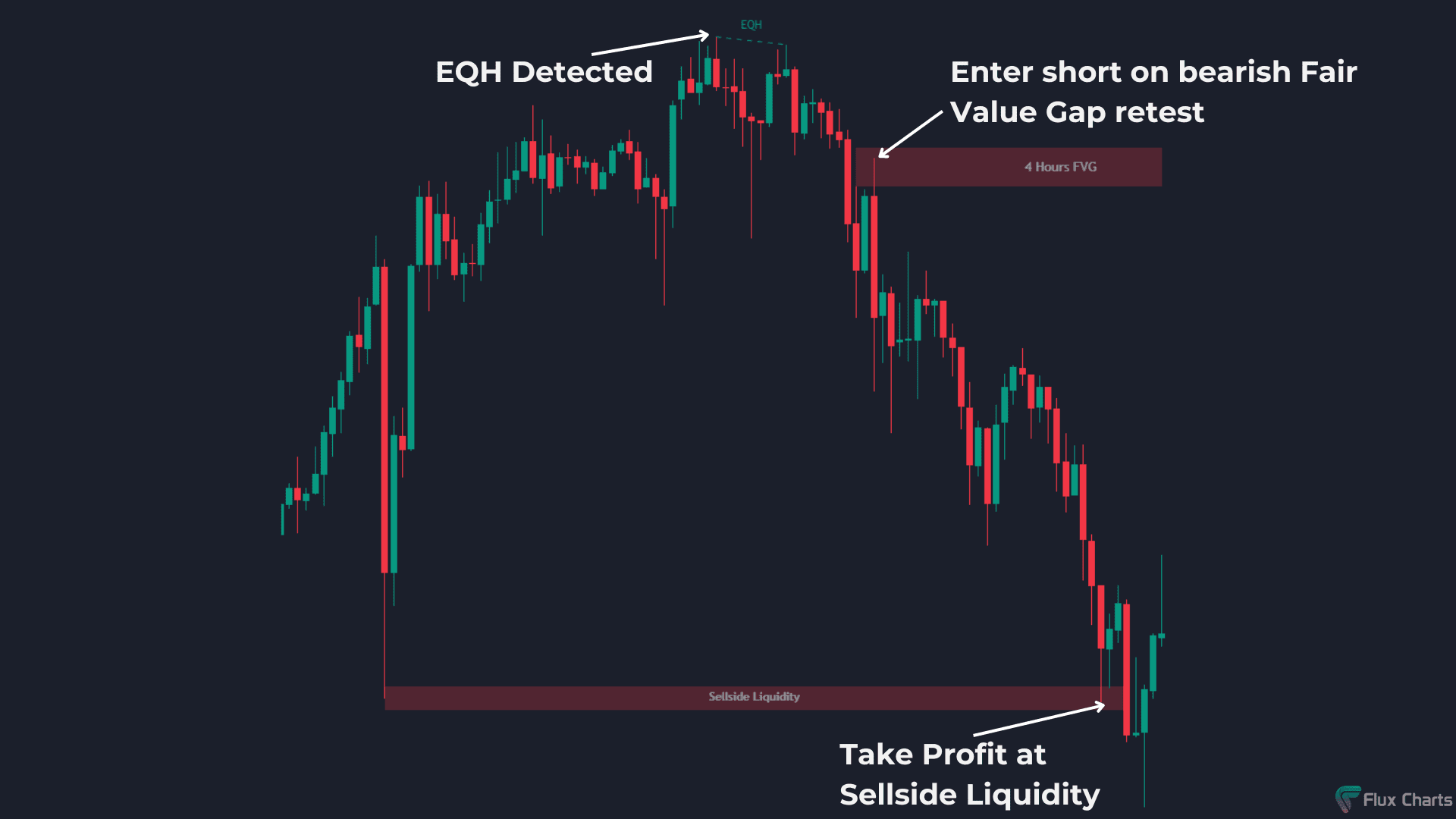
Equal highs (EQHs) are used in strategies that involve other price action formations. A common strategy is to use equal highs (EQH) with order blocks. Equal highs indicate a shift in market direction from bullish to bearish, allowing traders to look for short entry opportunities. A bearish fair value gap (FVG) retest can be used as an entry point after confirming the directional bias. The trader exits their position upon reaching key significant levels, such as a bullish order block, a support level, or buying liquidity.
What is the best timeframe to use Equal Highs?
The optimal timeframe for using Equal High indicators depends on the trader's style; day traders may prefer shorter timeframes, such as one minute to 15 minutes, while swing traders may find hourly or daily charts more beneficial. Longer timeframes typically provide more reliable signals by reducing market noise.
What is the common mistake when trading Equal Highs (EQHs)?
A common mistake traders make with equal highs is failing to use other forms of price confluence to enter their trades. Traders should build their strategies based on systems with specific conditions to increase their chances of winning; entering short positions based on a single bearish indicator may lead to losses.
How accurate are Equal High indicators (EQHs) at predicting future price movements?
Equal highs represent reliable indicators of resistance and market reversals, but they are best used in conjunction with other forms of confluence such as bearish fair value gaps, bearish order blocks, supply zones, etc.


