

Bitcoin is currently trading in the range of $92,082–$92,540. The price has moved within a narrow band during the past 24 hours, showing typical volatility of around one to two percent. Bitcoin returned to this level after a highly unstable week in which the price first dropped below $86,000 and later climbed back into the low-to-mid $90,000 range. This recovery highlights Bitcoin’s ability to rebound quickly when sentiment shifts in its favor.
The recent rise has strengthened Bitcoin’s position as the world’s largest cryptocurrency by market value. The price movement has drawn attention from traders, institutions, and analysts who continue to monitor market signals for clues about the next major direction.
Recent Market Movement
Earlier in the week, Bitcoin fell below $86,000 amidst a strong risk-off tone across global markets. Investors were shying away from speculative assets amidst growing concerns about economic conditions, thus paving the way for a broad sell-off. After this sharp dip, Bitcoin regained momentum. Within a span of about two days, Bitcoin recorded an impressive jump of nearly 11%, marking one of its most significant upward moves since May 2025.
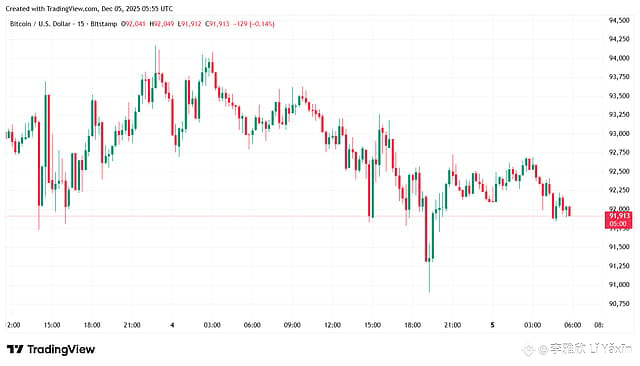
This rebound pushed the combined value of the entire cryptocurrency market to nearly $3.13 trillion. Bitcoin's market dominance climbed to around 59.1%, showing that fresh capital was flowing mainly into the most established digital asset rather than smaller alternative coins. Many analysts described the comeback as a sign that confidence in Bitcoin remains strong even during phases of heavy market pressure.
Also Read: Bitcoin Crash: Who’s Emerging as the Big Winner?
Why Bitcoin Rebounded
Interest-Rate Expectations and Their Impact
A major reason for the jump was a renewed expectation of a possible interest-rate cut by the United States Federal Reserve. Lower rates tend to brighten market sentiment since borrowing becomes cheaper and liquidity improves. Financial markets generally respond well to such conditions, and the crypto market is often among the first to reflect the shift in sentiment. Such optimism enabled Bitcoin to rapidly recoup losses after an earlier fall.
Higher Institutional Participation
Another key driver has been the consistent growth in institutional involvement. The number of asset managers and investment houses launching cryptocurrency-related products is also growing, which exposes Bitcoin to large investors. Analysts said that was a long-term structural shift. Greater involvement from incumbent institutions tends to inject stability, deeper liquidity, and greater trust into the market.
Bitcoin Price Prediction
Several financial analysts still feel bullish about the long-term prospects for Bitcoin. Analysts at JPMorgan Chase & Co. recently said Bitcoin could reach $170,000 over the next six to twelve months. The basis of this estimate is the idea that Bitcoin may increasingly act like gold, particularly as volatility decreases over time. A price model comparing Bitcoin with gold suggested the current level leaves considerable scope for substantial medium-term growth.
Bitcoin recently fell back from its all-time high above $126,000, and according to some analysts, the pullback was a healthy correction instead of relative weakness. In this view, Bitcoin's current range offers a favorable long-term positioning for investors who believe in the digital store-of-value narrative.
Financial planners encourage exposure cautiously. As cryptocurrencies are volatile, many professionals suggest crypto holdings should make up only a small portion of an overall investment strategy. Some recommendations range from 1% to 5% of a portfolio to keep risk tempered while still capturing potential long-term gains.
Risks That May Influence Price Direction
Bitcoin still carries a number of key risks. The first, and most visible, is ongoing volatility. Large price swings can occur in minutes; sudden losses are possible. Volatility could spur liquidation events-a forced closure of leveraged positions-that puts pressure on the market and accelerates downward moves.
Another hugely important factor driving cryptocurrencies is regulatory uncertainty: government decisions, taxation rules, and policies set by central banks could quickly and directly impact Bitcoin's price. Any regulatory action that restricts trading or reduces market participation may create immediate downward pressure.
Large institutional holders also influence the market. If a large company with significant Bitcoin reserves encounters financial difficulties or decides to reduce its holdings, the sell-off will definitely depress prices across all exchanges worldwide.
Effect on the Wider Crypto Market
Large price movements within Bitcoin generally set the tone for the entire cryptocurrency market. When Bitcoin rises, many smaller digital assets also grow due to strong correlations. When Bitcoin falls, alternative cryptocurrencies see steeper declines. This leadership role makes Bitcoin the central indicator of overall crypto-market health.
A steady or rising Bitcoin price generally instills confidence across the digital-asset landscape, attracting new investors, fostering innovation, and expanding awareness of blockchain technology. Yet frequent price swings will remind the market that cryptocurrencies operate in a developing, highly speculative environment.
Also Read: Will Bitcoin Benefit From Rising Inflation? Here's the Truth
Final Thoughts
The strong rise of Bitcoin from below $86,000 to over $92,000 reflects the toughness and resilience this cryptocurrency has gained through time, its ability to recover swiftly after downturns. Thus, the current range between $92,082-$92,540 reflects a balance between optimism and cautiousness as traders watch economic signals, institutional activity, and regulatory developments.
Forecasts like the $170,000 target among major analysts impart a certain confidence in Bitcoin's long-term potential. Still, volatility, economic uncertainty, and regulatory risks continue to govern the market. The next few months will show whether the recent rebound is the beginning of a new long-term upward trend.#BTC86kJPShock #BinanceBlockchainWeek #BTCVSGOLD #TrumpTariffs #Binance $BTC
