
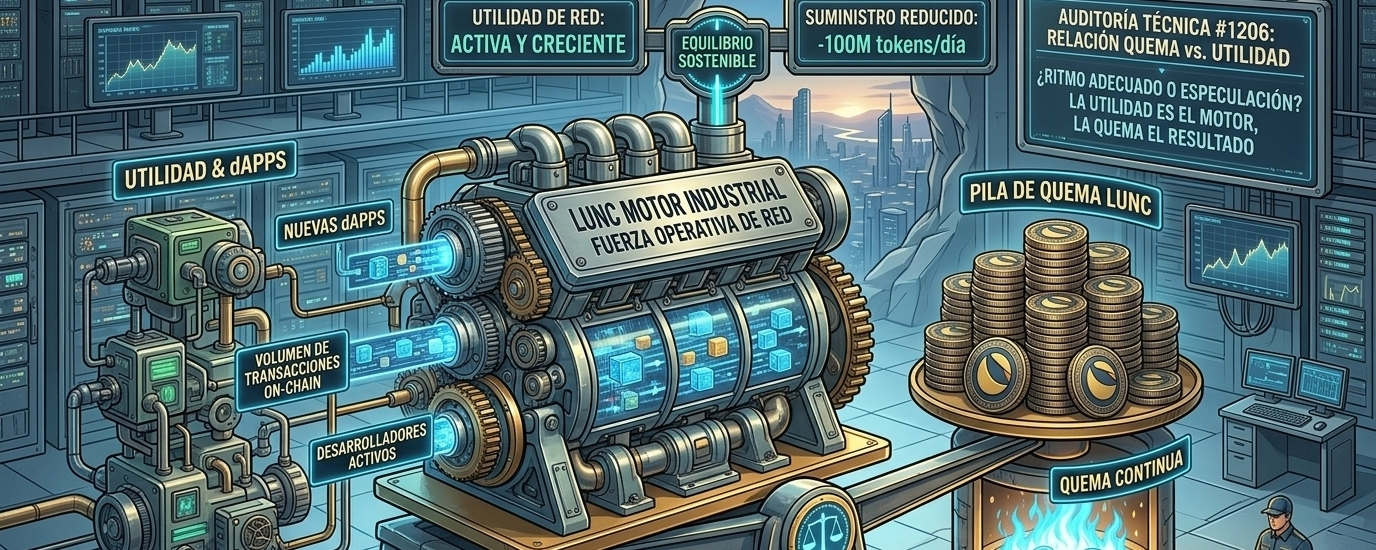
The debate around the burn velocity of $LUNC has heated up again. The question isn't whether burns are happening, but if the current pace is enough to significantly alter the supply structure before the narrative loses steam.
1. The speed dilemma
The current burn rate is largely dependent on the on-chain transaction volume. Here's the kicker:
If we burn too fast without utility: We create an artificial deflation that could spook liquidity providers (LPs), reducing market depth.
If we burn too slowly: The community loses the perception of scarcity, and with it, the interest.
2. Is the pace right?
From a network audit perspective, the current pace is a 'survival pace.' It's enough to keep governance active and community interest, but insufficient to reduce the supply to levels that impact the price on their own.
3. The truth about larger burns
Generating 'larger' burns isn't an admin decision; it's a result of operational activity. To burn more, we need:
Massive increase of applications on the network (dApps).
Increased capital flow through bridges.
Real volume on the DEX, not just speculative trading on the CEX.
Technical conclusion:
Forcing larger burns through excessive taxes can backfire, driving away developers looking for low-cost ways to build. The real catalyst isn't burning more, but building more. Burning should be a result of a utilized network, not the goal of a stagnant one.
Does the market prefer a massive burn today or a functional ecosystem tomorrow? The answer will define the next LUNC cycle. 🧱⚖️
#LUNC #TerraClassic #BinanceSquare #CryptoAnálisis #ElPanaBuilder
⚠️ Warning: This analysis is technical and informative. It does not constitute financial advice. The crypto market is highly volatile. Do your own research (DYOR) before making any investment decisions.
