
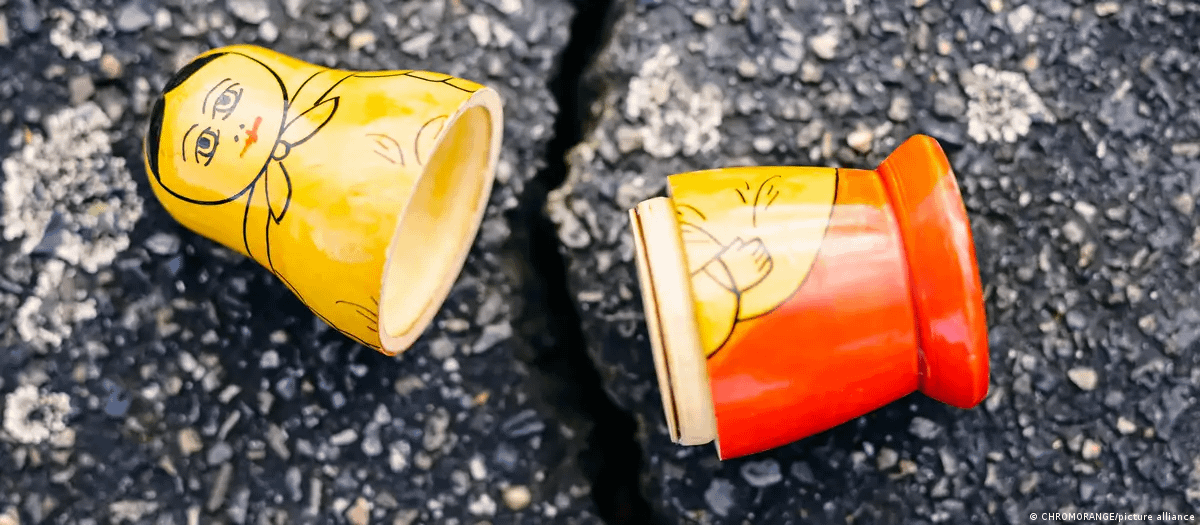
Russian authorities are continuing to seize private companies for state ownership. This process, which experts have dubbed "nationalization," gained momentum after Russia's military invasion of Ukraine and has currently affected hundreds of enterprises, with assets valued at several trillion rubles. However, this doesn't mean the state has become wealthier by that amount.
The authorities manage seized property in different ways. Some are transferred to state companies or 'court' businessmen. Some assets remain in state ownership. However, attempts to sell nationalized enterprises at their market value through open auctions and thereby replenish the budget consistently fail.
A fresh example is the latest, already third, unsuccessful auction for the sale of the company 'Yuzhuralzoloto', whose shares were redirected to state income nearly a year ago. Once again, there were no bidders for one of the country's largest gold producers. Previously, only on the second attempt and at half the initial appraisal was the Domodedovo Airport sold. Why this is happening is detailed in the DW material.
The scales of nationalization in Russia.
Since 2022, the Russian state has seized assets from private owners totaling 6.5 trillion rubles, calculated the law firm Nektorov, Saveliev & Partners (NSP). This statistic also includes assets seized from foreign owners after the start of the war against Ukraine. The process is accelerating: if in 2024, according to NSP, nationalization affected assets worth a total of 690 billion rubles, in 2025 it was already 3.12 trillion.
The General Prosecutor's Office mainly handles asset seizures. According to its data, the scale of nationalization in Russia is even broader. In 2025, property worth over four trillion rubles, including strategic enterprises with a total capitalization of around two trillion, transitioned to state ownership due to the office's claims, stated General Prosecutor Alexander Gutsan in March.
Rosimushchestvo, which manages nationalized property, reported on the progress of the process for the first time in March. According to the head of the agency Vadim Yakovenko, since 2022, 'about 805 companies have entered state ownership.'
Five models of nationalization.
As a rule, cases of nationalization develop rapidly: from the filing of a claim by the Prosecutor's Office to the actual seizure of assets takes on average only a couple of months. The mechanisms are already established.
Managing partner of the law firm 'Pavel Khlyustov and Partners', Pavel Khlyustov, who represented the interests of several entrepreneurs affected by nationalization in court, highlights five main legal models used by the state.
Assets can be seized in repayment of debts to the state. This may relate to fiscal liabilities, or, for example, causing environmental damage or other property harm. Another basis is violations of anti-corruption legislation. In such cases, property is seized as illegally acquired. The nationalization of a strategic enterprise can be justified by the owner's foreign citizenship or even residence permit. In some cases, businessmen have been accused of extremist activities or financing banned organizations in Russia. Finally, the state is actively challenging the results of past privatizations. Often, the same lawsuit from the Prosecutor General's Office includes a set of grounds: both illegal privatization and corruption, and being 'under foreign control'.
How the state manages nationalized property.
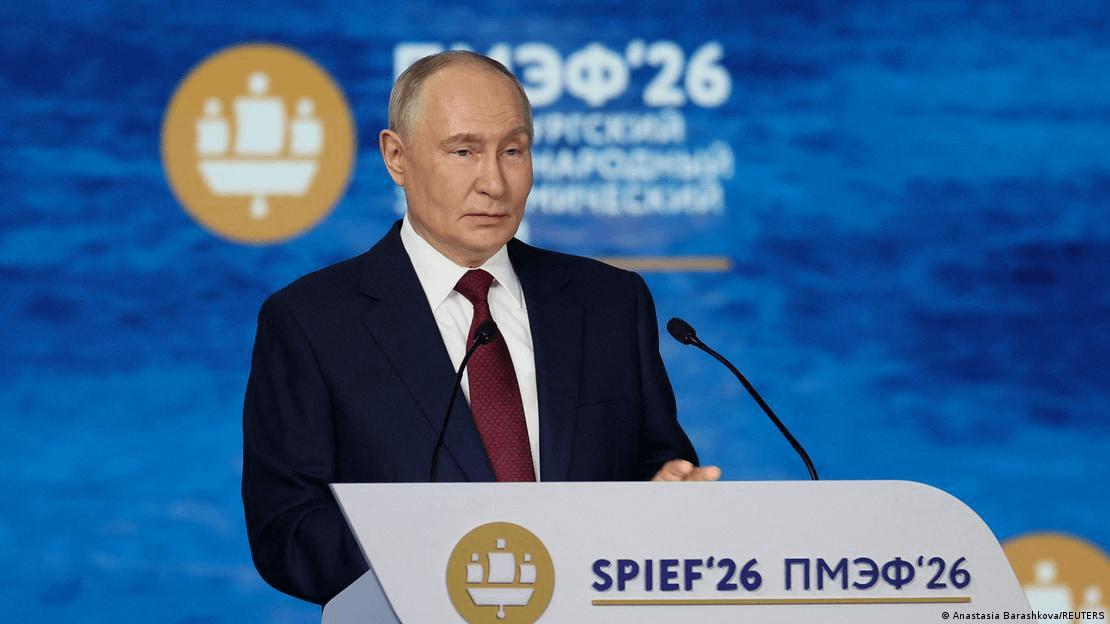
Everything that has already been nationalized must be re-privatized, authorities assert. 'We will sell them (nationalized assets - Ed.) - such tasks have been set for Rosimushchestvo: not to hold, not to manage, we do not need such a state economy,' emphasized Finance Minister Anton Siluanov while speaking at the St. Petersburg International Economic Forum in June.
However, the volumes of re-privatization are incomparable to the scales of nationalization - especially if we rely on the assessments of the Prosecutor's Office. According to Rosimushchestvo, in 2025, the budget revenues from the sale of nationalized assets amounted to only 84.2 billion rubles. In 2026, the Ministry of Finance expects to raise 'at least 100 billion rubles', Siluanov mentioned in February. The Minister expressed confidence that, in practice, 'this figure will be significantly increased, exceeded'.
Considering that in January the state sold the nationalized Domodedovo Airport for 66.1 billion rubles, the annual plan is likely to be fulfilled. However, exceeding it 'by several times' may not be possible: buyers for other assets are hard to find.
How auctions for the sale of nationalized assets are conducted.
On June 10, the third auction for the sale of 67.2% of the shares of 'Yuzhuralzoloto', one of the largest Russian gold mining companies, was declared unsuccessful due to a lack of participants. The fourth auction is planned to be held in a Dutch auction format, meaning the price will decrease by up to 50% from the initial level set at 162 billion rubles.
Previously, attempts to sell the leasing company 'Vector Rail' failed twice, for which the state hopes to receive 20.3 billion rubles. Nationalized assets from more than a year ago belonging to the commercial real estate operator Raven Russia, valued at over 90 billion rubles, also remain unsold. Issues also arise with smaller assets - for example, no one has shown interest in acquiring the Krasnodar agro-complex 'Teplichny', which is valued at 2.8 billion rubles.
Even the sale of Domodedovo Airport, which ensured the completion of the privatization plan for the year by two-thirds, can hardly be called successful: initially, the state aimed to fetch 132.3 billion rubles for the asset - twice what it ultimately received.
Why nationalized companies are not being sold.
The weak demand for nationalized property has one universal reason - Russian businesses are fundamentally reducing investments. Their profitability is declining, and loans remain inaccessible due to high key rates. According to consulting company Kept, the total volume of mergers and acquisitions in the Russian market in 2025 was minimal over the last 20 years. But there are other reasons.
'The economic situation in the country is indeed not the best, but even under more favorable conditions, rational buyers would avoid such assets: deals with them create reputational, legal, and sometimes political risks - while the state prices them at market rates,' comments the managing partner of TriTrace, board member of Transparency International Russia, Ilya Shumanov.
However, the market price is not set for everyone. The auction is just one of the options for realizing nationalized property.
How seized assets are handed over to 'proper' owners.
Some assets are handed over for management or sold at prices below market value (as a rule, the first precedes the second), without conducting any auctions.
'A transparent logic that could explain to the public why one enterprise is put up for auction while another, for instance, is handed over to a private company, is absent,' notes Pavel Khlyustov. 'Undoubtedly, decisions are not made arbitrarily, but they are based on a combination of factors that are not defined by law and boil down to internal convictions about the expediency from the perspective of those making such decisions.'
Thus, without participating in open bidding, control over a whole group of chemical enterprises was obtained by the previously less-known company 'Roskhim', which the media links to businessman Arkady Rotenberg, a long-time friend of Russian President Vladimir Putin. Significant agricultural assets - such as the largest pasta and flour producer in Russia 'Makfa' or the agroholding 'Ariant' - are being gradually acquired by Rosselkhozbank.
'The fiscal motive in the authorities' actions is certainly present, as the Ministry of Finance and Rosimushchestvo regularly mention, but it is not the only one and often - not the main one,' believes Ilya Shumanov. 'It cannot be justified that the seizure of property is due to the state lacking funds for war or social obligations. In my opinion, the main motive is the redistribution of assets in favor of 'proper' owners.'
#WorldNews2026 , #FinancialNews
All the most interesting financial news for our regular readers, subscribers, and guests of our group!!