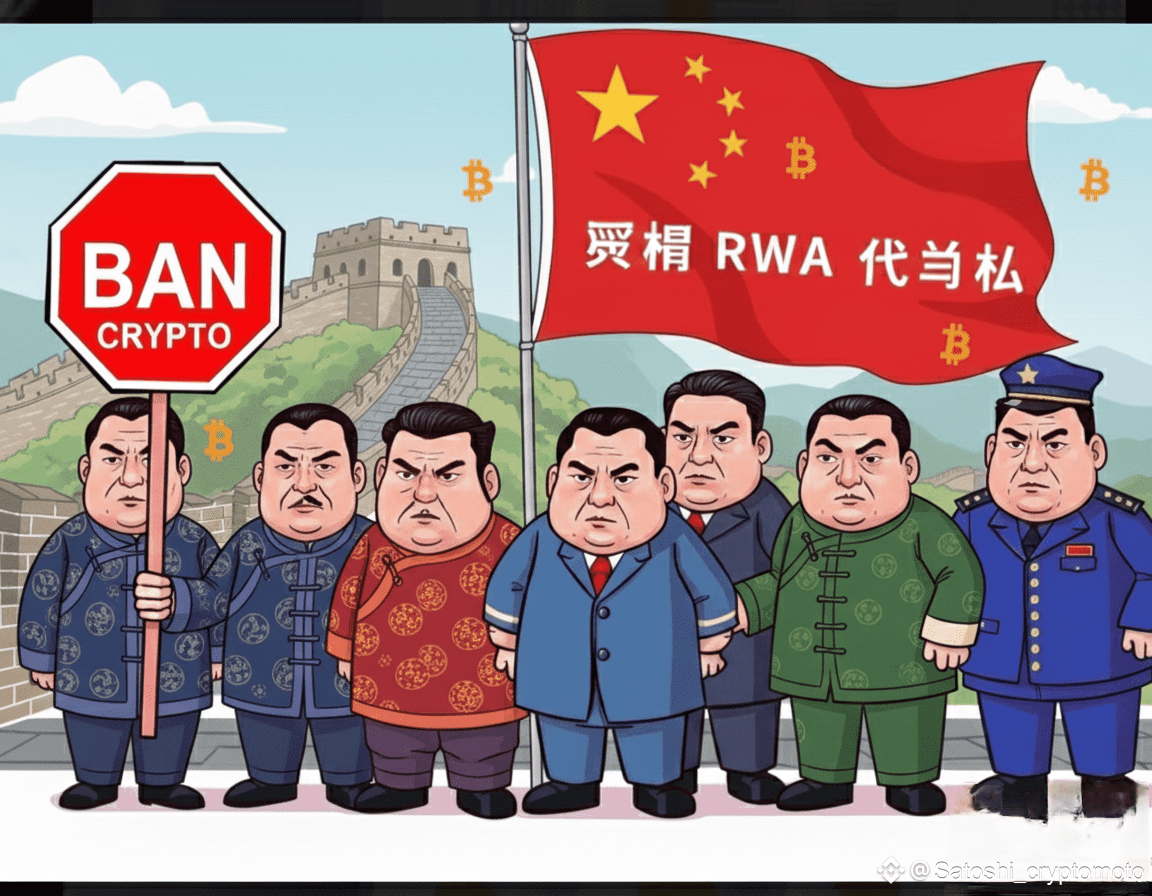
China has once again made its stance on digital assets unmistakably clear. A coalition of seven influential financial associations has issued a strong nationwide alert targeting the crypto ecosystem — with a sharp focus on Real-World Asset (RWA) tokenization, a rapidly emerging trend in blockchain finance.
This coordinated announcement sends a powerful message to global markets: China’s crypto ban isn’t merely active — it is intensifying.
🔍 What Exactly Did They Warn About?
On December 5, organizations including the China Internal Finance Association, through state media Xinhua, delivered a decisive directive:
> Citizens and entities are prohibited from engaging in, supporting, or promoting any form of RWA tokenization.
But the warning did not stop there. All cryptocurrency-related commercial activities remain fully illegal inside China. The ban specifically covers:
❌ Stablecoin issuance and trading
❌ Crypto promotional activities & airdrops
❌ Digital asset mining operations
❌ Any platform enabling RWA tokenization
China continues to enforce the principle that virtual assets do not hold the same legal status as the Chinese Yuan, and therefore cannot serve as lawful currency within the economy.
🧩 Why Is China Targeting RWA Tokenization?
RWA tokenization — converting physical asset ownership into blockchain-based tokens — is considered a breakthrough bridge between traditional finance and decentralized markets. Globally, it is one of the fastest-growing Web3 sectors.
However, Chinese regulators see this innovation quite differently:
➡️ A threat to financial stability
➡️ A potential channel for capital flight
➡️ A challenge to state-controlled monetary sovereignty
To the government, RWAs represent a backdoor through which crypto could regain influence over domestic finance — something Chinese authorities are determined to prevent.
📌 Not New Policy — But a Strong Reinforcement
This latest warning is aligned with earlier directives from the People’s Bank of China (PBOC). It serves two purposes:
1️⃣ Clarification
Removing ambiguity around newer crypto trends like RWA tokenization.
2️⃣ Deterrence
Sending a clear caution to both Chinese citizens and international companies:
China will not allow crypto-linked financial innovation within its jurisdiction — in any form.
🌍 What Does This Mean for the Global Crypto Market?
China’s unwavering approach creates a stark division in global regulation:
Regions Tightening Restrictions Regions Encouraging Innovation
China UAE, Singapore, Hong Kong (to some extent), USA & Europe
Excluding China — one of the world’s largest consumer and capital markets — could:
Reduce potential liquidity for RWA-focused ecosystems
Reshape strategic expansion for global Web3 companies
Accelerate innovation in more crypto-friendly regions
For any project seeking Chinese participation:
The door remains firmly closed.
🧭 Conclusion: China Stands Its Ground
This coordinated move by China’s top financial associations confirms one consistent reality:
> China will prioritize state control over digital-asset innovation — no exceptions.
By naming RWA tokenization alongside stablecoins and mining, regulators are closing every possible loophole before it even opens.
For investors and industry builders worldwide, the message is clear:
Understanding jurisdictional risks is no longer optional — it’s essential.
China’s path remains strictly separate from the global crypto evolution.
❓ Frequently Asked Questions (FAQs)
Q1: What is RWA tokenization?
It’s the digitization of ownership rights for real-world assets (e.g., real estate, gold, invoices) into blockchain tokens for trading or investment.
Q2: Why is China against it?
Regulators believe it can undermine financial control, destabilize markets, and challenge the authority of the Chinese Yuan.
Q3: Are all crypto activities illegal in China?
Yes — any crypto-related business is banned.
(Privately owning assets abroad exists in a gray area, but trading platforms are blocked.)
Q4: Does this affect global markets?
It reinforces China as a closed market, impacting sentiment and liquidity for crypto sectors like RWAs.
Q5: Have there been recent crackdowns?
Yes. The PBOC continues to intensify enforcement against illegal virtual-asset activities.
Q6: Could China change its crypto stance?
There is always a possibility — but current policies suggest no near-term shift.
If you found this regulatory update important, share it across your social channels to keep others informed. The crypto landscape is shifting fast — awareness is key
🚀 Stay updated with our global regulatory coverage and industry insights — because information is your greatest investment.
@Professor Mike Official @BlockchainBaller @Quiiii - Fast News @