

You are in a hurry to send 10,000 USDT to your secondary wallet or a partner. Since the address is too long and impossible to memorize, you are lazy to type. You open your Transaction History, seeing the latest transaction from a familiar wallet. You do a quick check First 4 chars match , Last 4 chars match. Good enough. You Copy, Paste, and send the 10,000 USDT. Boom. The money is gone to a Hacker wallet. Irretrievable. Welcome to the Address Poisoning trap.
🔸 This is not a Blockchain bug; it is a brain hack on users:
Hackers use Bots to scan network transactions. They spot you sending funds to wallet A.
The Hacker uses software to generate a new wallet address with the EXACT SAME prefix and suffix as the real one.
The Hacker uses the fake wallet to send you a spam transaction of 0 USDT or worthless dust tokens.
This spam transaction appears AT THE TOP of your transaction history.
Next time you need to transfer, due to the habit of copying from history and only checking start/end, you mistakenly copy the Hacker address.
🔸 Why Do We Fall For It?
The human eye tends to ignore the middle of long strings and relies on start, end points for pattern recognition.
Many wallets truncate the middle of addresses, making the real and fake wallets look identical on mobile screens.
🔹 How to Avoid Losing Money from Address Poisoning:
Never Copy from History.
Save frequently used addresses to Whitelist or Contacts in your wallet with nicknames. Only send to saved contacts.
Always verify 4-5 characters in the MIDDLE of the address, or the full string for large amounts.
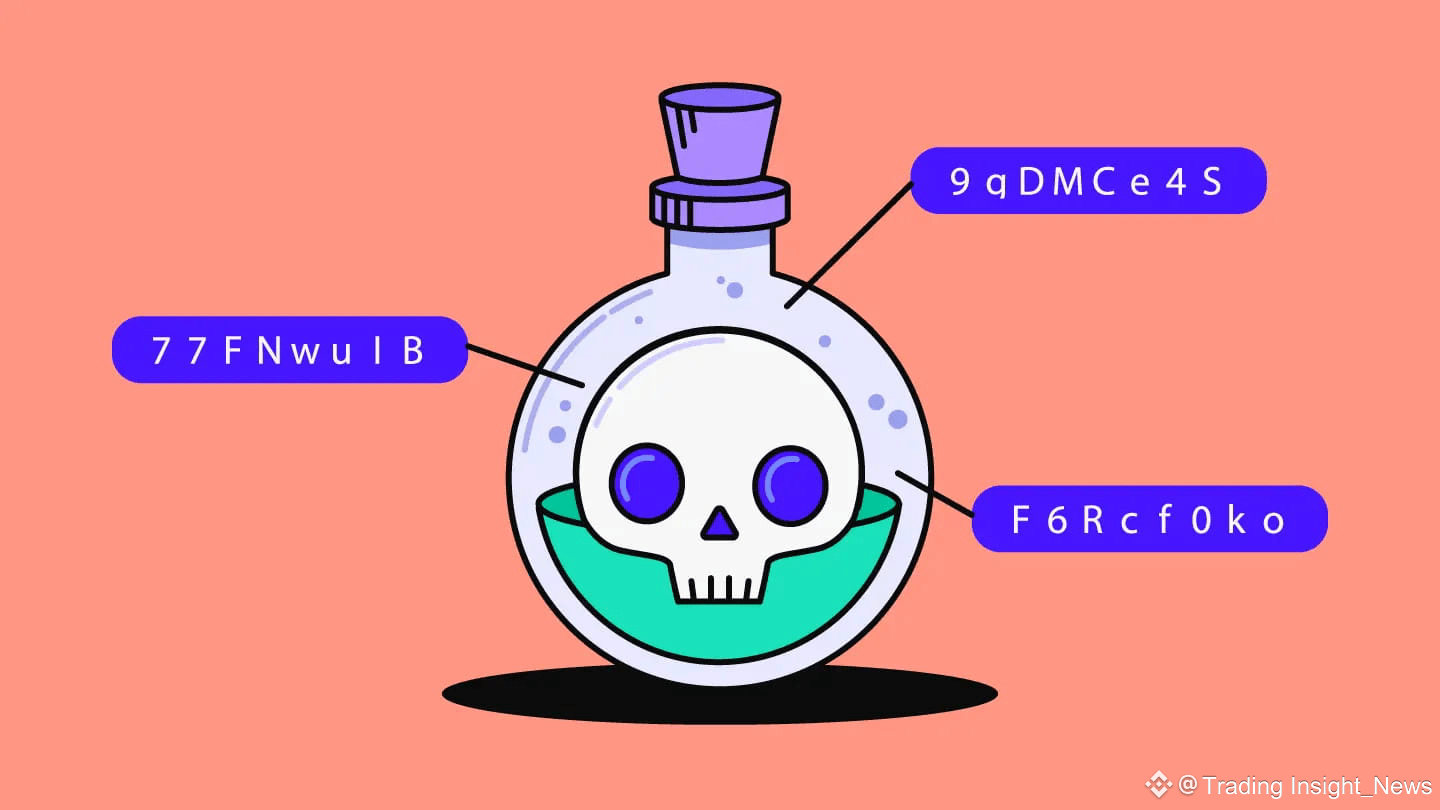
Do you have the habit of glancing at the last 4 digits and hitting send? Change that before it is too late.
News is for reference, not investment advice. Please read carefully before making a decision.
