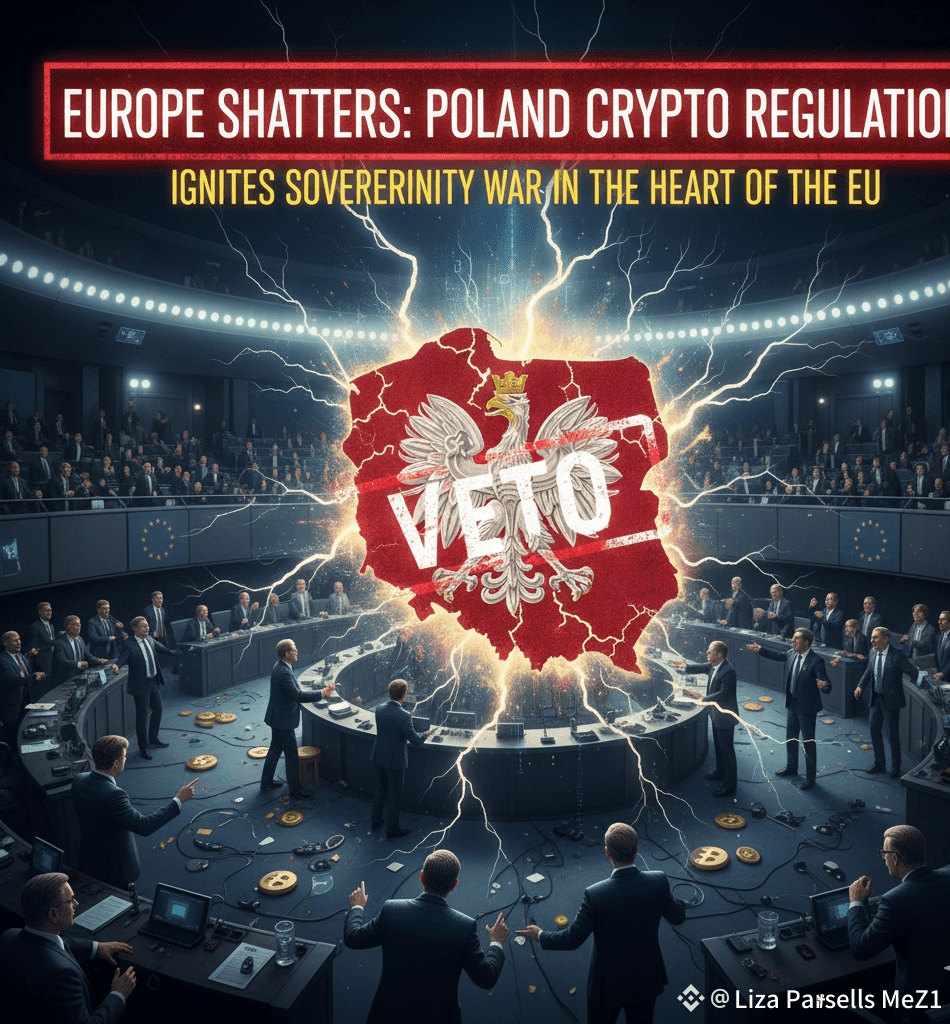
Europe’s ambitious plan for unified crypto oversight took a dramatic turn this week. Poland’s parliament rejected legislation aligned with the EU’s MiCA framework, citing national security and foreign influence concerns.
The vote has rocked Brussels. Officials expected compliance across member states, but Poland’s defiance exposes a fault line that could fracture EU regulatory unity. Analysts warn this move might inspire other nations to claim crypto regulation as a matter of sovereignty, potentially derailing years of planning for a harmonized digital asset market.
The stakes are enormous. Investors rely on predictable rules for cross-border trading. Exchanges risk legal uncertainty. And the MiCA framework itself now faces its first existential threat.
Poland’s statement was unambiguous: Crypto is not merely finance — it is a matter of national defense. Europe must now navigate the uneasy balance between centralized oversight and sovereign independence, while the continent’s crypto market holds its breath.