

How an oracle focused on real signals can reconfigure the interpretation of risk in increasingly volatile markets.
Financial risk has always been an art between statistics and intuition. But in a global market where cycles accelerate and data fragment, intuition is no longer enough.
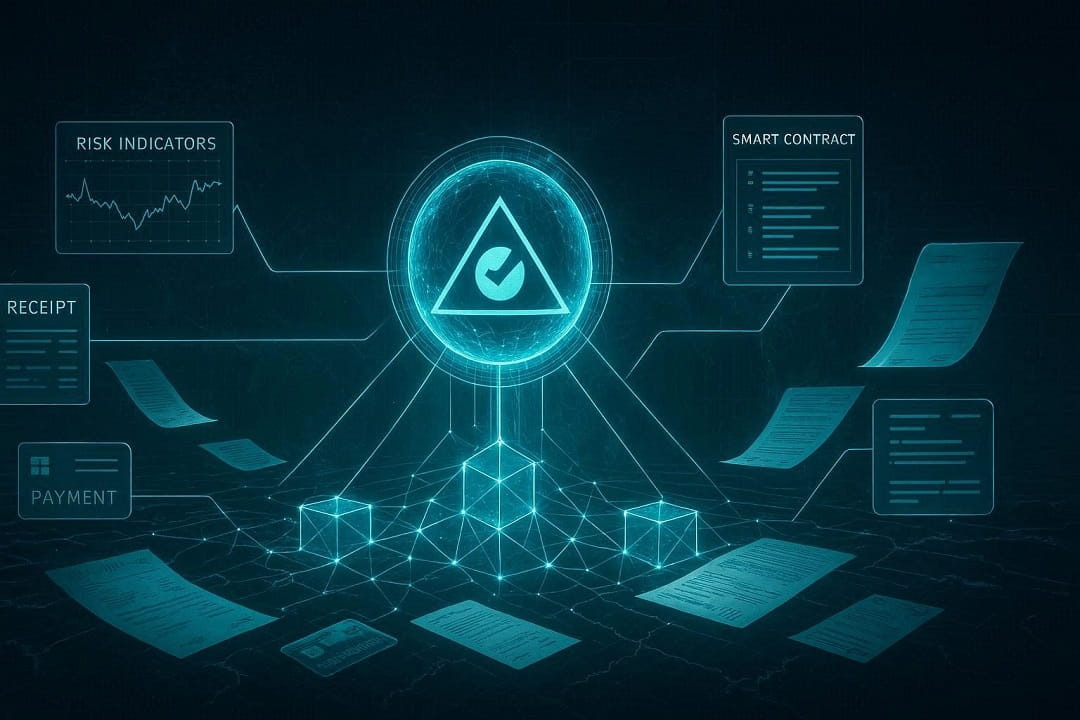
APRO emerges as a player that reorganizes the board: an oracle capable of transforming scattered data, on-chain and off-chain, into structured, verifiable, and actionable signals. It's not just about 'bringing information on-chain', but redefining how risk is measured, interpreted, and updated in real time.
A new compass for measuring volatility
Dynamic data: APRO allows for the incorporation of signals that reflect real behavior, reducing absolute dependence on traditional metrics (historical volatility, liquidity, correlations).
Contextual interpretation: not all data is equally valuable; APRO normalizes them so that smart contracts can 'understand' them without ambiguity.
Reaction times: in markets where an hour is already late, constant updating becomes part of the risk itself. APRO shortens that lag.
Transformation for DeFi protocols
Pools that automatically adjust rates based on macro stress or changes in user behavior.
Loans with flexible parameters where the LTV is recalibrated by verified signals.
Insurance that activates or deactivates coverage based on data validated by the oracle network.
Hybrid products that combine off-chain data (billing, payments, consumption) with on-chain history.
Why does this matter at a systemic level?
Less asymmetry: when everyone has access to clear data, efficiency improves and the cost of capital decreases.
Greater resilience: protocols that integrate multi-source signals anticipate shocks rather than reacting late.
Technological inclusion: new categories of users can participate because risk is understood from more angles and not just from 'hard collateral'.
Challenges: the other side of the map
Quality standards: without strict validation rules, more data does not mean better risk.
Governance and auditing: oracles must be auditable to sustain systemic trust.
Competition between models: different protocols can interpret APRO's signals divergently; coordinating standards will be key.
Conclusion
APRO does not compete with traditional models: it expands them. In a market where risk has become multidimensional, the ability to transform real data into verifiable information can make the difference between capturing opportunities… or losing them.
Do you think the future of risk management will be more automated or more human? 🤔
⚠️ Disclaimer: This content is for educational and informational purposes only. It does not constitute financial advice. Do your own research (DYOR).


