Is the market looking at money instead of interest?
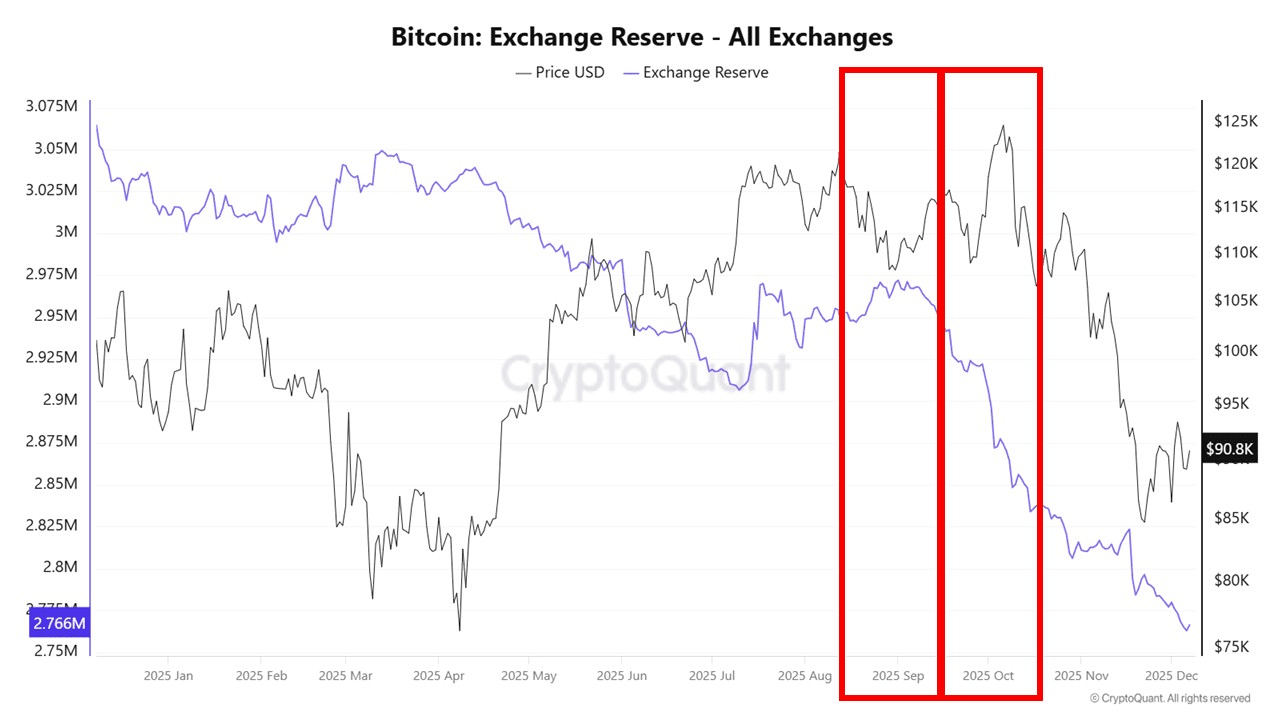
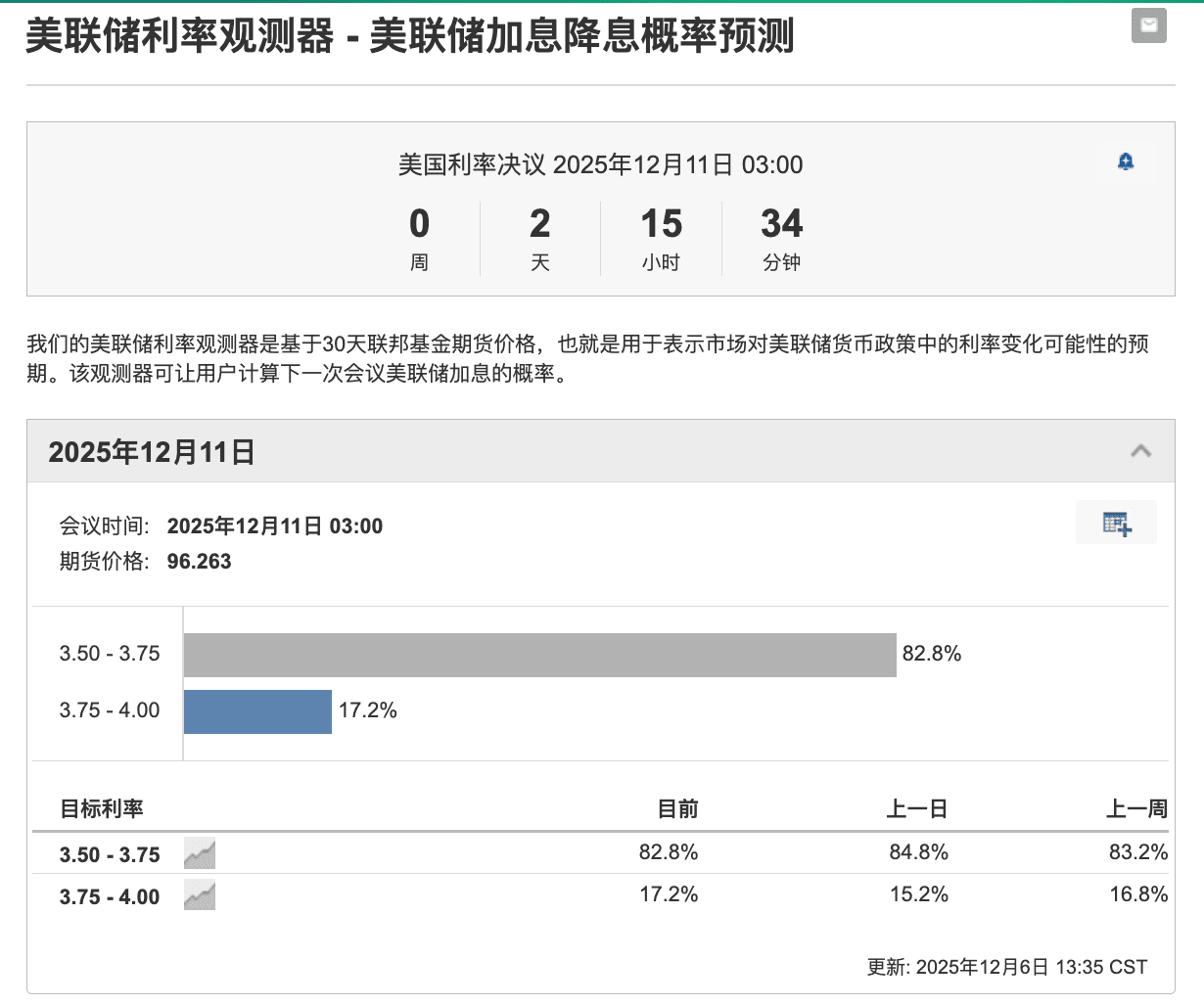
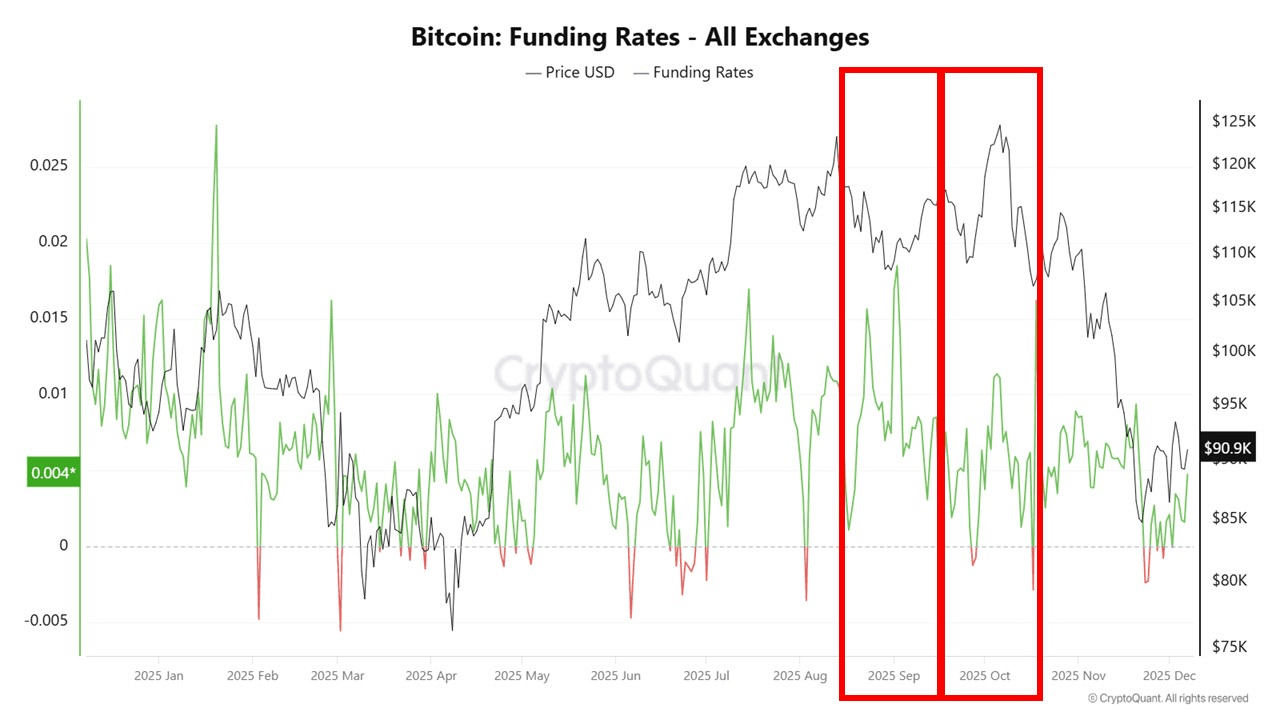
The FOMC is about to meet again, and the market is now basically treating a "25bp rate cut" as the answer, with an 82.8% probability. But the question has never been whether they will cut rates, but whether Bitcoin will experience another "rise then fall". September and October are living textbooks: before the news is released, it surges quickly, but once the news is out, it drops even faster, thoroughly exemplifying "buy the expectation, sell the fact". Will this time be the same? Watch two things: is money coming in, and is leverage blowing up? If exchange reserves increase, Bitcoin is more resilient; if reserves drop, any rebound relies solely on hype. Once the financing rate turns positive, it indicates that bulls are all crowded at the door waiting for a meal, and any fluctuation could lead to liquidation and being kicked out. If the funds remain neutrally stable, the market's temperament will naturally be much more stable. So don’t place your bets on the meeting results; whether the market can perform well depends entirely on "is there money, and is leverage stable". If you want to live a little longer: first, reduce your positions and come up with three plans.
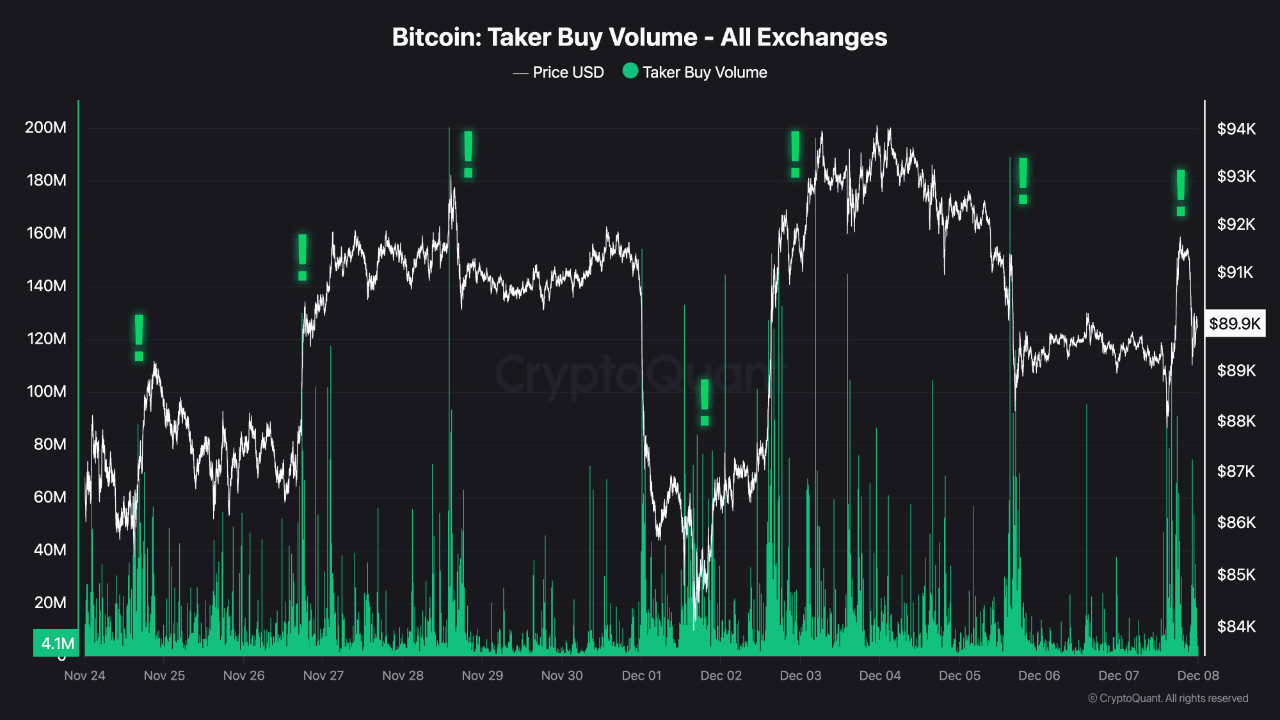
The buying surged but failed to push the price up.
In the past two weeks, Bitcoin has suddenly launched a 'buying competition' across the network. The Taker Buy Volume, regardless of price fluctuations, has surged significantly. Momentum traders are chasing buys, whales are taking advantage of the volatility to buy in, and shorts are being forced to cover. Each time the price drops sharply, the green bars instantly shoot up to the ceiling. The market's mentality of 'buying when it dips' is at an all-time high. The most exaggerated part is that as soon as the buying surges, the price quickly rebounds a bit, giving the impression that buyers want to regain control. But here’s the problem: as buying becomes more aggressive, the price moves slower, as if the strength is spent but there’s no speed generated. This usually means that market depth is thinning, and buying power is being dispersed, leading to a tired trend. Short-term it can hold, but if buying continues to 'idle,' the market is likely to shift from 'buying on dips' to a 'fatigue period where it can't push up.'
The chips are stable, and the panic is less.
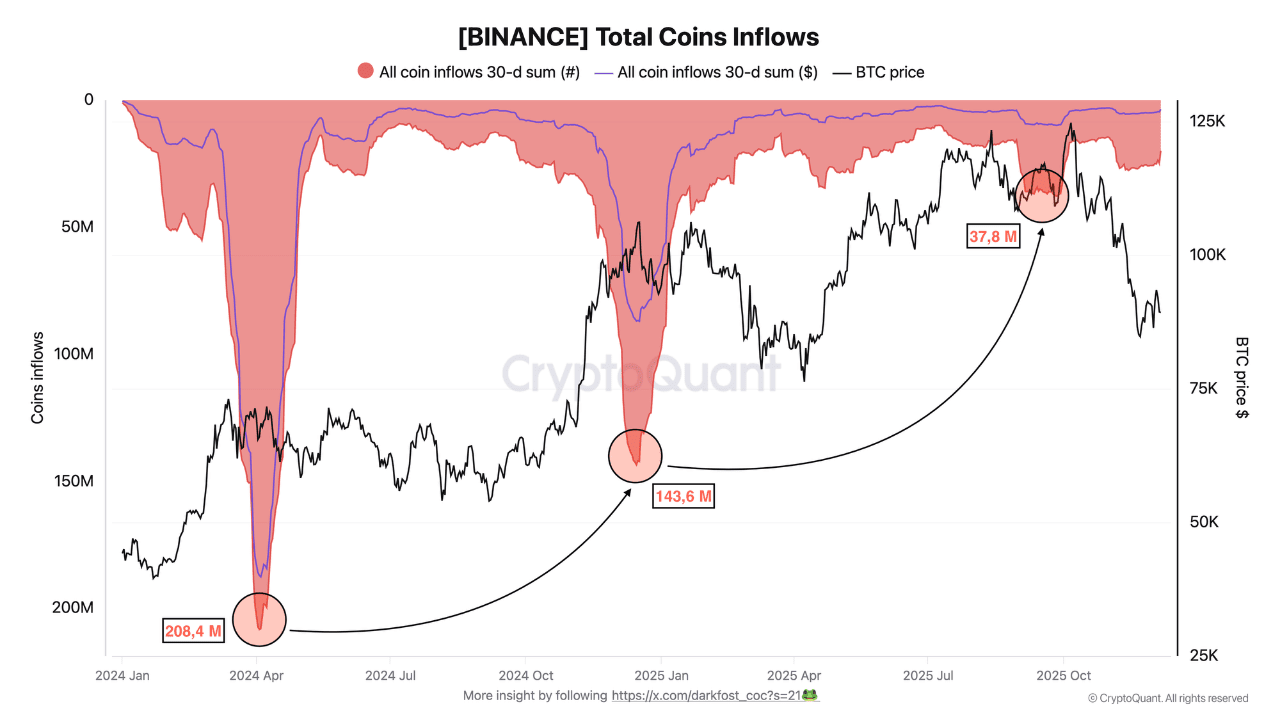
In the past two months, Bitcoin has dropped 36%, but the strangest part is not the severity of the drop, but that the market is not panicking at all! Looking back at those two major events in 2024: 4
When it turned around from $73,800 in April, the inflow to exchanges soared to 208 million coins; 12
When it broke $100,000 in December, it was also the same standard process of 'quickly rushing to the exchanges and cashing out.' But this time? It dropped deeper and for a longer time, yet the inflow was only one-fifth of the past peak, quiet as if everyone had forgotten the market was dropping. In other words, no one is rushing to exit, no one is throwing their chips onto the exchanges, long-term players are lying down and enduring the volatility, while the on-chain structure is surprisingly stable. This kind of 'cold inflow' is often a psychological rebalancing during a trend. As long as some incremental funds come in later, the rebound could suddenly accelerate. In short: prices are dropping sharply, but the mentality is astonishingly stable. This strange calm is usually not a bad signal; instead, it might be the prelude to the next big rebound.