

Original Title: (The Underground Ledger of Moscow Beyond SWIFT (Part II): Garantex, Cryptex, and the Shadow Settlement System)
Original Author: Anita (X: @Anitahityou)
Rhythm Note: This article is part of the 'Beyond SWIFT' series, with the previous article found here: (The World Beyond SWIFT: Russia and the Secret Economy of Cryptocurrency). The following is the main content:
Three years after the West severed Russia's connection to SWIFT, the Kremlin has not been plunged into financial suffocation. On the contrary, a massive 'shadow financial machine' is operating within the Moscow Federation Tower.
This machine no longer relies on JPMorgan and does not fear dollar freeze directives. According to documents from the U.S. Treasury, blockchain analysis reports, and ICIJ investigative data, this machine is roughly composed of three interlocking layers of gears:
Garantex (black market hub), Cryptex (secret backup), and the Exved / A7 system (national-level B2B channel and 'on-chain ruble').
Phoenix Garantex—the intersection of gangs and oil capital
On the U.S. Treasury's sanctions list, Garantex is a name that has long been marked in red; in Russia's gray trade and capital flight system, it is an indispensable 'general clearing house.'
1. On the surface, it is a trading platform, but underneath it is two dark rivers.
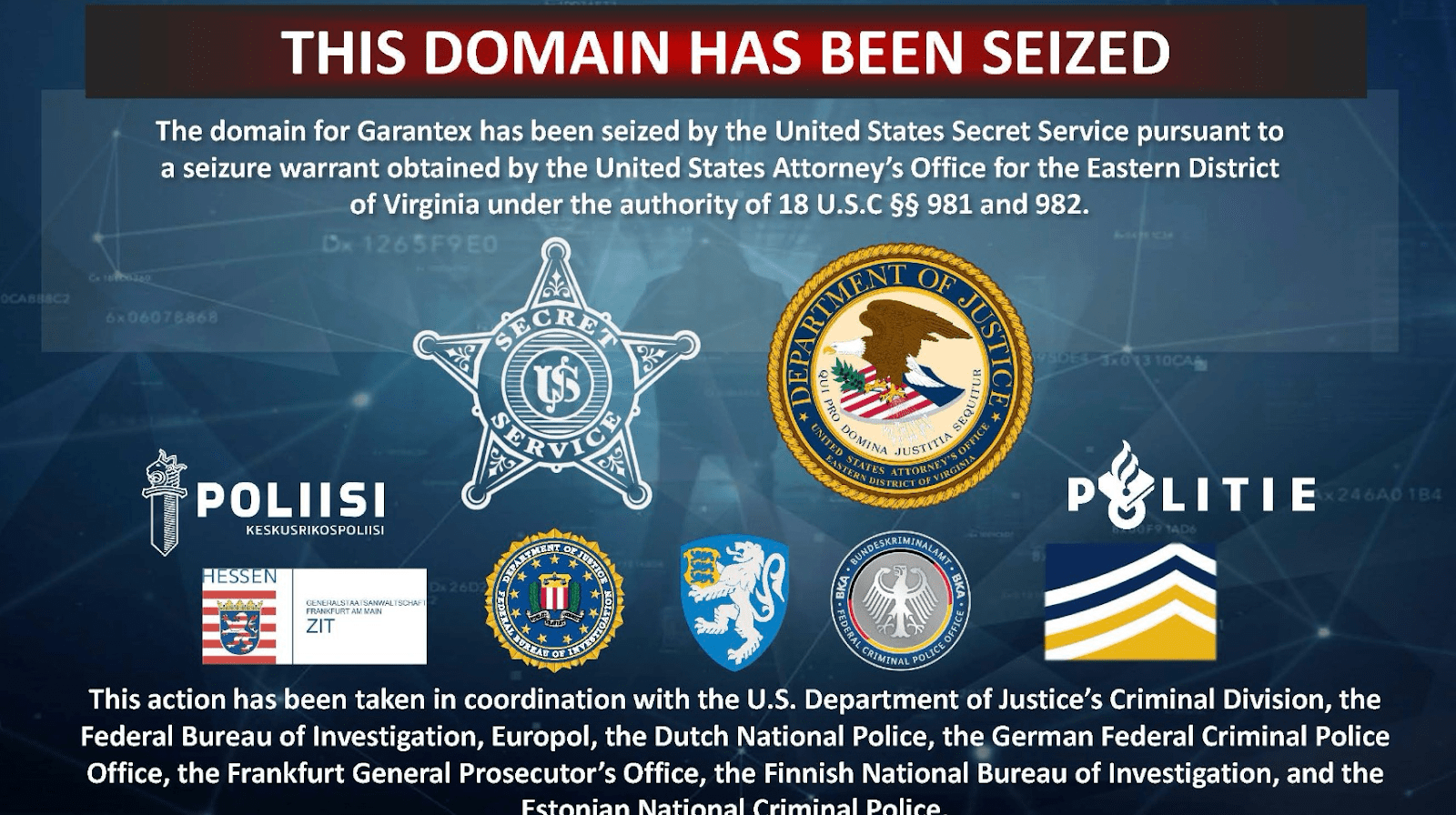
Public information shows that Garantex was established in Moscow in 2019, with its registered office located in the Moscow landmark building, the Federation Tower, founded by Stanislav Drugalev and Sergey Mendeleev among others. In April 2022, it was sanctioned by the U.S. OFAC due to transactions associated with the dark web market Hydra and the ransomware Conti, with at least $100 million in transactions directly deemed related to criminal activities, but after the sanctions, it remains 'one of the main channels for Russian funds to flow in and out of the world.'
ICIJ's investigation zooms in on the equity structure, and the picture begins to deform:
· A company deeply tied to Garantex is called Fintech Corporation—it is both the owner of the Garantex App and the operator of brands like 'Garantex Academy.'
· Russian company registration records show that Fintech holds 50% of a debt collection company 'Academy of Conflicts,' while the other half is controlled by 'gang leader' Alexander Tsarapkin, who was convicted of extortion and sentenced to seven years in prison due to a blackmail gang.
· Pavel Karavatsky, a key shareholder of Fintech, previously served on the board of Peresvet Bank, which was later taken over by Rosneft (the Russian state-owned oil company); Fintech also early on used contact information and email domains related to Rosneft's logistics subsidiary.
Looking back from the cold, hard paper chain of company registration, you see the national oil capital + violent debt collection companies + sanctioned crypto trading platforms.
This does not mean that 'Rosneft is operating Garantex,' but it is enough to indicate that Garantex can continue to handle tens of billions of dollars in stablecoin liquidity even after being squeezed from three sides by OFAC, Tether, and the EU, not merely relying on 'technology and entrepreneurial spirit.'
It is a central gear embedded in a larger national-gray capital network.
Cryptex—a 'Plan B' that wanders on the flanks of Garantex
When Garantex becomes a sample under regulatory spotlight, 'doing only that and nothing else' becomes too dangerous for black and gray funds. The market will naturally grow backup routes, and Cryptex is one of the most typical.
1. The 'invisible exchanger' named by OFAC.
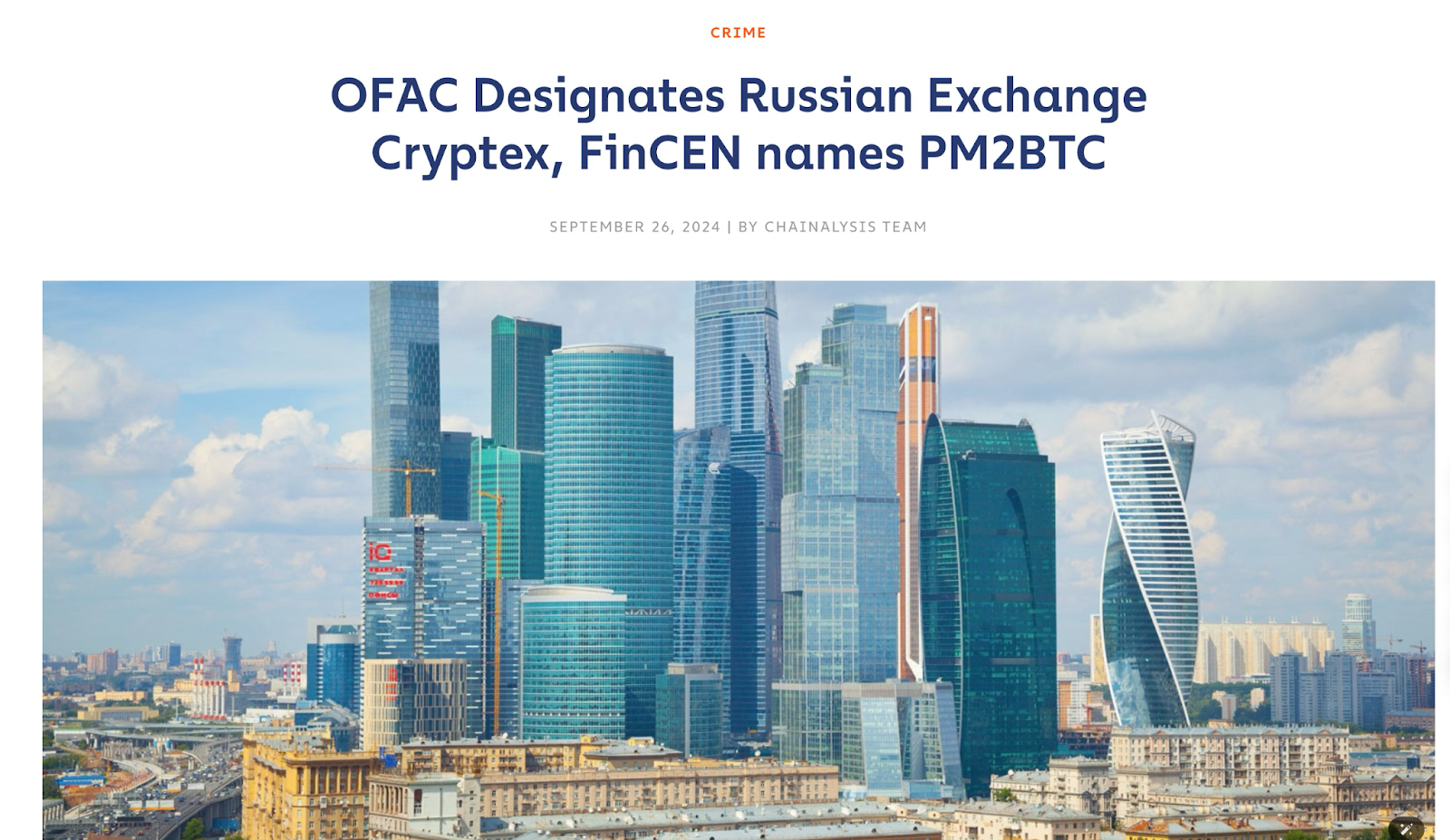
Cryptex also appears to be a 'Russian cryptocurrency exchange platform,' supporting instant exchanges between fiat currency and virtual assets. However, on September 26, 2024, the U.S. Treasury's OFAC included it and its operator Sergey Sergeevich Ivanov in the sanctions list, accusing it of providing money laundering and settlement services for 'fraud shops, ransomware organizations, dark web markets, and other criminal activities.'
Chainalysis's on-chain analysis shows that Cryptex has processed about $5.88 billion in cryptocurrency transactions since 2018, a significant portion of which comes from 'high-risk and even clearly illegal' source addresses, and the other platform associated with Ivanov, PM2BTC, has been identified by FinCEN as a 'primary money laundering concern,' with nearly half of its business related to criminal activities.
If Garantex leans more towards 'the total clearing pool for ruble-stablecoin transactions within and outside Russia,' then Cryptex / PM2BTC's position is more towards 'a lighter, more anonymous entry for money laundering.'
2. What cannot be killed is not a specific platform, but an entire type of structure.
Structurally, Cryptex plays the role of a typical 'sidekick': when Garantex's on-chain addresses are blacklisted in batches, many dark web shops, scam groups, and ransomware operators will shift their settlement channels to KYC-free exchangers like Cryptex or PM2BTC; and when Cryptex itself is sanctioned, a new 'Cryptex 2.0' will appear under a different name.
This is a 'decentralized evasion' model:
(1) What regulation crushes is the name, and what the market grows is the model itself.
(2) In this network, Garantex is a heavyweight host.
(3) Cryptex and PM2BTC are front-end nodes specifically responsible for 'receiving dirty money, laundering it, and then throwing it into Garantex or other channels.'
Exved, A7A5, and PSB—the prototype of a sovereign-level 'shadow bank'
If Garantex is the black market, Cryptex is the gray industry, then Exved + A7 / A7A5 + PSB is closer to a national laboratory project on the blockchain.
It is not meant to evade a single payment, but to rewrite 'how Russia pays abroad.'
1. Exved: a USDT B2B channel disguised in compliance.
In December 2023, a digital settlement trading platform named Exved quietly launched in Moscow.
The official positioning is quite simple:
a. Providing cross-border digital payment services for local Russian entities.
b. Support the use of Tether's USDT to complete external settlements.
Almost all public reports emphasize three points: Exved targets export and import enterprises, not retail investors; it provides a front-end interface where 'USD, USDT or offshore rubles' may be displayed, while the backend completes final settlement through offshore accounts and partner institutions; the project is technically involved with the InDeFi Smart Bank team and has received approval from the Central Bank of Russia and the Federal Financial Monitoring Service (Rosfinmonitoring).
From the perspective of regulatory narrative, Exved is an innovative pilot with KYC.
Structurally, it resembles: after traditional banks are sanctioned and locked down, it creates a 'compliant shell + stablecoin channel' for enterprises.
It does not directly issue any new coins but incorporates existing USDT under a B2B facade recognized by the state.
2. A7 and A7A5: the real debut of the ruble version of the 'shadow stablecoin'
If Exved is still at the level of 'using USDT for cross-border settlements,' then A7 / A7A5 is the next step—putting the ruble itself on the blockchain.
Elliptic's (A7 leak) report breaks down this system very clearly:
a. A7 is a group company specifically targeting Russian enterprises for cross-border payments and sanction evasion.
· 51% of the shares are held by Moldovan oligarch Ilan Shor—he was convicted due to the 'big hole case' in the Moldovan banking sector in 2014 and sanctioned by the U.S. for undermining Moldovan elections for Russia.
· Another major shareholder is the Russian state-owned defense bank Promsvyazbank (PSB).
b. A7A5 is a ruble stablecoin developed by A7.
· The issuer is Old Vector LLC registered in Kyrgyzstan.
· Each A7A5 is claimed to be 1:1 backed by ruble deposits stored in PSB accounts.
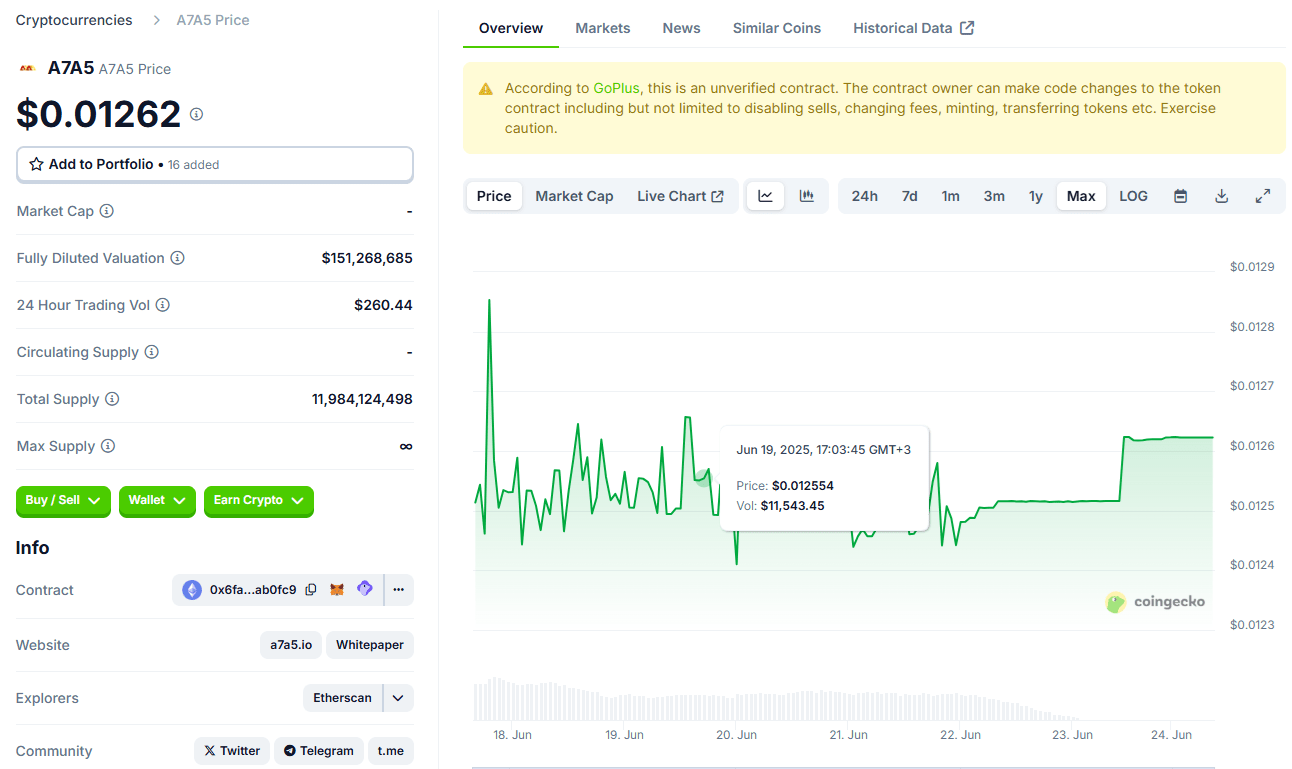
· As of mid-2025, approximately 41.6 billion A7A5 are in circulation, with a total transaction volume of about $68 billion.
· Reuters cites data from Elliptic and TRM Labs, stating that the cumulative transfer volume of A7A5 has exceeded $40 billion, with daily transaction peaks exceeding $1 billion, and its market value skyrocketed from $170 million to $521 million in just two weeks.
More crucially, the relationship between it and USDT is not one of substitution, but rather a 'dual structure':
From internal chat records disclosed by Elliptic, A7 employees discussed using at least $1 billion to $2 billion of USDT to provide liquidity for A7A5 on various trading platforms—first using USDT to create liquidity, then swapping it for A7A5 to make it look 'like a deep stablecoin market.'
In July 2025, the official A7 Telegram channel directly announced the injection of $100 million worth of USDT liquidity into the A7A5 DEX to meet market demand for the 'best price for A7A5 ↔ USDT.'
Under this set of tactics, the role of A7A5 becomes very clear: it is an 'on-chain ruble liability' attached to the PSB balance sheet, using USDT as a credit engine to avoid Tether's freeze risk.
For Russian enterprises, this means that even if they are kicked out of SWIFT and bank accounts struggle to complete cross-border payments, they can still:
Ruble → deposited in PSB → A7A5 → settled on-chain for goods → then exchanged back for local fiat or USDT.
From the outside, it looks like a technical product, but from a geopolitical perspective, it resembles a 'rubel version of a shadow central bank pipeline' built outside the SWIFT system.
There is a particularly striking section in Elliptic's 'A7 leak' report:
· The A7 group not only helps Russian enterprises bypass to buy parts and negotiate freight but is also used to support political projects within Moldova.
· Leaked documents and on-chain records show that funds under Shor's control flow through stablecoins to a network of applications and organizations called 'Taito' for rewarding political participants and paying for propaganda expenses.
· The U.S. and EU clearly accuse Shor of 'using funds and a network of false information to undermine Moldovan democracy,' and A7 and its crypto channel are seen as one of the important infrastructures for this activity.
This does not mean that we can simply conclude that 'PSB + A7A5 = directly giving USDT to voters in a certain region to buy votes.' The publicly available materials are not sufficient to draw such fine lines.
But it is certain that the same financial chassis not only helps Russian enterprises purchase goods and circumvent sanctions but also provides funding distribution tools for political influence operations.
When sovereign banks (PSB), shadow payment groups (A7), and on-chain stablecoins (A7A5) are tied together,
Money is no longer just an 'economic variable,' but a cross-border, programmable geopolitical weapon.
Under SWIFT is the dollar, outside SWIFT is the shadow network.
If you abstract all of this into a diagram, you would see such a structure:
· Garantex: aggregates Russian retail investors, gray trade, dirty money, and some energy-related funds into a 'ruble ↔ stablecoin' black market clearing pool.
· KYC-free exchangers like Cryptex / PM2BTC: providing a front-end entry point for ransomware, scam shops, and some sanctioned entities for 'getting in and laundering.'
· Exved + A7 / A7A5 + PSB: extends this network from 'civil and black' to 'semi-official B2B payments' and 'on-chain ruble sovereignty project'—breaking down what could only operate on the central bank's balance sheet into a token that can jump on Tron and Ethereum.
In this network, USDT is blood, PSB's ruble deposits are the skeleton, Garantex / Cryptex are the capillaries, and A7A5 is a newly grown heart valve—its existence is to ensure that this cycle continues to pump outside of SWIFT.
This is not a jest about sanctions, but a pressure test on the limits of global financial order.
When a major country expelled from SWIFT begins to skillfully use stablecoins, shadow platforms, and its own 'on-chain ruble' to complete trade and political projects, the question is no longer: 'Can Russia be sanctioned?' but rather: 'Will a financial sewer that can never be cleaned grow outside the dollar and SWIFT?'
The machine running in the Moscow Federation Tower is just the first segment of this sewer.
Reference materials
<1>https://home.treasury.gov/news/press-releases/jy0713
<2>https://home.treasury.gov/policy-issues/financial-sanctions/specially-designated-nationals-list-data-formats
<3>https://www.icij.org/investigations/shadow-money/
<4> FinCEN – Advisory FIN-2023-A002
<5>https://tass.ru/ekonomika
<6>OFAC Notice – September 26, 2024
<7>U.S. Treasury Press Release – April 5, 2022
<8>Chainalysis Crypto Crime Report 2023
<9>https://cryptonews.com/news/russias-exved-launches-cross-border-payment-service-powered-by-tethers-usdt-stablecoin
<10> https://en.wikipedia.org/wiki/Garantex?utm_source=chatgpt.com
<11>https://www.chainalysis.com/blog/ofac-sanctions-russian-exchange-cryptex-uaps-fraud-shop-2024/?
<12> https://zh.spaziocrypto.com/wen-ding-bi/e-luo-si-wen-ding-bi-a7a5-zai-4-ge-yue-nei-liu-dong-93-yi-mei-yuan
Original link
This article comes from a submission and does not represent BlockBeats' views.


