


Today, this article will describe how the market maker earns money from retail investors through wash trading, and how they make retail investors willingly give up their chips. Are you losing to the market or losing to yourself?
In my public course on my homepage, 【Wyckoff Trading】, I have shared a lot about the market maker's trading techniques. This course itself is a book about trading. I believe that after watching the public course, you will understand the operating logic behind it, but to this day, I regret that everyone's understanding is almost superficial.
First, in the secondary market, it is basically all strong control coins, and the dealer can control the market.
The dealer's profit is nothing more than the money in your pocket flowing into the dealer's pocket, but mainstream coins/some well-structured dealers will not cut you off in one go; in this case, the probability of users cutting losses themselves is relatively high.
I am trying to help you understand its principles, although I know this may be a bit difficult!
Next, let’s look at a picture:
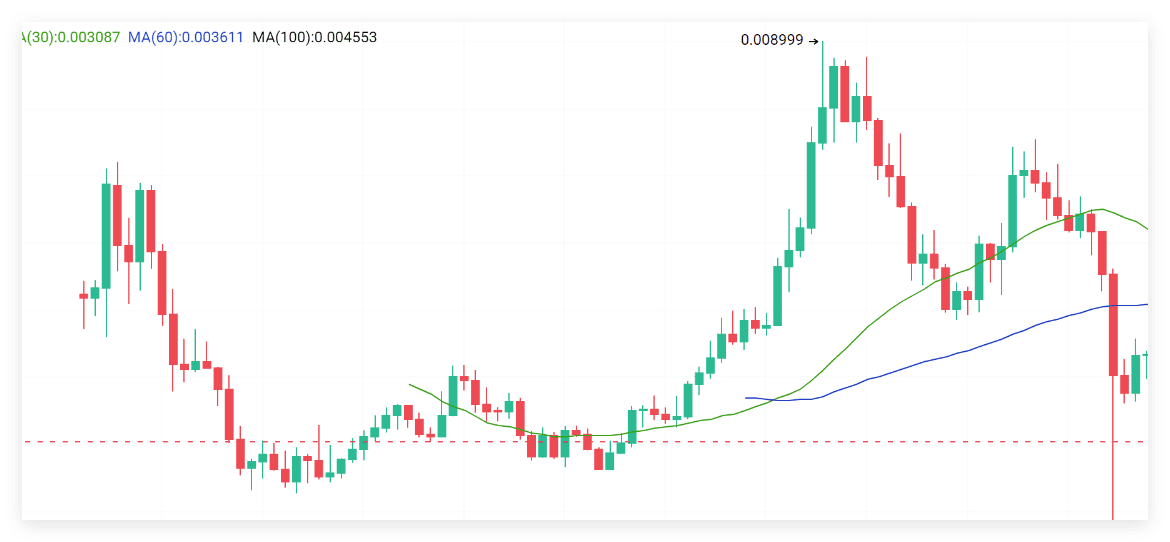
In the K-line above, the dealer has a larger market wash, so it can be said that they will not stop until they achieve their goal.
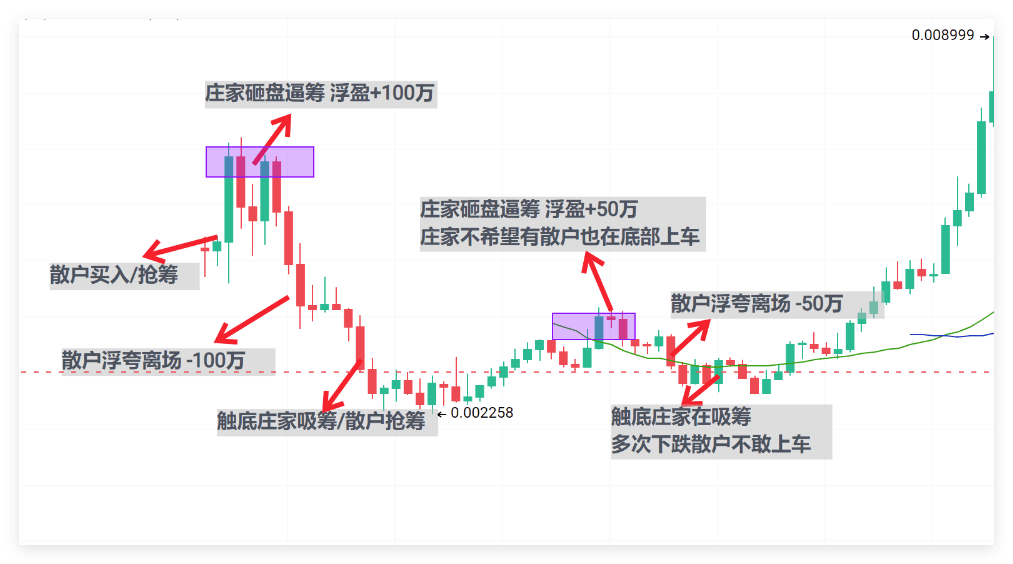
In this market, the dealer's coercion to gather chips is incredibly fierce. Under strong dealer control, if the dealer does not want you to make money, then you simply cannot make money.
When a new coin goes online, early investors and retail investors who enter the market at the opening hold chips that are a burden to the project. If the project party is decisive, they will choose to directly smash the market. In the secondary market, the project party has an abundance of chips, so they smash the market first, and while smashing, they can also draw out funds.
Early investors and retail investors who entered at the opening do want to make money, right? The answer is certainly yes, but will the dealer let them make money? The answer is no. If you don't hand over your chips, I will smash the market endlessly until you are scared, until you are anxious, waiting for you to cut yourself. If the project party's intention is to wash the market, they will inevitably pull it back. At this time, you getting out prematurely is undoubtedly one of those played by capital.
After the K-line initially hits the bottom, that is, when the project party sees that most retail investors have surrendered, smashing the market again has no meaning. At this time, an initial rebound will occur. Of course, many retail investors will follow this rebound, but the project party cannot let retail investors divide their cake. After the rebound, they will continue to kill (while making another wave) until the market wash reaches a point where retail investors dare not take over. If retail investors keep grabbing chips, what to do? Abandon the market!