The story of Yield Guild Games — affectionately “YGG” — feels like the digital-age underdog that refuses to stay down. Once a modest play-to-earn guild, YGG has reimagined itself as a full-blown ecosystem builder, retooling for durability rather than hype. Dazai remembers when play-to-earn felt like magic: login, grind, earn — but as the crypto winter set in, so did the cold reality that most games lacked staying power. YGG did not just survive that shift; it evolved, and now stands at the forefront of Web3’s next gaming wave.
At its core, YGG began as a decentralized guild — an organization pooling resources to buy or rent in-game NFTs and let players use them in exchange for a slice of game-rewards. This “guild” concept unlocked opportunities for people who couldn’t afford expensive NFTs, democratizing access: small players could join under guild umbrellas, benefit from shared assets, and earn tokens without heavy upfront cost. Over time, as YGG scaled worldwide and partnered with dozens of blockchain games, the birth of a true Web3-gaming community gained traction.
But in 2025, YGG pulled off its boldest transformation yet: it launched a publishing and distribution arm named YGG Play, shifting from renting assets to creating and promoting games — often casual, browser-based titles built for crypto-native players. The first of these games, LOL Land, launched with massive buzz. Its simple, fun, “casual degen” vibe — lighthearted, accessible, and game-native — helped YGG reach a new audience, beyond hardcore gamers or speculators. The success of LOL Land confirmed what many in crypto hoped for: Web3 games could be more than high-risk, speculative play—they could be genuinely enjoyable, with sustainable design and community at heart.
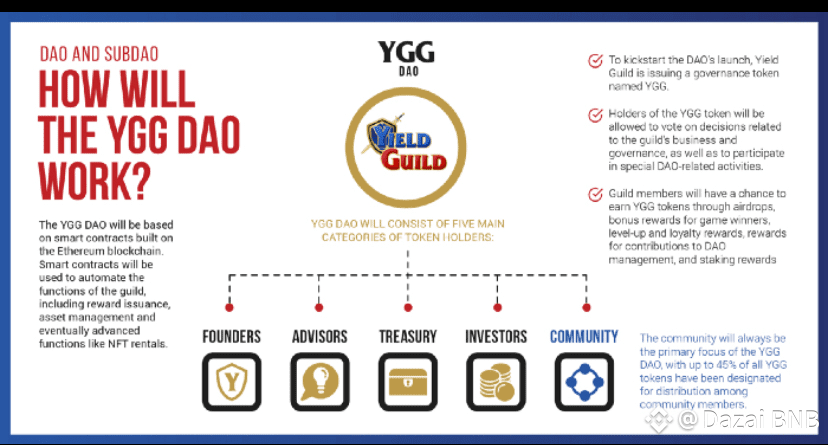
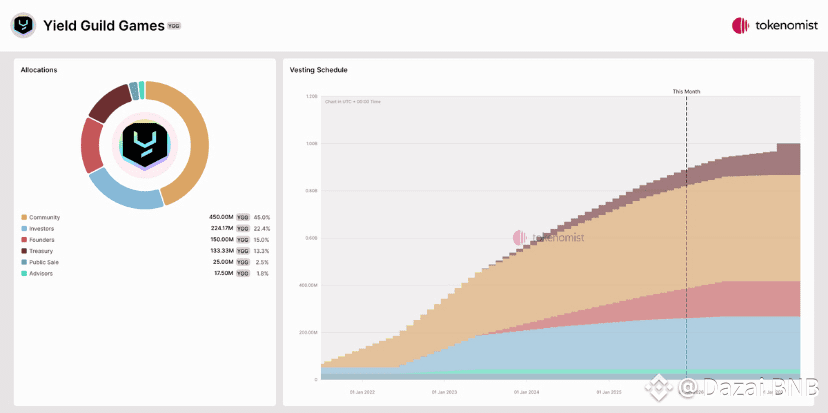
Beyond games, YGG has strategically used its token, YGG, to anchor governance and utility across its expanding ecosystem. As per their listing on major exchanges, YGG remains the governance token of the DAO: holders vote on proposals, decide on asset allocation, manage partnerships, and influence the overall strategic direction. Over time, this tokenomics architecture has been refined: in August 2025, YGG executed a token buyback worth roughly $518,000, while simultaneously unveiling a new $7.5 million ecosystem pool. The move signaled that leadership believes in long-term growth, and that YGG still sees opportunity — even when valuations are low.
Simultaneously, YGG Play didn’t stop with LOL Land. The initiative broadened rapidly, onboarding games like GigaChadBat — a fast-paced Web3 baseball game built with partner studios on the Abstract chain — where players can earn YGG tokens for gameplay. They also introduced a points-based questing system: players complete in-game tasks, earn points, and turn those into YGG rewards — or access to upcoming token launches on YGG’s Launchpad. This pivot underscores YGG’s larger ambition: to be a distributor, enabler, and hub for Web3 gaming — not just another guild sitting on stagnant assets.
Looking at the market dynamics, YGG’s recent exchange listing performance has drawn eyes. With a 50 % price surge following support by a major exchange (as per a recent listing on Upbit), that rally ignited excitement among traders and fueled speculation of a broader comeback. For traders betting on a resurgence of blockchain gaming hype, YGG now represents a bridge: between fun, accessible crypto-native games and serious ecosystem infrastructure.
Yet the path ahead isn’t guaranteed. One of the biggest lessons from the first Web3 gaming boom is that hype fades — if games don’t deliver consistent value, user interest vanishes. Dazai sees that YGG’s shift toward real playable games, distribution, and token utility may just avoid the pitfalls that plagued early play-to-earn models. The combination of DAO governance, tokenomics that reward long-term holders, and a catalogue of light games designed for accessibility — all position YGG for a potential second wave.
Beyond gaming, whispers of a more ambitious future loom. According to some strategy documents circulating in crypto-research circles, YGG’s “Guild Protocol” aims to expand beyond pure gaming: into content creation, AI data-labeling, and real-world organization support by 2026. If realized, that would transform YGG from “gaming guild turned publisher” into a full-fledged Web3 infrastructure provider — blending gaming, decentralised work, and content in unprecedented ways.
For those watching the bull market in blockchain gaming, YGG offers a story of adaptation, ambition, and perhaps redemption. From humble guild beginnings to a sprawling ecosystem with publishing, tokenomics, and real utility — YGG’s journey feels emblematic of Web3’s growing pains and its evolving promise. Dazai thinks: maybe this time, if developers deliver and the community rallies, YGG could be among the few to truly ride the next wave.