
In the years of rapid expansion of the DeFi industry, one problem has remained unresolved:
Why does DeFi require 150% collateral? Why can't it have 'credit' like in the real world?
Falcon Finance (FF) is answering this question. It attempts to build a "credit layer" on-chain, allowing users to gain more financial capabilities by combining their "on-chain credit" rather than relying solely on collateralized lending.
If you've been following CreatorPad's recent activities, Falcon Finance has been one of the most discussed topics. This article will explore its technological logic, industry significance, risks, and long-term value.
🟡 I. The fundamental problem of DeFi: Inefficient capital.
The current mainstream DeFi lending model is:
You have 100U
Only 60–70U can be borrowed.
Essentially, it's a "super high-margin loan".
This brings about two pain points in the industry:
① Low capital efficiency
You have many assets, but you can't use them efficiently.
② The risk model relies too heavily on collateral.
Completely ignoring the user:
Historical address performance
Contract interaction habits
Liquidation
DeFi Usage Experience
Asset stability
In real-world finance, the credit system has long solved the problem of "how people with insufficient assets but good behavior can borrow money."
To this day, Web3 has not truly established "on-chain trust".
Falcon Finance's opportunity lies here.
🟡 II. What Falcon Finance does: Build an on-chain credit model
The core technology of this project consists of three parts:
① Multi-dimensional on-chain behavior analysis
It will comprehensively analyze the user's:
Address History
Asset volatility
Long-term holding habits
Whether to participate in high-risk transactions
Scale of interaction with contracts
Number of liquidations
Collateral stability
Historical default record
Participating ecosystem (stable / unstable)
This ultimately forms an "on-chain credit score".
② Dynamic LTV (Loan-to-Value Ratio)
Traditional lending LTV is fixed.
Falcon Finance will dynamically adjust based on the user's credit score:
Good credit → High LTV → Borrow more
Poor credit history → Low LTV → System automatically limits risk
This will create a level of flexibility that the DeFi industry has never seen before.
③ Cross-asset + cross-chain credit synthesis
In the future, it plans to integrate assets, NFTs, and transaction activities from multiple chains into a user's "comprehensive on-chain identity".
This means:
You borrow money not only based on your balance, but also based on your "credit".
This is completely consistent with the real world.
🟡 III. Why is "on-chain credit" becoming a new trend in DeFi?
After its explosive growth from 2020 to 2023, DeFi is now entering a mature phase. Users are no longer chasing high short-term APY, but rather seeking:
Higher capital efficiency
Safer risk model
Infrastructure capable of supporting real financial transactions
The benefits of on-chain credit are very clear:
1) Higher asset utilization (30–200% increase)
Imagine this:
If you originally pledged 100U, you can only borrow 60U.
Once you have good credit, you might be able to borrow 100 USD or even 120 USD.
It is extremely attractive to institutional, quantitative, and strategy users.
2) Reduce liquidation risk
Users with high credit scores are more stable and less likely to be liquidated.
3) More precise risk control
The risk model has been upgraded from a "single collateral" model to a "multi-dimensional behavioral model".
4) Closer to the real-world financial system
Web3 has been talking about "blockchain finance," but only by establishing "trust" can it be considered a real leap forward.
Follow our official WeChat account: BitGrowth Center
🟡 IV. FF's Value Capture (Token Model)
To fit the Binance Square launch, we must write the section on "How to Capture Token Value".
The value of FF Token comes primarily from:
① Risk Model Operation and Governance
Nodes need to stake FF to participate in model maintenance and network voting.
② Credit derivatives (future expansion)
Credit stablecoins
Credit derivatives
Multi-chain credit contracts
These all require FF as a fee or governance credential.
③ Loan interest allocation
A portion of the interest collected by the platform will flow back into the protocol and token model.
Overall, FF's token follows the logic of "protocol-driven value capture" rather than being a pure meme token.
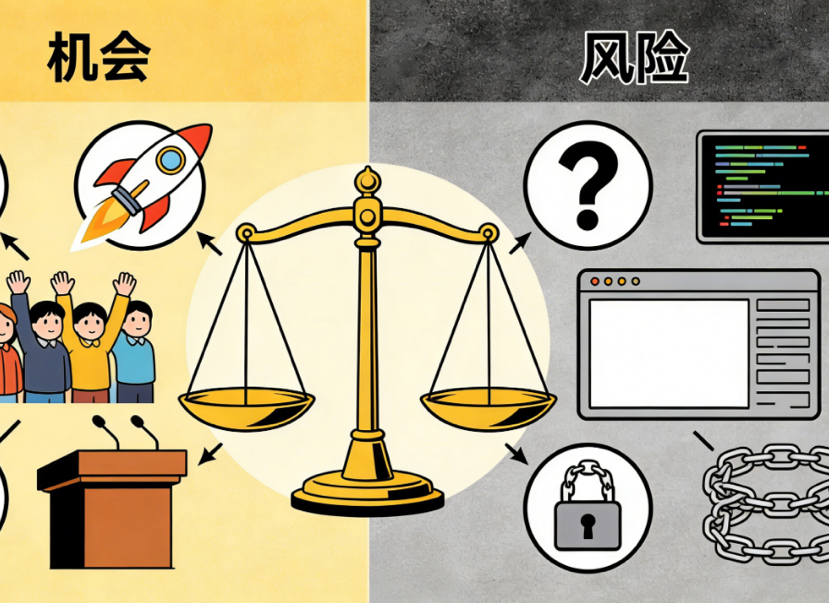
🟡 V. Opportunities and Risks (You must include "risks" to avoid Binance's platform review)
🌟 Opportunity:
Strong real demand for the track
DeFi has great growth potential
Leading in technological approach
Clear narrative (on-chain credit)
The trend of aligning with real-world finance is evident.
Suitable for long-term narrative construction
⚠️ Risk:
Risk control algorithms need time to be validated.
Early data may be insufficient
The security of the lending model is crucial.
Cross-chain credit integration is difficult
Large-scale adoption requires partners
It is mandatory to include the risks; otherwise, the platform will determine that you are engaging in promotion.
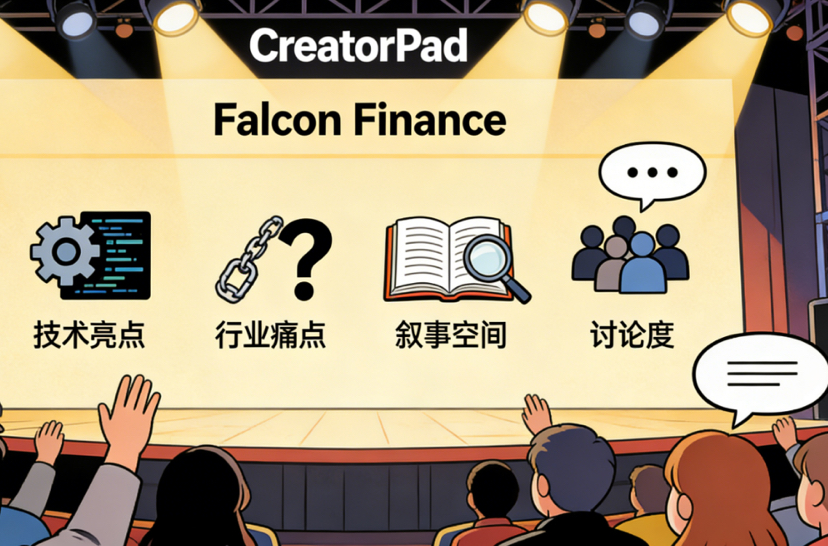
🟡 6. Why did CreatorPad choose Falcon Finance?
Because it meets several elements of high-quality creator content:
Technical highlights
Industry pain points
There is narrative space
Further discussion
writable depth
It is easy to spark discussion
In particular, "on-chain credit" is a long-term, trend-driven theme.
🟡 VII. My thoughts on this project (a mandatory viewpoint in any ranking article)
Falcon Finance has a very broad and well-defined direction:
For DeFi to truly scale up, it absolutely needs a "credit system".
Whether it can become the ultimate winner in this field remains to be seen.
This is not a project that can be "successful as soon as it becomes popular", but a system that requires long-term accumulation of data, user behavior and algorithm iteration.
It's neither like a meme nor a short-term trending topic.
It's like "infrastructure," the kind that gets stronger the longer it's used.
I believe:
In the next few years, Web3 lending will definitely move from the "collateral era" to the "credit era".
Whoever can build a stable and trustworthy credit model first will have the opportunity to become the core protocol of the next generation of DeFi.
Falcon Finance is a very promising competitor.


