

The Federal Reserve implemented a 25 basis point interest rate cut as expected this time, but the result of 9 votes in favor and 3 against during the voting session exposed serious internal divisions within the monetary policy decision-making body. This voting ratio set a record for the most dissenting votes in six years. From the opposing camp's perspective, some officials hold a hawkish stance, believing that current inflationary pressures remain sticky and that an early rate cut could undermine previous anti-inflation achievements; while others lean towards a dovish position, advocating for a more significant rate cut to preemptively hedge against economic downturn risks. The clash of diverse positions highlights the complexity of current policy choices. More critically, Federal Reserve Chairman Powell clearly signaled in his post-meeting speech that "the probability of a rate cut in January is low," directly breaking market expectations for continued short-term easing. The macro benefits accumulated due to rate cut expectations have subsequently dissipated, leading to a concentrated release of market sell-off sentiment.
The cryptocurrency market is exhibiting a typical 'buy the rumor, sell the news' trend in this atmosphere. Bitcoin and Ethereum both experienced dramatic fluctuations in a 'sharp rise and fall' pattern. After the interest rate cut decision was announced in the early hours, Bitcoin briefly surged to around $94500, while Ethereum also rebounded to the $3450 level. However, after the good news was realized, selling pressure rapidly emerged, and prices began to decline. Entering the trading session this morning, selling pressure further expanded, with Bitcoin once again falling below the critical $90000 level, and Ethereum probing below $3200. The gains from Tuesday evening, driven by interest rate cut expectations, have been nearly erased, almost completely retracing Tuesday's gains. This fluctuation structure reflects that current market sentiment is still dominated by macro drivers, and in the context of tightening liquidity expectations, investors tend to lock in profits.
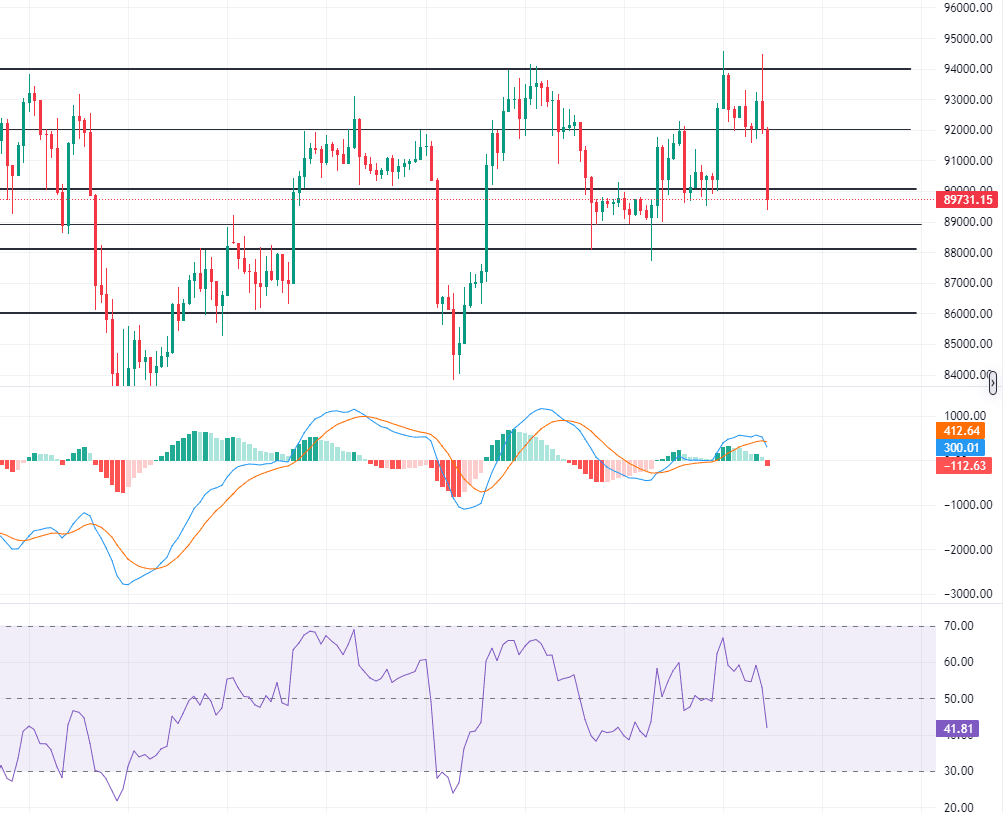
From a technical perspective, the movements of the two major cryptocurrencies are both influenced by the dual impact of key resistance levels and macro sentiment resonance. On the daily chart, Bitcoin's price encountered strong resistance at the upper Bollinger Band and failed to break through effectively. Ethereum is constrained by the MA60 moving average, which has previously been a 'roadblock' for rebound trends; after the macro bullishness faded, the technical pressure quickly translated into actual declines. The four-hour indicators show that the MACD continues to shrink and decline, while the RSI is approaching the oversold territory, with the continued release of bearish volume pushing the morning decline further. However, as selling pressure was concentrated during the Asian trading session, the half-hour RSI has entered the oversold area and is gradually flattening. The MACD has shown slight signs of bullish divergence, suggesting that the downward momentum is slowing, and there may be certain technical rebound repair needs during the European trading session to digest the pressure from excessive short-term selling.
For the afternoon trading session, the effectiveness of key support and resistance levels will become the core focus of market direction. Bitcoin needs to pay close attention to the support strength in the $90000-$89000 range, which is the central position of the previous oscillation consolidation. If effective support is formed, it is expected to trigger a repair; short-term resistance above is concentrated at $91700 and $92500, which correspond to key consolidation platforms in yesterday's retracement process.
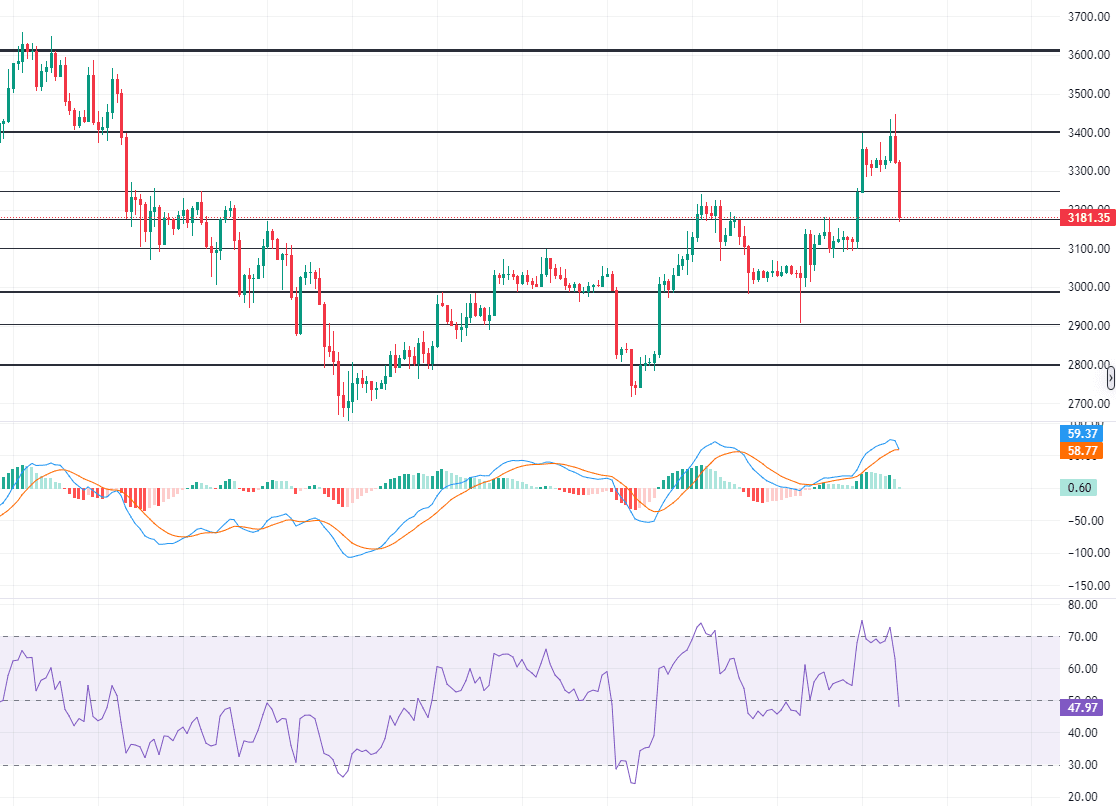
As for Ethereum's support area, it focuses on $3180 and $3100, both of which were previous resistance levels that are now converting into support as they retract. The $3000 level is a crucial support point for the shift between bulls and bears. The short-term resistance above is at $3250 and $3300, and it needs to break through $3300 to confirm that the short-term repair trend will continue.
Tonight, the market will welcome the U.S. initial jobless claims data, which is one of the key reference indicators for Federal Reserve policy-making. The performance of employment data may bring some new volatility to the market. If the data exceeds expectations (indicating a cooling job market), it may strengthen market expectations for further easing, leading to a significant rebound during the U.S. trading session. However, if the data falls short of expectations (indicating a strong job market), it may further validate the expectation of 'no rate cuts in January,' limiting the rebound potential. However, it should be clear that, with the recent rate cut implemented and policy divergences intensifying, even if a rebound occurs, its sustainability and amplitude may be quite limited, and the overall structure still leans toward oscillation and consolidation, or even another test of the lows.

Overall, in an environment where macro drivers have temporarily paused and technical indicators are weakening, the market may enter a period of observation. Volatility may gradually converge, with a short-term focus on responding to key levels nearby. Upcoming evening jobless claims data, as well as speeches from Federal Reserve officials on Friday and non-farm payroll data next week, will provide further guidance for the market.
This article represents personal views only. Due to the timing of the article push, the above views or suggestions may not be real-time and are for reference only. Investment involves risks; please make prudent decisions based on your actual situation.
Written by Jane crypto


