
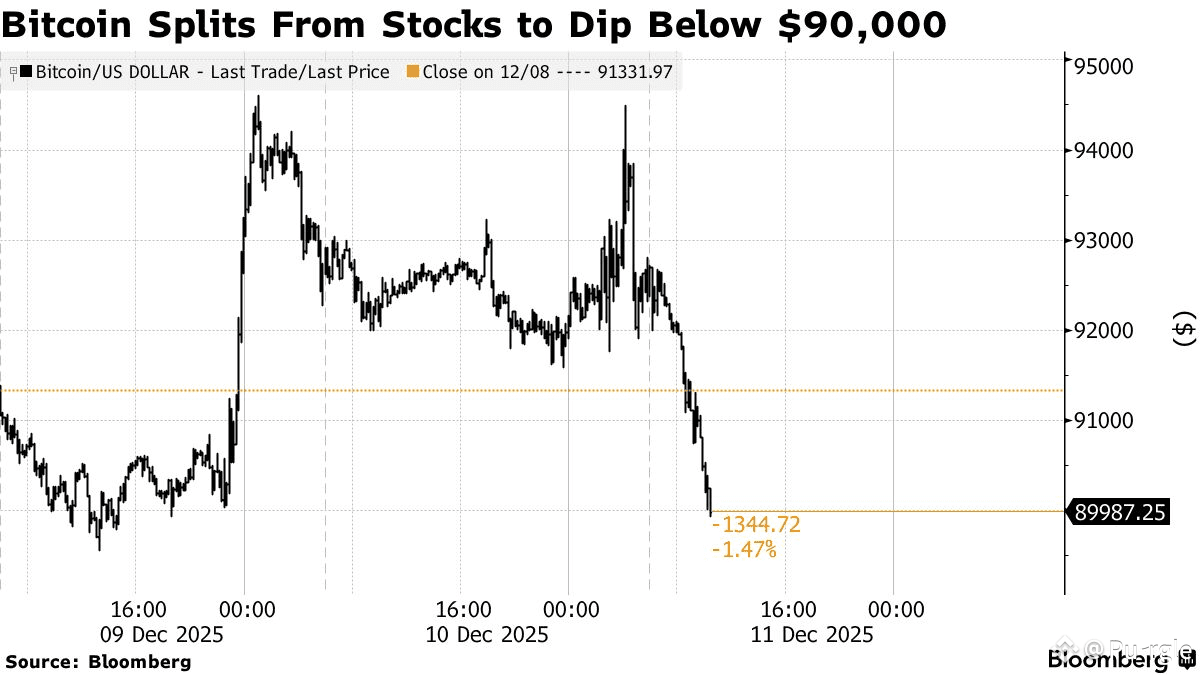
Bitcoin ( $BTC ) briefly slipped below $90,000 on Thursday morning in Singapore, down from an intra-day high of $94,490 the day prior, marking a 2.7% drop, according to Bloomberg. Ethereum, XRP, and Solana also retreated, showing that the decline extended across the broader crypto market.

Part of the move can be traced to institutional positioning. Reports indicate that BlackRock transferred over 2,000 BTC, worth more than $200 million, to Coinbase just before the Fed announcement. Large transfers like this often signal preemptive hedging or profit-taking, a strategy commonly used by major players to protect against sudden volatility.
Bitcoin entered the session already under pressure. A weeks-long selloff starting in early October, triggered by a major liquidation event, wiped out around $19 billion in leveraged bets, leaving BTC technically vulnerable. Even as Asian equities followed Wall Street higher after Fed Chair Jerome Powell delivered a quarter-point rate cut, crypto traders remained cautious.
Historical trends reinforce the cautious outlook. Bitcoin has fallen following six of the seven Fed meetings this year, averaging a 0.7% decline in the 48 hours after the announcements, with only May showing a temporary 6.1% gain. Markets often price in rate changes well before they are announced, leaving limited room for immediate upside.
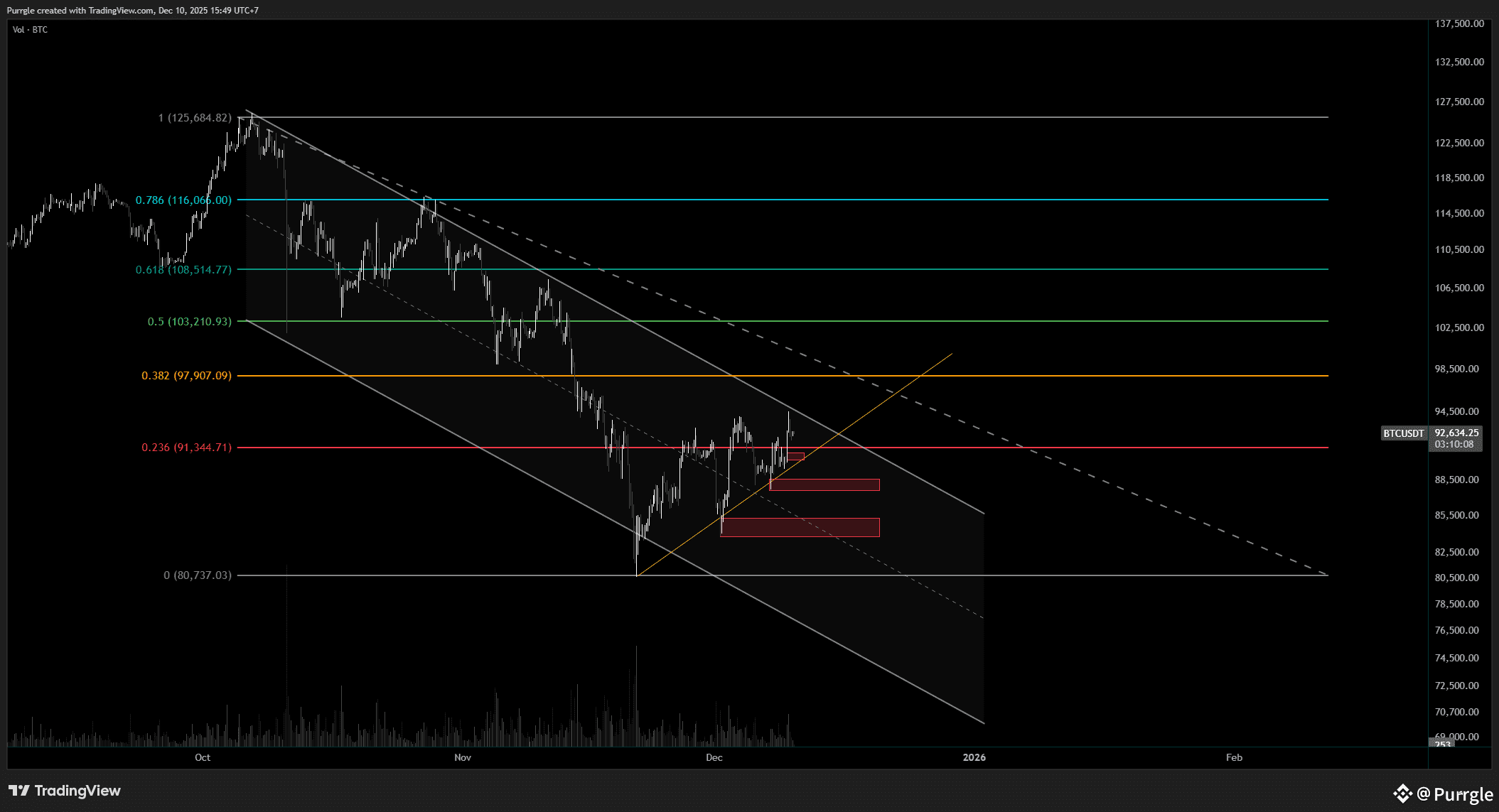
From a technical perspective, Bitcoin’s inability to hold $93,000 triggered automated sell orders, intensifying the pullback. Analysts view BTC as sitting at a critical juncture: any hint of hawkishness from the Fed or further macro uncertainty could push volatility higher, with large swings in either direction.
Finally, the move reflects a classic “sell the news” scenario. Positive policy outcomes don’t always translate into immediate buying pressure, particularly when major holders and automated trading systems are actively managing risk. BTC’s drop isn’t necessarily a rejection of the rate cut itself, but rather the market recalibrating after a period of high leverage and technical vulnerability.
In short, Bitcoin’s current environment combines technical weakness, macro uncertainty, and institutional positioning. Traders who pay attention to these factors—rather than headlines alone—are better positioned to navigate the volatility ahead.