
1. USDD Overview: Evolution from 1.0 to 2.0
USDD is a decentralized stablecoin on the TRON network, pegged 1:1 to the US dollar, ensuring stability through an over-collateralization mechanism. Unlike centralized stablecoins (like USDT), the USDD 2.0 version introduces a 'freeze-free' design, independent audits, and on-chain data transparency to avoid risks from a single entity's control.
Core Mechanism: Collateral assets include TRX, BTC, ETH, etc., with a collateral ratio maintained above 120%. sUSDD is its interest-bearing token, allowing users to earn approximately 12% base APY simply by holding.
Ecosystem Positioning: Integrating TRON, Ethereum, and BNB Chain, supporting DeFi protocols such as JustLend DAO, Uniswap, and Aave.
USDD emphasizes 'trust but verify': all collateral data is publicly available on-chain, and users can monitor reserve changes in real-time. This stands out in the stablecoin market, avoiding the blind trust model of 'trust me, bro'.
Currently, USDD is in an accelerated growth phase. In the past week, sUSDD TVL soared from 72 million dollars to over 90 million dollars, with supply exceeding 600 million dollars. This is thanks to multi-platform collaborations and reward activities.
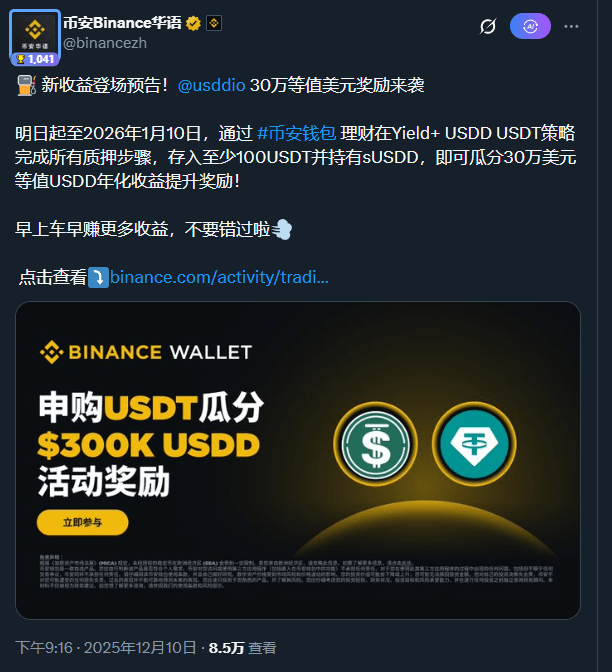
For example, the recently launched Binance Wallet Yield+ event
Event details: Launching on December 11, subscribe to the USDT to USDD strategy, sharing a 300,000 USDD reward (10,000 USDD pool daily, no TVL cap). Path: USDT → USDD → sUSDD, minimum 100 USDT.
Yield: Base 12% APY + event rewards (currently 100% stacking), early participants enjoy the highest returns.
Growth data: Within 7 hours of launch, sUSDD TVL on Ethereum grew by nearly 18 million dollars.
And some other collaborations I know of:
JustLend DAO: Supply USDD to earn 10% APY + yield enhancement activities.
Stable Partnerships: Collaborating with Bitfinex-supported Layer 1 chains to reduce fees, enhance throughput, and support USDT-gas transactions.
Global Content Creation Program: Phase 6 event (December 9 - January 9), 1000 USDD prize pool + KOL recruitment.
Let's talk about the core advantages: (this should be what everyone is most concerned about)
Compared to (USDT/USDC), it is decentralized and cannot be frozen, with no central controlling authority for issuance, while USDT/USDC is centrally issued and easily influenced by regulation
Then the yield mechanism, sUSDD has a 12% base APY + Smart Allocator. In contrast, USDT/USDC has virtually no native yield.Next is transparency: USDD allows real-time monitoring of on-chain collateral and independent audits. Meanwhile, USDT/USDC's reserve reports are not fully disclosed.
As for growth potential, USDD TVL > supply (660 million vs 618 million). USDT/USDC relies too heavily on market share with no DeFi overlay.
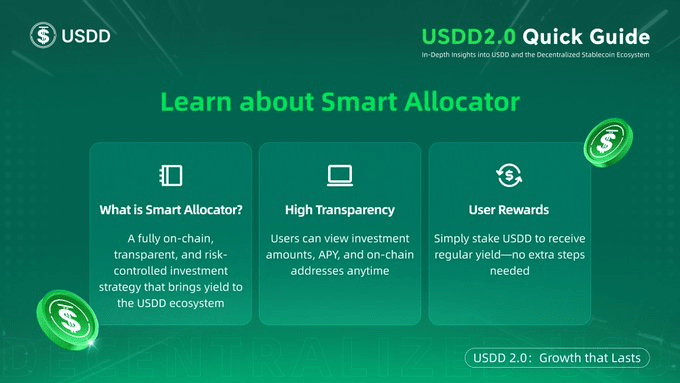
Smart Allocator: USDD’s yield distributor, deploying reserves to protocols like Aave/Venus to earn interest and share it with users. The first round of investments has been completed, and the address is public (0xD00e0079B8CAB524F3fa20EA879a7736E512a5Fc).
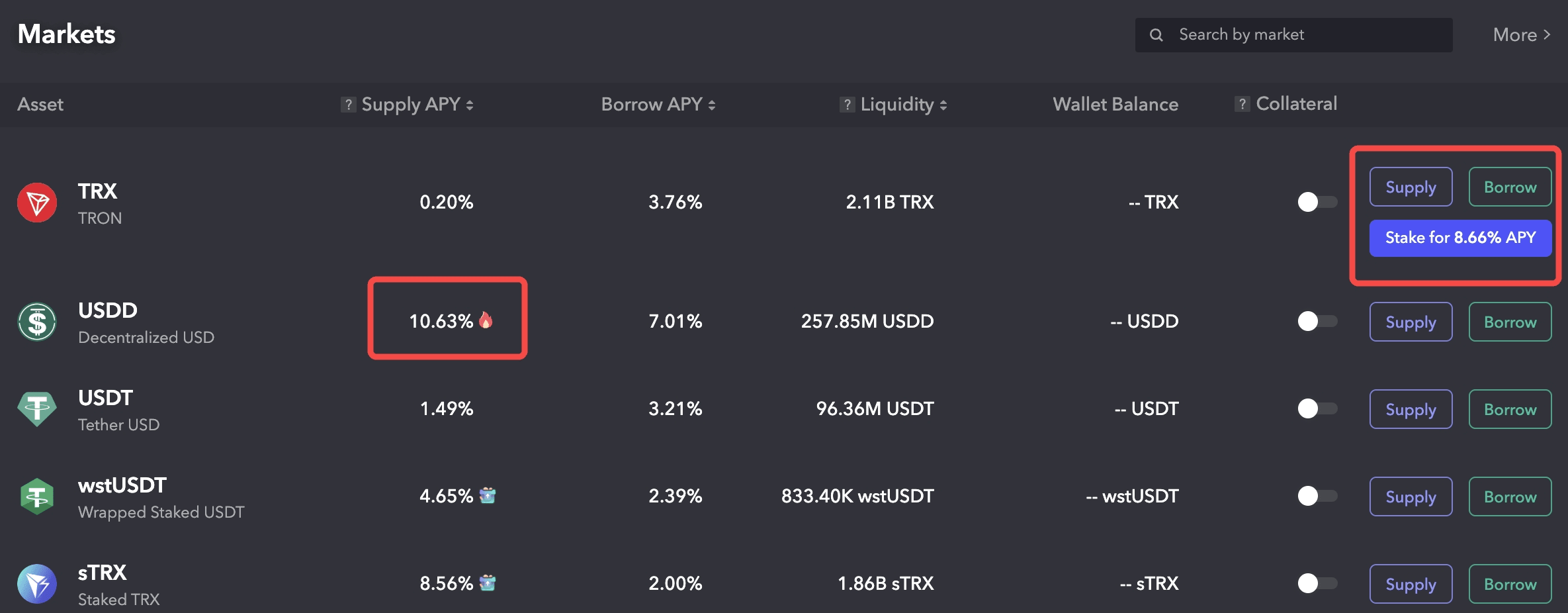
Dual yield strategy: for example, sTRX + USDD path: Stake TRX to earn 8.57% → Mint USDD → Stake again to earn 10.62%, total APY exceeds 19%.
USDD 2.0 has continuously strived to create and showcase an innovative path in the stablecoin space: decentralization + high yields + transparent governance. The recent TVL explosion and multi-chain collaborations signify its transition from 'stability tool' to 'growth engine'.
I recommend everyone join the ecosystem now to experience it firsthand:
Join Binance Yield+ now (ends January 10, 2026).
Monitor Smart Allocator updates and focus on Ethereum/BNB deployment yields.
Join the USDD community and participate in the Learn to Earn event to earn rewards.


