

To be honest, my previous focus in the stablecoin space was also quite fixed: USDT, USDC, DAI. These three have large volumes and stable scenarios, essentially being the default configuration for on-chain users. However, with several waves of increasing regulation this year, changes in on-chain yield structures, and a growing demand for 'transparent collateral' and 'cross-chain composability', I had to reassess Decentralized USD (USDD), and found that this project has indeed undergone significant structural changes in the past few months.
First, let's clarify the fundamentals. USDD, short for Decentralized USD, is a decentralized stablecoin aimed at pegging to 1 US dollar, with a total market capitalization maintained at several hundred million dollars, and a circulation of about over 600 million tokens, with prices slightly fluctuating around 1 US dollar. In terms of volume, it certainly cannot be directly compared to global settlement-level stablecoins like USDT and USDC, but in the niche of 'decentralized stablecoins', it is no longer a small-scale project; rather, it has a certain depth and a continuous iteration roadmap.
More importantly, when the market discusses USDD now, it can no longer simply use the concept of 'algorithmic stablecoin' to categorize all its stages. The previous version, USDDOLD, leaned more towards algorithmic adjustment, but in 2025, USDD will adjust its mechanism towards 'over-collateralization, full-chain transparency, and user verifiability', and clearly distinguish between historical and current versions, reducing the interference of old narratives, allowing the market to more accurately assess the current model.
If we place USDD in the broader context of the stablecoin industry in 2025, the reasons for transformation become clearer. The on-chain settlement position of stablecoins is already well-known, occupying a significant proportion of overall cryptocurrency trading volume; whether in DeFi, cross-border business, or on-chain payments, stablecoin infrastructure is indispensable. And when funds simultaneously pursue 'transparency' and 'decentralized guarantees', those stablecoins willing to make reserves public, solidify collateral ratios, and deploy across chains will naturally gain more discussion.
The mechanism of USDD after adjustment has three keywords: over-collateralization, reserve structure transparency, and on-chain verifiability. For example, based on recently published data, the value of collateral assets is usually higher than the circulation, and the corresponding collateralization ratio is in an excessive range. The collateral assets include TRX, sTRX, and some mainstream stable assets with good liquidity. This combination is similar to the design philosophy of DAI: transparent asset structure, clear collateral path, and publicly verifiable addresses. For users, such mechanisms are easier to independently verify and facilitate risk assessment.
Another reason for my renewed focus on USDD is its accelerated multi-chain deployment and liquidity expansion starting in 2025. Many people previously associated it closely with the Tron ecosystem, but now USDD has been natively issued on Ethereum and BNB Chain, rather than expanding through bridging. For stablecoins, the significance of native deployment lies in its ability to become a foundational asset that can be combined and participate in core protocols within multi-chain DeFi, rather than being a single-chain product within a certain ecosystem.
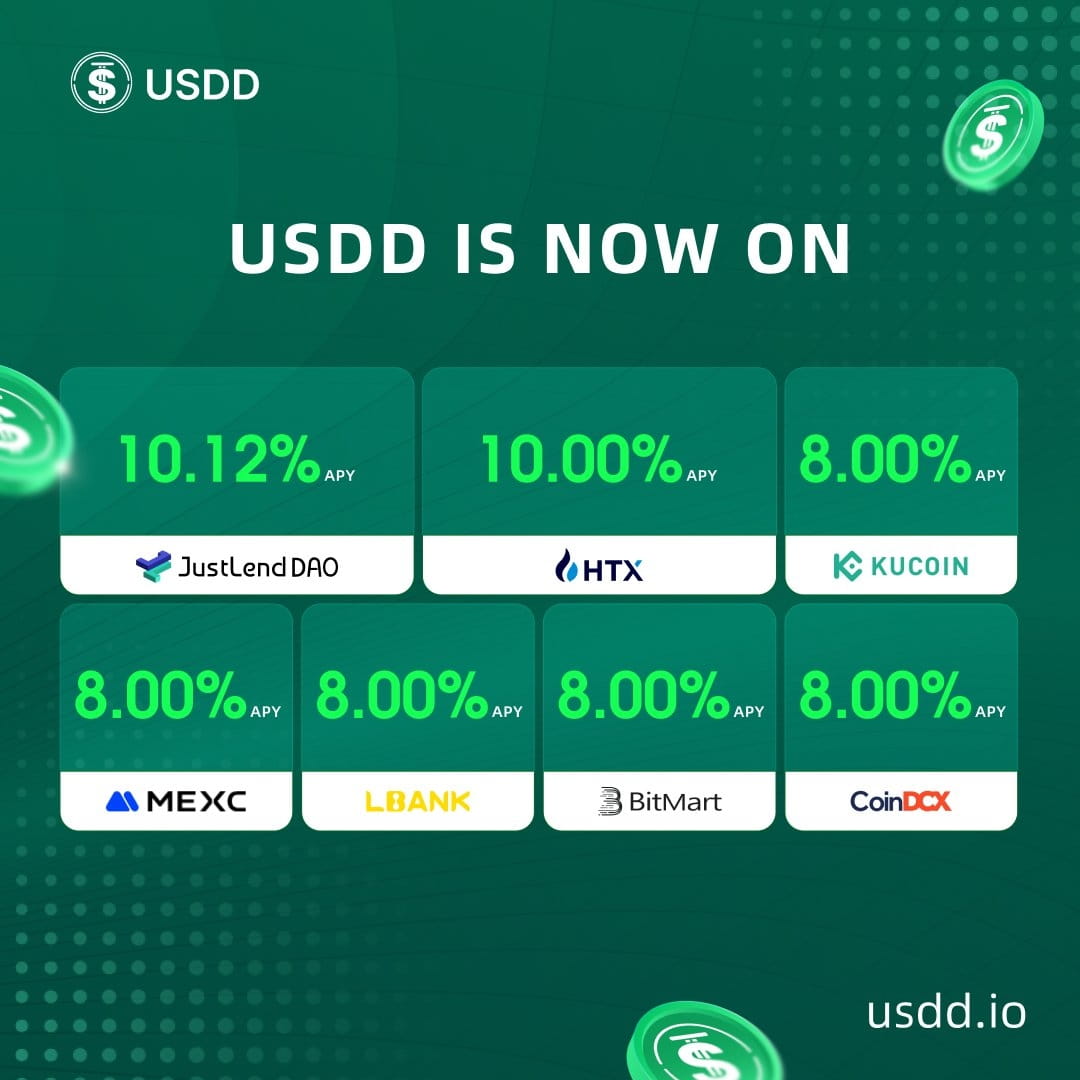
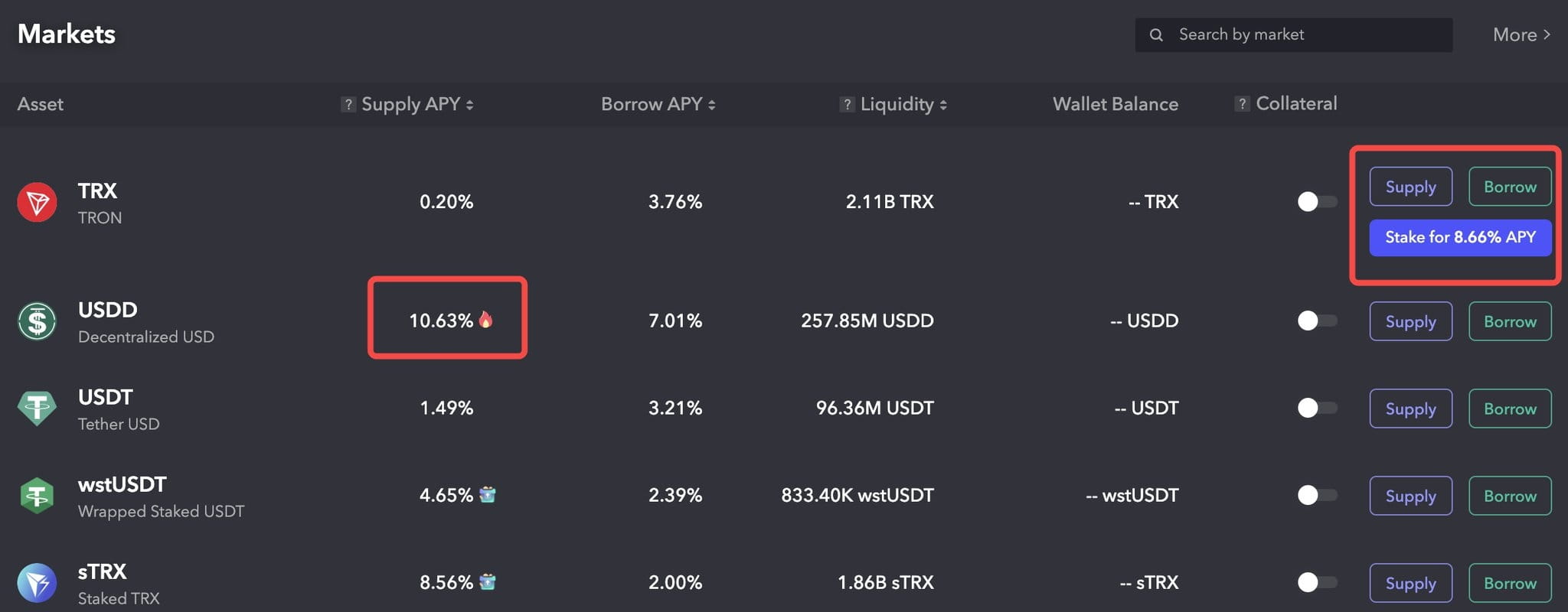
Meanwhile, the changes in USDD's revenue structure have also significantly increased its discussion in the community. 'Yield-bearing versions' like sUSDD have previously shown good performance in their yield ranges; at the same time, in some mainstream DEXs, the stablecoin pools that USDD participates in also offer attractive on-chain yields for holders. Of course, merely looking at the APY figures is not complete; the sustainability of any yield needs to be analyzed from its sources.
From publicly available information, revenue roughly comes from two directions: part is driven by on-chain revenue generated from collateral assets; the other part comes from incentives on the ecological side. The former determines robustness, while the latter determines short-term activity. What users should truly focus on is whether the revenue structure is transparent, whether the composition is reasonable, and whether the protocol can maintain stability under pressure.
In the larger landscape, USDD's current position can be summarized as follows: it does not pursue competition with the large-scale USDT and USDC, but rather strengthens its direction in 'decentralization, transparent collateral, multi-chain usage scenarios, and verifiable revenue structure'. The market's evaluation logic for it has gradually shifted from 'is it stable' to 'can the long-term mechanism be sustained, can the cross-chain ecology be extended, and is the transparency sufficient'.
If I were to judge USDD from the perspective of a real on-chain user, I would break it down into three dimensions:
First, stability. Collateral ratio, asset liquidity, on-chain transparency, and redemption logic are all core indicators of stablecoins. Looking back over the past period, USDD has shown relatively stable performance, but extreme market conditions will always be the ultimate test for stablecoins, so it still requires time for verification.
Second, the usage scenarios. With the native deployment expanding to Ethereum and BNB Chain, it can now participate in core components such as lending, LP, and cross-chain routing. Whether a stablecoin is genuinely used does not depend on promotion but on whether it is integrated into protocols and adopted by users.
Third, the revenue structure. The level of returns can attract attention, but whether it is healthy in the long term depends on the composition and sustainability of the returns. Personally, I prefer to start with small positions to experience and understand the mechanism before considering expanding my allocation.
Overall, whether USDD can genuinely solidify the idea of 'seeing trust through stability' depends on three points: the robustness of the mechanism, the expansion capability of cross-chain scenarios, and the transparency of the revenue structure. The direction it is currently taking is to transform from being 'passively discussed' to 'actively entering the competitive landscape'. At this stage, including it in the stablecoin observation portfolio is a reasonable choice.


