In this writing, here are six practical types of entries that every swing trader should know, along with when and why they work.
1. PDH entry
The price is moving above yesterday's high. It shows the continued strength from the last session.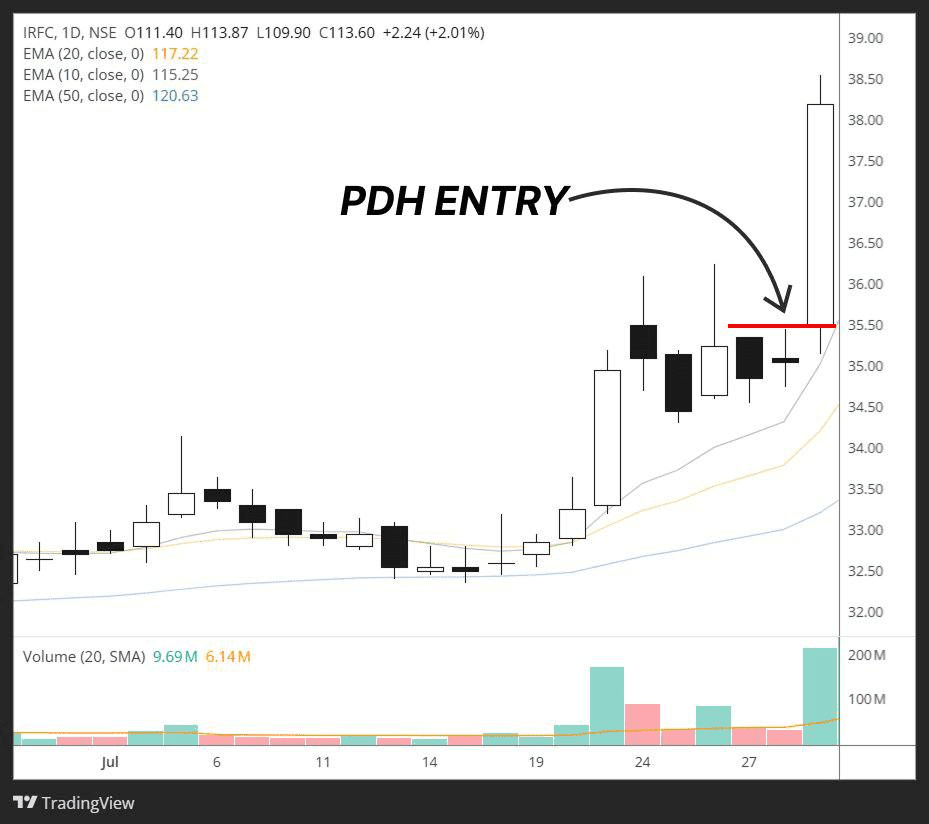
2. Strong start entry
The stock opens well and shows clear strength and large volume in the first few minutes. After the initial push, a break of any range formation can be used as an entry. Useful in leading stocks.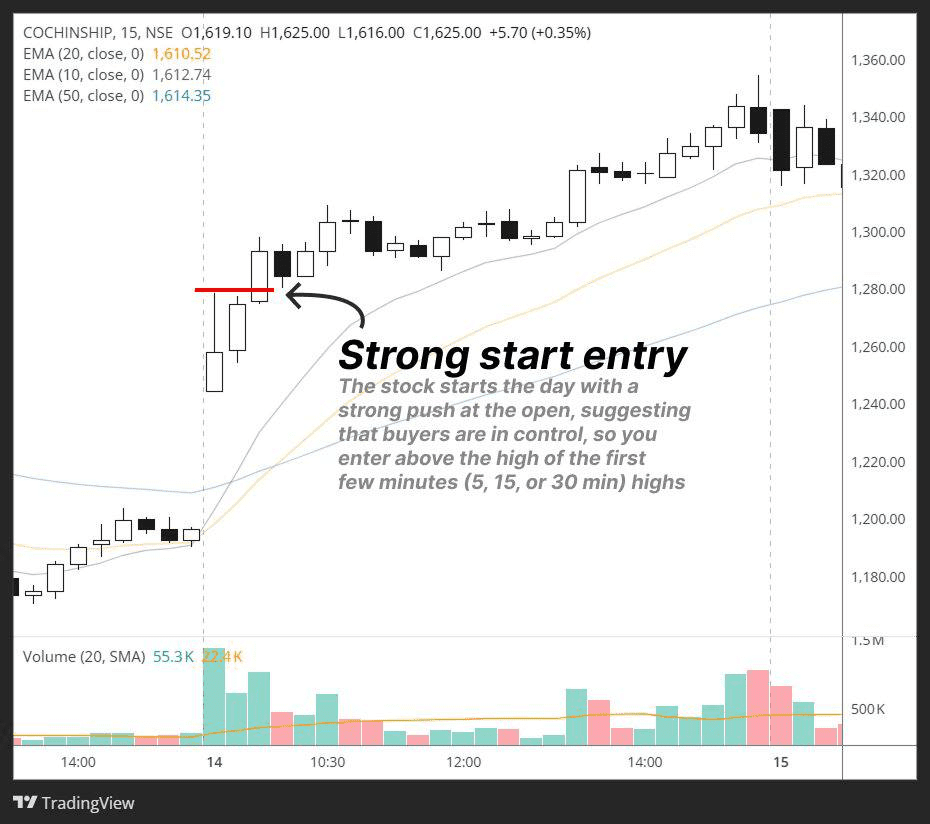
3. Entry of the pivot break
The price breaks a level that has been rejected multiple times. This indicates that sellers at that level have finally cleared the way. A clean breakout candle usually confirms this.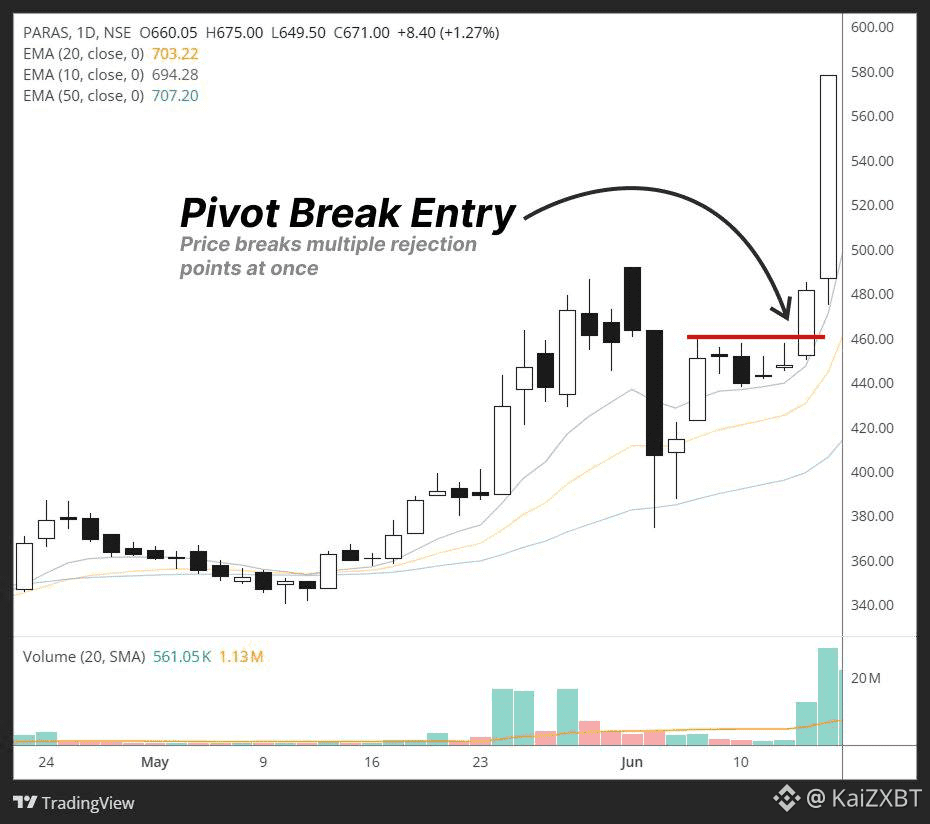
4. Entry of the expectation
Entering slightly before the breakout, typically within a tight consolidation on a day when prices were very tight, at the end of the day. The structure should already be strong for the breakout chances to be higher. It provides a better risk-to-reward ratio.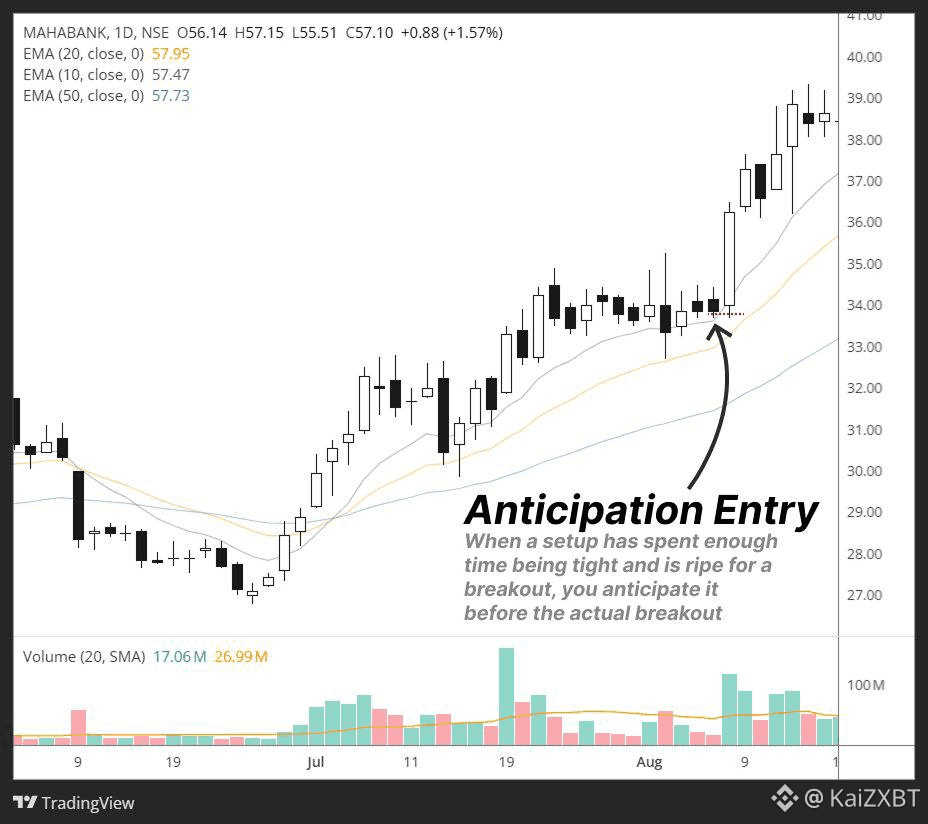
5. Entry of the pullback
Buying a stock that is already topping when it dips to the EMA, trend line, or support area. The pullback should be controlled, not aggressive.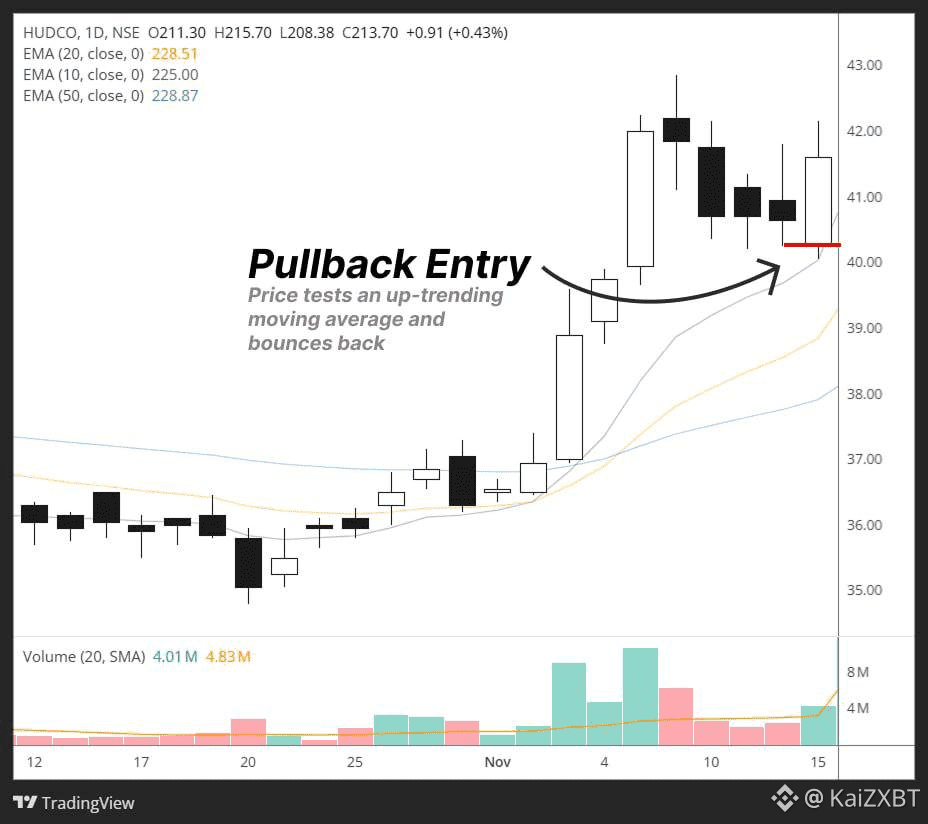
6. Entry of the internal day
Price remains within the range of the previous day, indicating a contraction. When it breaks above the internal day high the next day, it often leads to a clear continuation move.