
Binance, as the world's largest cryptocurrency exchange, once again brings an unprecedented airdrop feast for users. According to the official announcement, the USDD airdrop event will officially start on December 11, 2025, and the reward claiming period will continue until January 10, 2026, lasting a full month.
The total reward pool for the event is as high as $300,000, distributed at a rate of $10,000 per day, first come first served, while supplies last. Compared to previous airdrop events, the participation threshold this time is extremely low, requiring only a stake of 100 USDT to qualify for participation, making it an excellent opportunity for retail investors.
According to industry data, the total amount distributed through airdrops in the entire cryptocurrency market reached an astonishing $14.91 billion in 2024, with DeFi projects accounting for 22.2% ($3.31 billion) of the share. The USDD airdrop activity from Binance continues this trend, providing users with a low-risk, high-return investment opportunity.
It is worth noting that USDD, as an algorithmic stablecoin, is pegged to the US dollar, providing high stability. By participating in this airdrop event, users can not only receive additional token rewards but also experience various functions of the Binance wallet, making it a win-win situation.
2. Detailed operation tutorial
Step 1: Enter the activity page
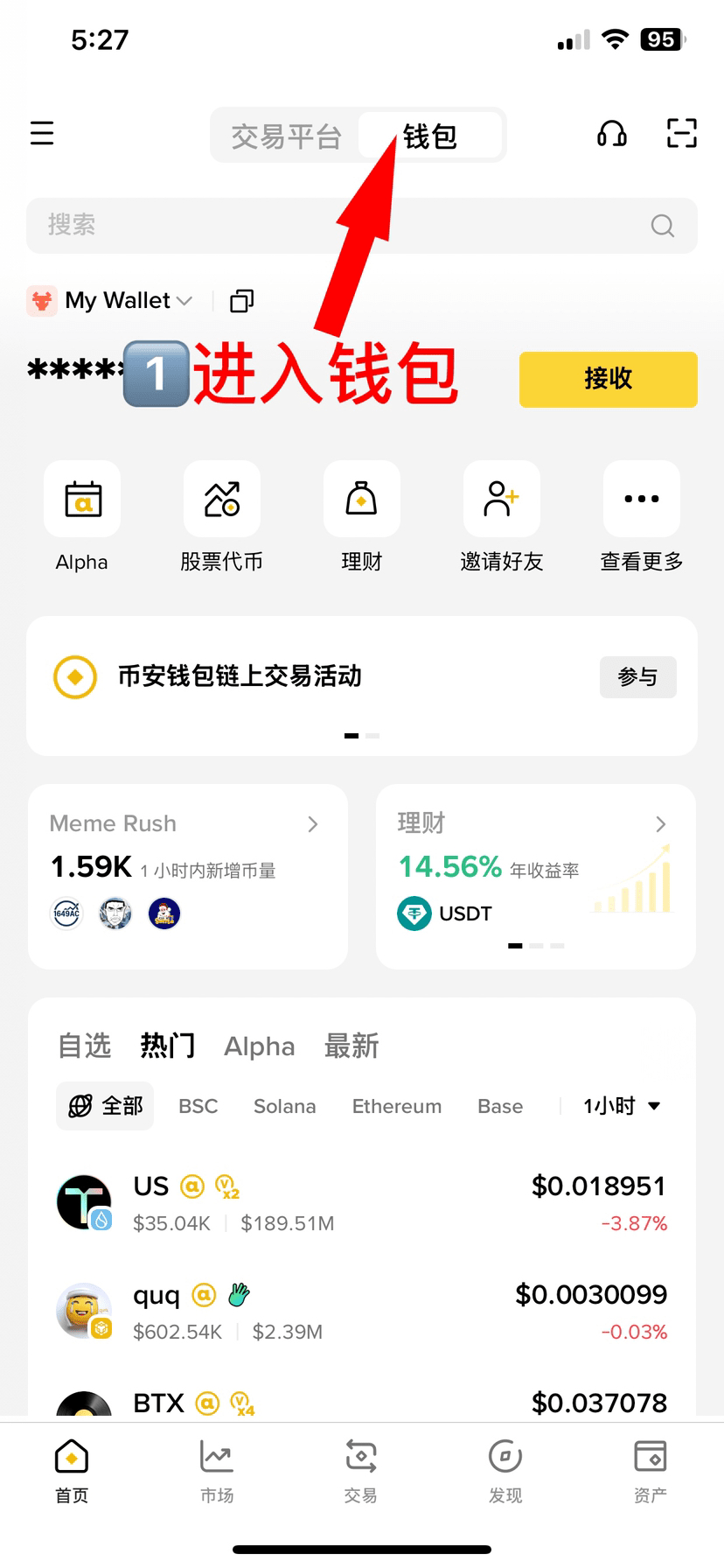
First, open your Binance wallet app (make sure it is updated to the latest version), find and click the [Wallet] icon in the bottom navigation bar on the homepage. After entering the wallet page, switch to the [Web3] tab at the top, and then look for the entrance to the [Activity Center] on the page.
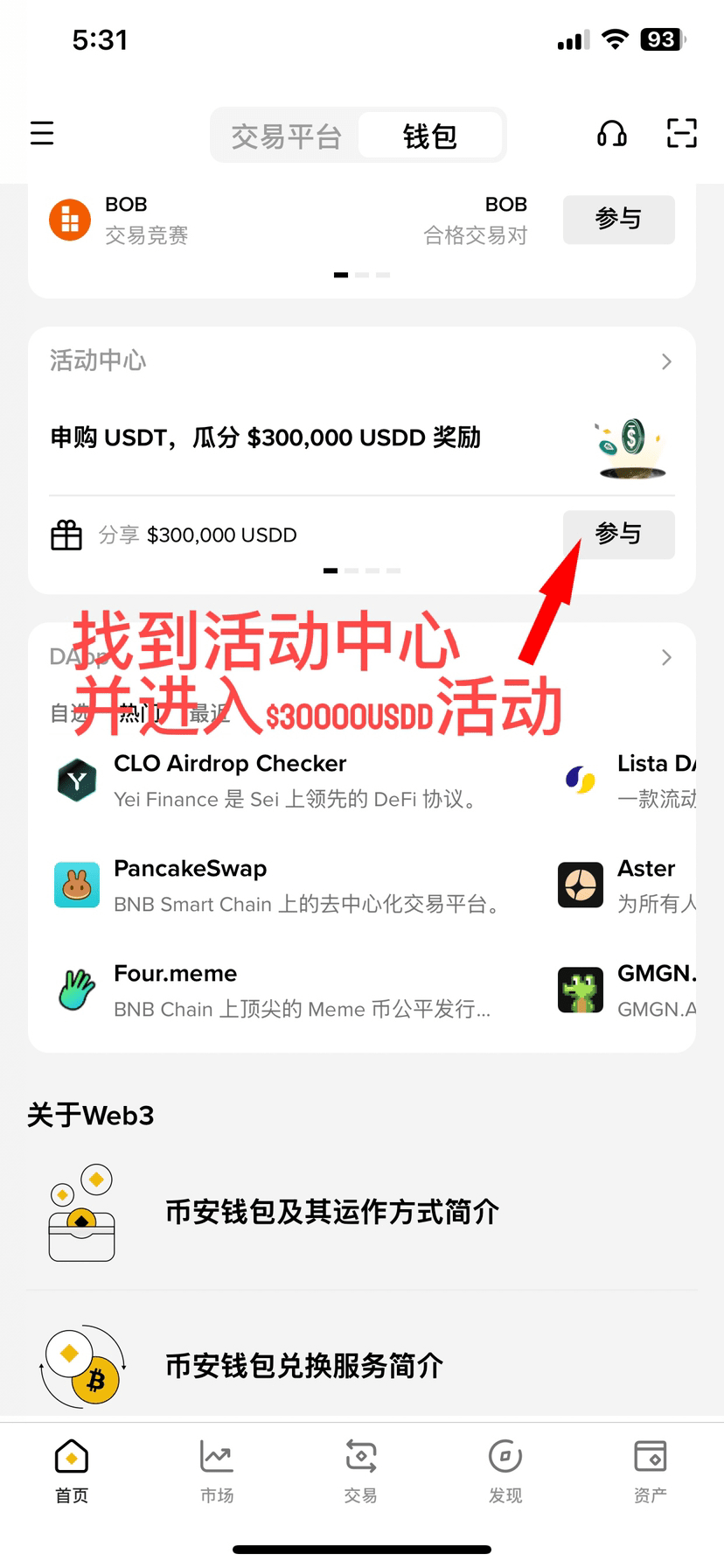
On the wealth management page, you will see a list of various ongoing activities. Find the [USDD Airdrop Event] and click to enter, which will take you to the staking participation interface. The whole process is very simple, and even users who are using the Binance wallet for the first time can easily get started.
Step 2: First Subscription Operation
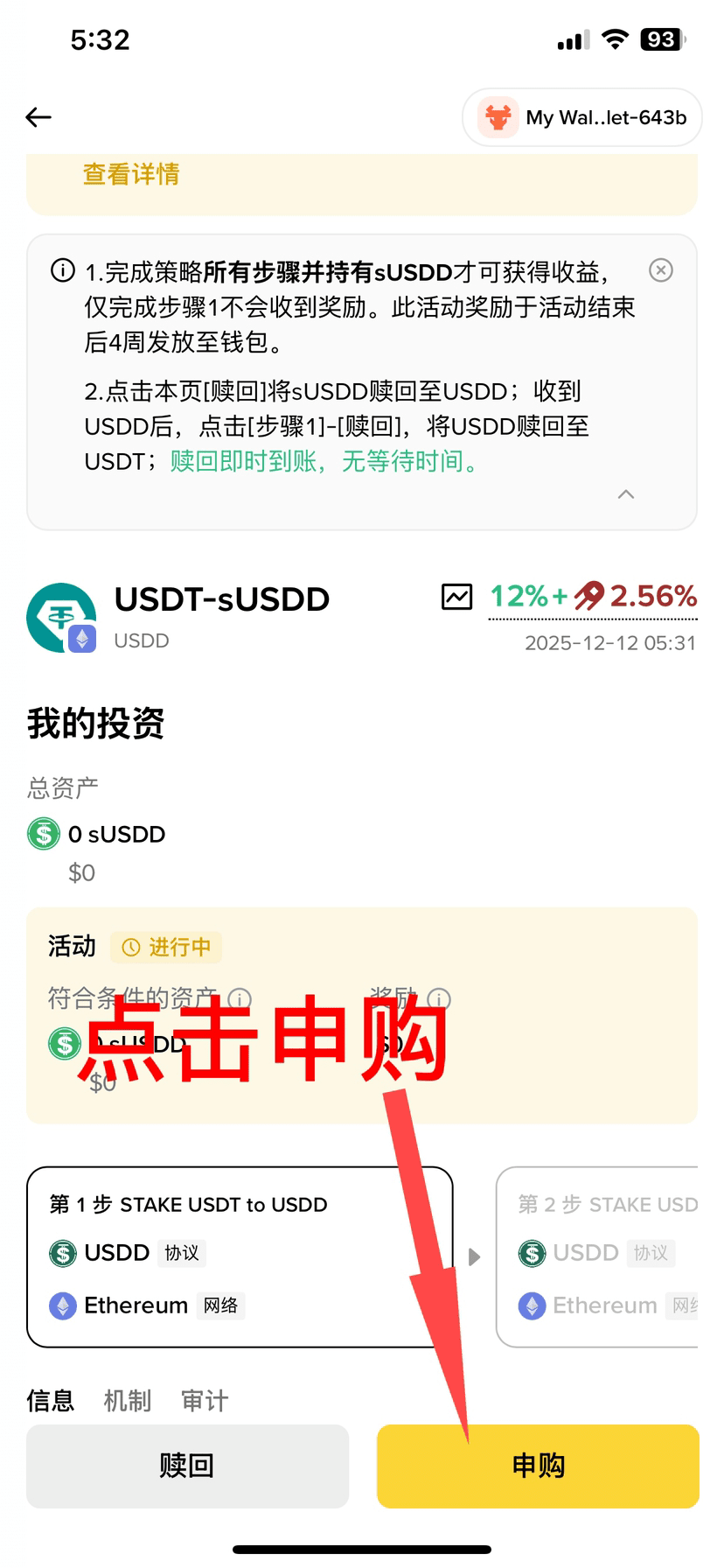
After entering the staking interface, you will see two step options: Step 1 and Step 2. We first need to complete the subscription operation for Step 1.
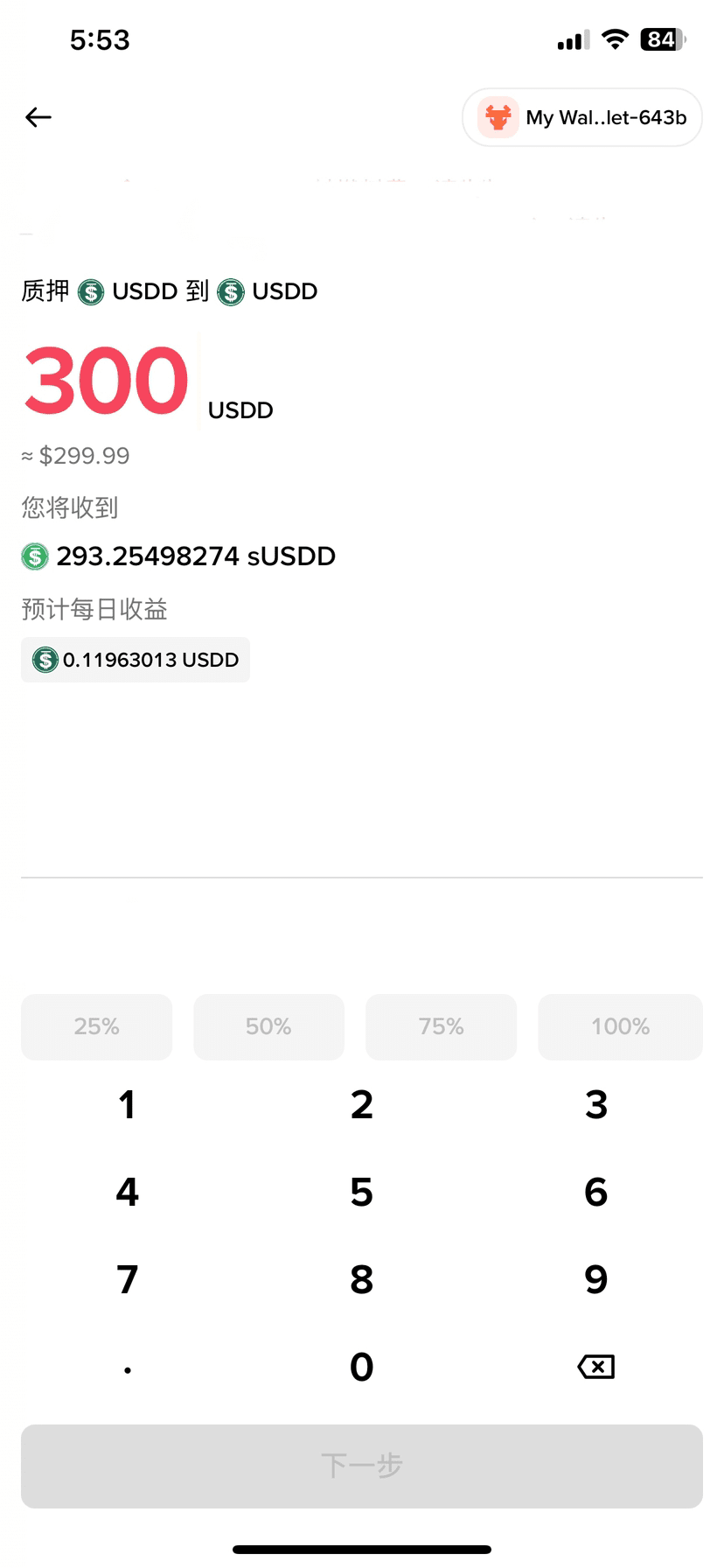
Click the [Step 1] - [Subscription] button, and the system will pop up the subscription page. On this page, you need to enter a subscription amount of at least 100 USDT. According to the activity rules, the minimum staking amount is 100 USDT, with no upper limit, so you can choose a suitable staking amount based on your financial situation.
After entering the amount, the system will automatically calculate and display the estimated daily income and related fees. After confirming that all information is correct, click the [Next] button, and then click [Confirm] again to complete the first subscription. During this process, you can adjust the subscription amount at any time until you are satisfied with it.
It should be particularly noted that Binance uses smart contract technology for staking operations, making the entire process transparent and secure. Your USDT will be locked in the smart contract until the event ends or you actively withdraw your stake.
Step 3: Complete the second confirmation
After completing the first subscription, the page will usually automatically redirect to the Step 2 interface. If it does not redirect automatically, you can manually select the [Step 2] - [Subscription] option.
In the Step 2 interface, you need to re-confirm the staking information and complete the final authorization operation. Click the [Approve USDD] button, and the system will pop up a confirmation window showing the details of the operation you are about to perform. Carefully check all information, including the staking amount and expected returns, and after confirming everything is correct, click the [Confirm] button.
The purpose of this step is to ensure the safety of funds and ensure that only you can operate this pledged capital. Binance uses multiple security verification mechanisms, including password verification, SMS verification, etc., to maximize the protection of user assets.
Step 4: Confirm Staking Success
After completing all operations, you will see a prompt on the page saying 'Staking Successful'. At the same time, you will receive sUSDD tokens on the ETH chain in your wallet, indicating that you have successfully participated in this airdrop event.
sUSDD is a token that represents your staking rights, with a 1:1 relationship to the amount of USDT you stake. For example, if you stake 1000 USDT, you will receive 1000 sUSDD tokens. These tokens can be traded on the secondary market or exchanged back for USDT after the event ends.
After successful staking, you can check your sUSDD balance on the asset page of the Binance wallet and view daily earnings on the activity page. The system will update the annualized return rate (APR) based on the total locked value (TVL) in the pool on an hourly basis, allowing you to understand income changes in real time.
3. Income calculation and case analysis
Detailed explanation of income mechanisms
The profit mechanism of this USDD airdrop event is designed to be very scientific and reasonable. According to official explanations, the annual return consists of a basic annualized return rate (up to 12%) and floating annualized return rate rewards. This dual-track income model ensures users' basic returns while providing additional growth space.
The annualized return rate (APR) is an important indicator to measure investment returns, reflecting the original returns over one year without considering the impact of compound interest. The annualized percentage yield (APY) includes the effect of compounding, representing the real yield, with the calculation formula: APY = (1 + r/n)^n - 1, where r is APR and n is the number of compounding periods in a year.
In this activity, the APR will be updated hourly according to the total locked value (TVL) in the pool. TVL refers to the total value of assets locked in decentralized finance protocols, in simple terms, the total amount of funds deposited in the smart contract at a specific point in time. Changes in TVL directly affect the income distribution ratio for each participant.
Actual revenue case
To help everyone better understand the method of calculating returns, let's take a specific example. Suppose you subscribed for 1500 USDT, and the TVL of the activity pool on that day is 15,000 USDT, with a daily prize pool of $10,000 USDD.
According to the profit calculation formula:
Expected daily reward = Individual staking amount ÷ Total TVL in the pool × Daily prize pool amount
Substitute data calculations:
1500 USDT ÷ 15000 USDT × 10000 USDD = 1000 USDD
This means that under the above conditions, you can earn $1000 in USDD rewards per day, with a yield of up to 66.7%! Of course, this yield will fluctuate with changes in TVL. If more users participate in staking and TVL increases, your yield will correspondingly decrease; conversely, if TVL decreases, your yield will increase.
Let's take another look at a longer-term revenue analysis. Suppose you maintain a stake of 1500 USDT throughout the entire event period (30 days) and earn an average of $500 in USDD rewards per day, then over 30 days, you could accumulate $15,000 in rewards. This means that your investment of 1500 USDT has achieved a 10-fold return in one month!
Of course, actual returns will be affected by various factors, including:
• Trends in TVL changes
• Changes in the number of participants
• Fluctuations in market conditions
• Adjustments to activity rules
Therefore, it is recommended that everyone closely monitor the real-time data on the activity page and adjust strategies in a timely manner based on market changes.
Risk Warning
Although this airdrop event seems to promise attractive returns, we must also be clear about the risks involved. According to industry research, 88% of airdropped tokens lose value within three months, highlighting the gap between short-term speculation and long-term sustainability.
Therefore, when participating in this event, please be sure to pay attention to the following points:
1. Rational investment: Do not invest more than you can afford; it is recommended to keep the staking amount within 20% of your disposable income.
2. Focus on the market: Closely monitor the price trends of USDD and market dynamics, and adjust investment strategies in a timely manner.
3. Diversify risks: Do not invest all funds into one project; it is recommended to engage in diversified investments.
4. Understand the rules: Read the activity rules carefully, especially the important terms regarding staking duration, unlocking conditions, etc.
5. Protect assets: Ensure the security of your Binance account by enabling two-factor authentication and other security measures to avoid asset loss.
4. Industry background and development trends
The rise of airdrop economy
Airdrops have become an important marketing tool in the cryptocurrency industry, serving as a key method for projects to attract users and expand communities. According to statistics, the total value of tokens distributed through airdrop activities reached $14.91 billion in 2024, with Layer 2 projects receiving $4.22 billion (28.3%) and DeFi projects receiving $3.31 billion (22.2%).
The essence of an airdrop is a marketing strategy of 'free token distribution'. The project team issues tokens for free to users to achieve the following goals:
• Increase project visibility and exposure
• Attract new users to register and use
• Incentivize users to participate in community building.
• Promote the circulation and trading of tokens
From historical data, successful airdrop cases are not uncommon. For example, Hyperliquid airdropped 28% of HYPE tokens to early users, with a total market value exceeding $7 billion, making it one of the most successful airdrops in crypto history. Starknet airdropped 700 million tokens to 1.3 million addresses, worth $1.33 billion, effectively expanding the influence of its Layer 2 ecosystem.
The development of DeFi staking
Staking, as one of the core mechanisms in the DeFi field, has become an important way for users to obtain passive income. In simple terms, staking is where users "lock" their held cryptocurrencies into a specific system to help the blockchain network confirm transactions and generate new blocks.
According to industry data, the current staking rate of Ethereum is about 29.6% (worth over $150 billion), Solana's staking rate is about 66%, Polkadot's staking rate is close to 49%, while Cosmos (ATOM) maintains a staking rate of around 20%. This data fully illustrates the important position of staking in the cryptocurrency ecosystem.
The sources of staking income mainly include:
• Network issuance rewards: This is the main source of income, usually distributed in token form.
• Transaction fee sharing: Validators can earn a portion of the transaction fees.
• Liquidity mining rewards: In some DeFi protocols, staking can also earn additional token rewards.
There are three main ways to stake:
1. Independent Validators: Need to set up servers, run node software, and stay online 24 hours, which is a high threshold suitable for users with strong technical abilities
2. Entrust Staking: Delegate tokens to professional node operators to obtain profit sharing.
3. Staking Pool: Multiple users pool their tokens into one pool, managed by professional operators, sharing risks and profits.
Prospects of the stablecoin market
USDD, as an algorithmic stablecoin, has unique advantages in the current market environment. Stablecoins serve as a bridge between cryptocurrencies and traditional finance, with their market demand continuing to grow. According to the latest data, the total market value of global stablecoins has surpassed $100 billion, with USDT, USDC, and BUSD accounting for the majority share.
Algorithmic stablecoins have the following advantages compared to traditional collateralized stablecoins:
• No need for over-collateralization, higher capital efficiency
• Higher degree of decentralization, not controlled by a single institution
• Can automatically adjust supply according to market demand
• Lower issuance costs and greater sustainability
Of course, algorithmic stablecoins also face challenges such as price stability, market acceptance, regulatory compliance, etc. However, with continuous technological advancements and gradual market maturity, algorithmic stablecoins are expected to play a larger role in the future.
5. Participation suggestions and risk control
Best participation strategies
Based on an in-depth analysis of the activity mechanism, I have summarized the following participation suggestions:
1. Participate as early as possible: Since rewards are distributed daily on a first-come, first-served basis, it is recommended that everyone complete the staking operation as soon as possible to seize the opportunity. Especially in the first few days of the event, TVL is relatively low, and yields will be higher.
2. Reasonable allocation: Choose a suitable staking amount based on your risk tolerance and financial situation. It is advisable to adopt a 'laddered' strategy, first investing a small amount to test, and then gradually increasing once safety is confirmed.
3. Continuous monitoring: Closely monitor changes in TVL on the activity page, APR updates, daily income, etc., and adjust strategies in a timely manner. Particularly when TVL is growing rapidly, consider increasing the staking amount.
4. Flexible operations: The staking period for this event is relatively flexible, allowing users to adjust at any time according to market conditions. During significant market fluctuations, consider reducing the staking amount; during stable market conditions, consider increasing the staking amount.
5. Diversify investments: Do not invest all funds into the USDD airdrop project; it is recommended to participate in other high-quality DeFi projects simultaneously to achieve risk diversification.
Risk control measures
Although this airdrop event seems like a rare opportunity, we must maintain a clear mind and manage risks well:
1. Technical Risk: Smart contracts may have vulnerabilities or be subject to attacks. Although Binance is a large platform with high security, it is still recommended that everyone does not invest too much capital.
2. Market Risk: The price of USDD may fluctuate, and a significant drop in price may affect actual returns. It is recommended to withdraw or convert to other stable assets in a timely manner after obtaining profits.
3. Liquidity Risk: Funds are locked during the staking period and cannot be withdrawn at any time. If an emergency arises and money is needed, it may lead to liquidity difficulties.
4. Policy risk: The cryptocurrency market is greatly influenced by policies from various countries, which may lead to policy changes that interrupt activities or impair earnings.
5. Operational risks: There may be asset losses due to operational errors during the process, such as selecting the wrong network or entering the wrong address. It is recommended to read the instructions carefully before operating and seek professional help when necessary.
Long-term investment suggestions
For users who hope to achieve long-term gains through this event, I have the following suggestions:
1. In-depth understanding of the project: Focus not only on short-term returns but also on deeply understanding the technical architecture, team background, development plans, etc., of the USDD project, to assess its long-term value.
2. Learn DeFi knowledge: Participate in this event to learn the basic concepts and operational methods of DeFi, laying the foundation for future participation in more DeFi projects.
3. Establish an investment system: Develop an investment strategy and risk control system that suits you, including asset allocation ratios, profit-taking and stop-loss standards, etc.
4. Pay attention to industry dynamics: Keep a close eye on the development trends of the cryptocurrency industry, especially the latest developments in DeFi, stablecoins, Layer 2, and other fields.
5. Maintain a rational mindset: Stay rational during the investment process, avoid being dazzled by short-term gains, and do not panic due to temporary losses. Remember, investing is a marathon, not a sprint.
Take immediate action and seize the opportunity
After a detailed analysis and introduction, I believe everyone now has a comprehensive understanding of the Binance wallet USDD airdrop event. This is truly an investment opportunity not to be missed, with a $300,000 reward pool, a low entry threshold of 100 USDT, and a maximum basic annualized return of 12%, all of which are very enticing.
However, I must remind everyone again that investing carries risks, and one must be cautious when entering the market. Before participating in any investment activity, one should fully understand the project situation, assess their own risk tolerance, and develop a reasonable investment strategy.
For this event, my suggestion is:
• Take immediate action: Open the Binance wallet now, follow the tutorial steps to complete the staking operation, and do not miss this once-in-a-lifetime opportunity.
• Rational investment: Choose an appropriate investment amount based on your actual situation, and do not blindly follow the crowd.
• Continuous monitoring: Keep a close eye on activity progress and market changes, and adjust investment strategies in a timely manner.
• Learn and grow: Use this event as an opportunity to learn about DeFi and improve your investment skills.
@USDD - Decentralized USD Finally, I want to say that the cryptocurrency market is full of opportunities and challenges. 2025 is a year full of uncertainties and hope. As long as we maintain a learning mindset and invest rationally, we can surely achieve our own returns in this market.
Remember, successful investing relies not on luck, but on knowledge, patience, and discipline. I hope everyone can start their DeFi wealth journey through this USDD airdrop event!
Now take action and let's seize this rare opportunity together to reap substantial investment returns by the end of 2025!#USDD以稳见信

