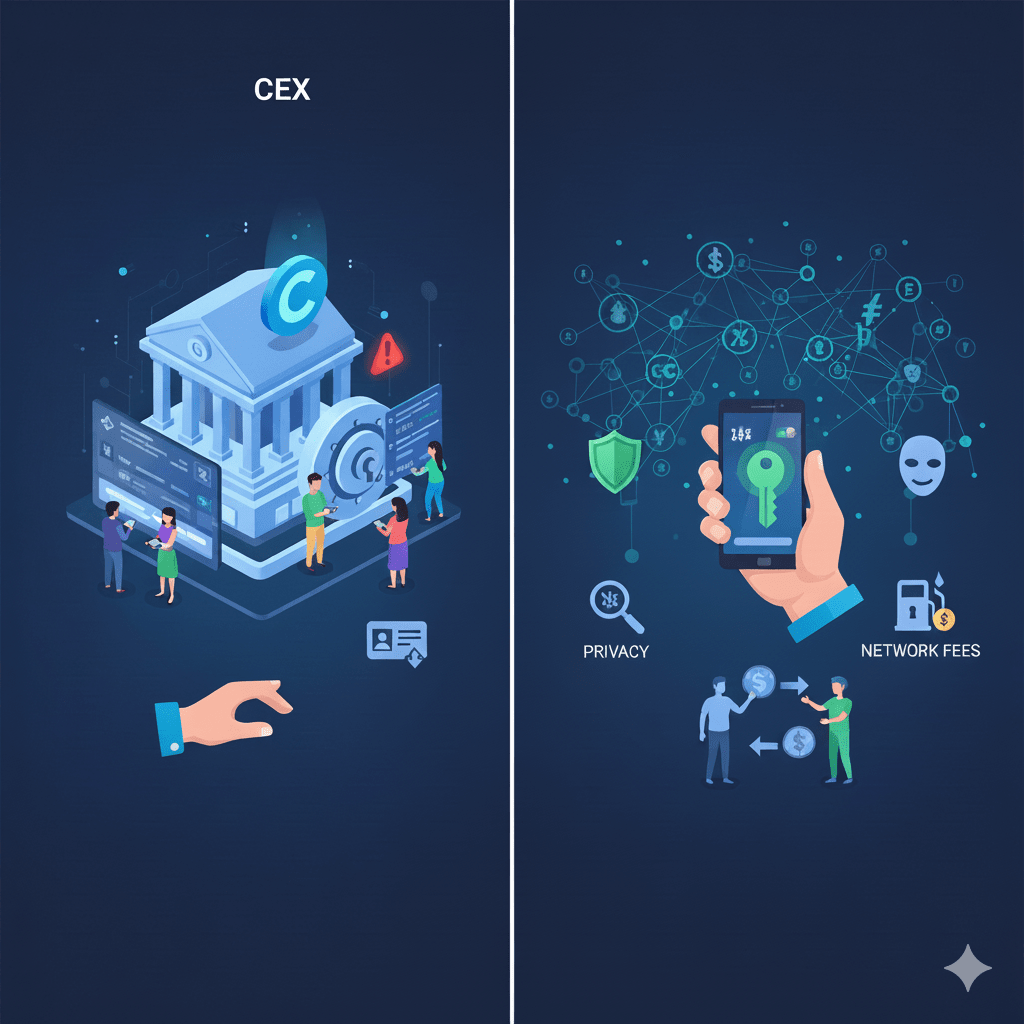
Centralized Exchanges (CEX) - Like a traditional bank or stock exchange
1. Intermediary: There is a company (like Binance, Coinbase) that controls the platform.
2. Custody: They hold your cryptocurrencies for you (in their wallets).
3. Operation: To trade, you must register (KYC) and deposit your money or cryptos on the exchange.
4. Advantages:
· Easy to use (similar to banking apps).
· High liquidity (many buyers and sellers).
· More features: trading with complex orders, financing options.
5. Disadvantages:
· Hacking risk: They are a big target for hackers.
· Control: You do not have the private keys to your cryptos. If the company has problems, you may lose access.
· Require identification (loss of privacy).
---
Decentralized Exchanges (DEX) - Like a marketplace between people (P2P)
1. Without intermediaries: There is no company in charge. It works with smart contracts on a blockchain.
2. Self-custody: You always control your cryptocurrencies from your own wallet (like MetaMask).
3. Operation: You connect your wallet to the DEX (e.g., Uniswap, PancakeSwap) and trade directly with other users.
4. Advantages:
· Total control: You are the sole owner of your funds.
· Privacy: You do not need to register with your identity.
· Security: With no central deposit, it is much harder to hack users' funds.
5. Disadvantages:
· Complexity: Less intuitive for beginners.
· Responsibility: If you lose the keys to your wallet, you lose everything. There is no recovery.
· Variable liquidity: It may be lower for some cryptocurrencies.
· Network fees: You pay fees (gas) for each transaction on the blockchain.
In simple summary:
· CEX: Convenience and ease. Ideal for starting and trading with traditional money (fiat). You trust a company.
· DEX: Control and privacy. Ideal for those who prioritize sovereignty over their assets. You trust the code (blockchain).