@Falcon Finance is emerging at a moment when decentralized finance is still trying to answer a fundamental question: how can people unlock liquidity from the assets they already own without being forced to sell them, abandon long-term exposure, or expose themselves to unnecessary liquidation risk? For years, DeFi has offered lending platforms, stablecoins, and yield mechanisms, yet most operate within narrow boundaries. They often accept only a handful of assets, deliver yield through emissions rather than true economic activity, or require users to choose between holding an asset and using it. Falcon Finance steps into this landscape with an entirely different approach one that tries to dissolve these trade-offs through something it calls universal collateralization.
At the center of Falcon’s vision is a synthetic dollar known as USDf. The idea is familiar on the surface: users deposit assets into a protocol, and in return, they receive a dollar-pegged token backed by those deposits. But Falcon treats collateral very differently. Instead of limiting users to the usual set of stablecoins or blue-chip assets, it opens the doors to a broad universe of liquid collateral stablecoins, major cryptocurrencies, altcoins, and even tokenized forms of real-world assets like Treasury bonds. Anything that is liquid, custody-ready, and properly integrated can potentially serve as collateral. That simple shift dramatically expands who can participate and how capital can move within the system. Someone holding BTC can mint USDf without selling it, just as someone holding tokenized government bonds can unlock liquidity without touching traditional banking rails.
Once collateral is deposited and USDf is minted, the user has a stable unit of liquidity to move across the chain. Some people simply want access to dollars while keeping exposure to their original assets. Others use USDf as working capital across DeFi, placing it in lending markets, trading pairs, or payment flows. Falcon adds another dimension by offering sUSDf, a yield-bearing version of the synthetic dollar. When someone stakes USDf into the protocol, they receive sUSDf, which slowly increases in value as yield accumulates from a range of market-neutral strategies. Instead of relying on inflationary token emissions, Falcon taps into more grounded sources of return funding-rate arbitrage, cross-exchange inefficiencies, liquidity provisioning, and staking strategies that aim to generate steady yield without exposing depositors to heavy directional market swings.
This design tries to solve a longstanding issue in DeFi: stability during turbulent markets. Many protocols perform well when everything is going up, only to unravel when the market turns. Falcon’s architecture and risk engine are built to avoid that trap. Overcollateralization ensures that more value remains locked in the system than USDf circulating. A sophisticated monitoring engine tracks collateral health and responds to volatility. External audits, transparency measures, and insurance layers support user trust. Even as markets fluctuate, the system is engineered to keep USDf solvent and maintain confidence in its peg. That stability is especially important when the protocol begins handling tokenized real-world assets, where institutional users expect dependable risk control rather than speculative behavior.
The interplay between USDf and sUSDf brings a balance that many stablecoin ecosystems lack. USDf stays simple, liquid, and stable ready for use as a transactional currency or DeFi building block. sUSDf grows quietly in the background, rewarding people who choose to stake and participate in the protocol’s broader yield engine. Users decide which path suits their needs, shifting between liquidity and yield as conditions change. Layered on top is Falcon’s governance token, $FF, which ties long-term incentives to protocol ownership and direction. As adoption expands and USDf circulates more widely, the governance token gains a deeper connection to the network’s growth and financial activity.
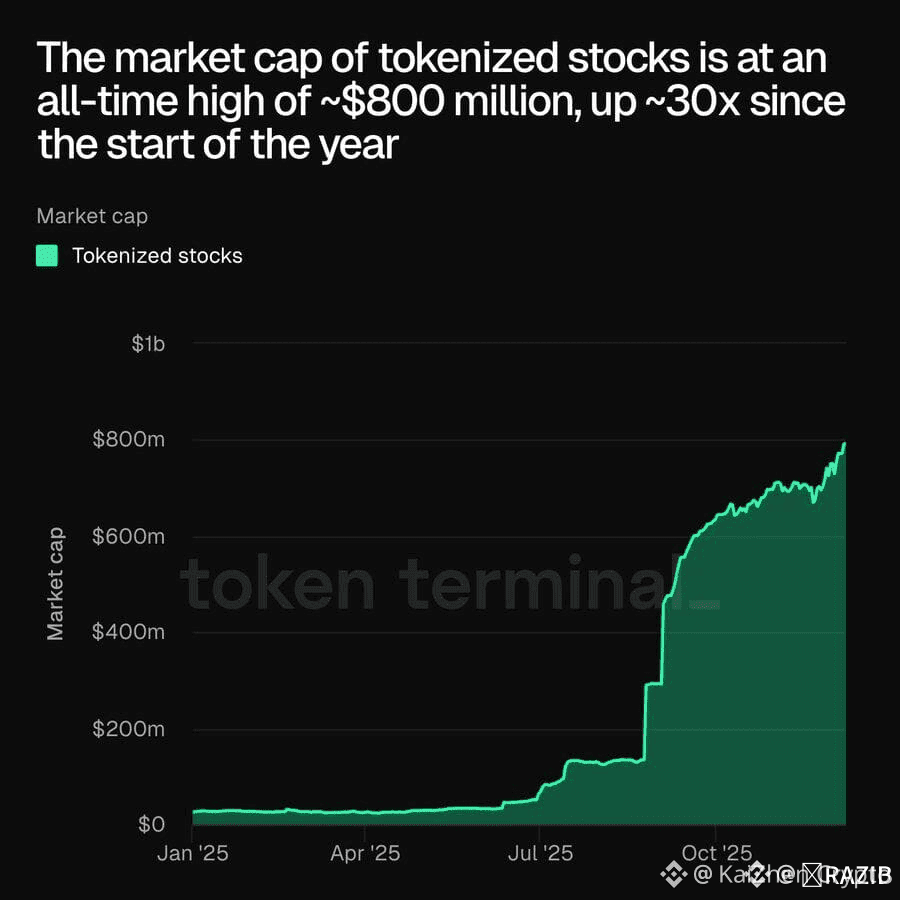
What makes Falcon especially interesting isn’t just the engineering; it’s the bridge it aims to build between traditional finance and decentralized systems. Real-world assets are moving on-chain at a rapid pace, from short-term Treasuries to corporate credit. Many institutions want exposure to the efficiencies of blockchain rails instant settlement, transparent accounting, programmable liquidity but they also need frameworks that feel familiar in terms of risk, compliance, and reliability. Falcon’s infrastructure is attempting to meet that need by offering a decentralized yet professionalized environment where tokenized RWAs can sit alongside crypto assets as collateral. In practice, that means an institution could deposit tokenized Treasury bills, mint USDf, and deploy liquidity on-chain without having to liquidate their traditional holdings or take on undue directional exposure.
Of course, this model comes with challenges. Any system touching synthetic dollars will face regulatory scrutiny, especially as governments become more attentive to stablecoin frameworks. Integrating real-world assets requires careful balance between compliance expectations and DeFi’s ethos of openness. Maintaining a stable peg under stress remains an ongoing responsibility, as history has shown with other synthetic dollar protocols. These are not small obstacles, yet they are the kind that every major player in this space will eventually have to confront. Falcon’s strategy is to meet them early through transparency, overcollateralization, and a risk engine closer to institutional standards than typical DeFi experiments.
Even with these hurdles, interest in the protocol has grown quickly. Developers are integrating USDf into lending markets and liquidity pools. Traders are using it as a stable base for strategies across chains. Institutions exploring tokenized assets are paying attention to its collateral flexibility. Venture backing has added momentum to its expansion. All of this activity points to a protocol that is not merely introducing another stablecoin, but proposing a more adaptable framework for how capital can live and move on-chain.
Falcon Finance ultimately represents a rethinking of what collateralization can be in a decentralized world. Instead of forcing users to choose between liquidity and long-term exposure, it allows both to coexist. Instead of restricting collateral to a short whitelist, it embraces a universe of liquid assets backed by careful risk controls. Instead of relying on incentives that fade when markets turn, it seeks diversified yield streams capable of withstanding different economic cycles. Whether Falcon becomes a foundational layer of on chain liquidity will depend on adoption, governance evolution, and the ability to scale responsibly. But its approach signals a meaningful evolution for DeFi one where liquidity is accessible without surrendering ownership, yield is grounded in real market activity, and collateral is limited only by the breadth of assets the world chooses to tokenize.