

Note: Original author Alien Worlds!
Web3 technology has completely changed the game, allowing players to truly become masters in the virtual world. Although cryptocurrency brings many benefits, the sustainable management of the in-game economy remains a key factor for project success.
If there is a lack of a balanced economic system, reasonable inflation control, and a sound reward mechanism, Web3 games, even if the gameplay itself is outstanding, often collapse under the heavy burden of their own cryptocurrency. Research data from ChainPlay shows that the failure rate of blockchain game projects is as high as 93%, with an average lifespan of only four months.
Currently, the market value of game cryptocurrencies has surpassed $14 billion, and the entire market is expected to reach $124 billion by 2032. In this context, developers need to learn historical lessons more than ever and build games around sustainable economic models. Otherwise, they are doomed to fail.
The power of cryptocurrency
Imagine that after working hard in the game to obtain a rare sword, everything is lost when the server shuts down. In 2021, players of (Might & Magic X: Legacy) faced such misfortune—developer Ubisoft suddenly terminated the game's operation.
Events like this are not isolated. Just two years ago, millions of Chinese (World of Warcraft) players lost their accounts and assets due to server shutdowns. In any Web2 game, such risks are ever-present—players only have a license to use, not ownership of the assets. Once the game stops operating, the virtual wealth they have painstakingly accumulated disappears. This is undoubtedly a heavy blow to players who have invested money and effort.
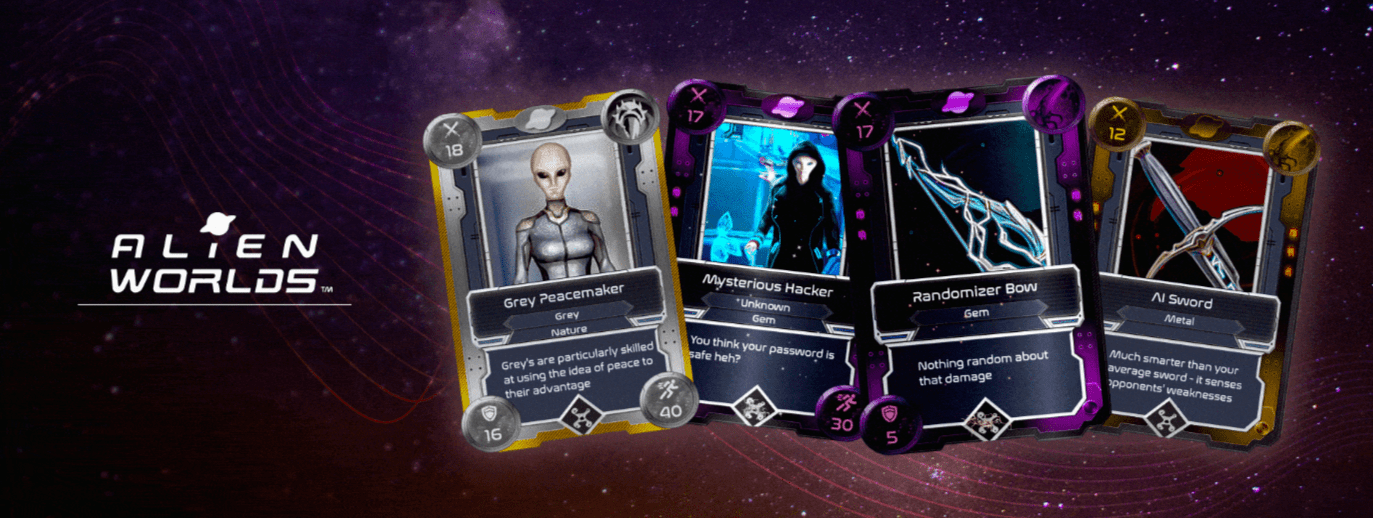
In recent years, blockchain technology has emerged, ensuring that the assets players acquire can permanently exist on the chain. In the (Alien Worlds) metaverse, when players compete for scarce resources, your NFT shovel or land plot belongs only to you and can be exchanged for Trillium (TLM), other NFTs, or fiat currency. In such projects, the value of certain items can even reach thousands of dollars.
Of course, the mechanism of cryptocurrency naturally incentivizes and empowers players—they highly value this freedom: they can convert rare items into real value or exchange them for things they desire. This ownership model has spurred the booming development of blockchain games. In July this year, the total financing in this sector reached $60 million, with the number of active wallets approaching 5 million per month.
However, cryptocurrency also inevitably comes with hidden dangers: if the game economy is built on a fragile foundation, then asset ownership is essentially meaningless. Without a solid foundation, the value of cryptocurrencies will plummet, rewards will become worthless, and players will ultimately turn to more stable competitors. In simple terms, without a well-designed economic model to support it, cryptocurrency becomes meaningless.
Warning cases are everywhere
Failed Web3 games are scattered across the 'graveyard,' and the risk lies with those trapped investors—holding devalued cryptocurrencies—who may permanently exit this field. To address this reality, the relatively successful project Splinterlands launched a $500,000 cryptocurrency game recovery fund aimed at helping those who are struggling rebuild trust.
So, what factors lead to such astonishing failure rates? The answer is certainly multifaceted: from poor gaming experiences and technical barriers to market dynamics and the difficulties of financing and maintaining funds. Considering that projects often rely on the success of core cryptocurrencies, flawed economic models are undoubtedly one of the important reasons for the high failure rate.
Inflation is the 'silent killer' of the Web3 economy: if the production of cryptocurrencies exceeds demand, prices will crash, and players will lose confidence. Last year, Chinese researchers published a study (Exploring the Sustainable Development of Web3 Game Cryptocurrency Economics) (https://www.mdpi.com/2071-1050/16/15/6587) pointing out that a sustainable economic system has a dual positive impact on the value of cryptocurrencies and the number of active users. The author particularly emphasized the 'unique economic design and cross-chain operations' of (Alien Worlds), believing it 'creates scarcity of digital assets through mining and resource interaction mechanisms.'
An imbalance in reward mechanisms is another deadly hidden danger for Web3 games. Overly generous rewards can lead to an imbalance in the economic system, while being too stingy can provoke player dissatisfaction. Early P2E games generally faced issues of reward bias, turning projects into cash-grabbing tools rather than sustainable long-term ventures. When funds dry up, players rush to escape—and those venture capital firms that once provided startup funds for the games will follow suit and withdraw.
Despite many players (most of whom are not true gaming enthusiasts) once being keen on the narrative of 'play-to-earn' (P2E), the inflated prices, endless hype, and panic-induced 'fear of missing out' led to speculative frenzies that ultimately caused many projects to crash in the cycle of boom and bust. In fact, a sustainable economic system needs to achieve a balance: rewards must be substantial enough to maintain player activity, but not so excessive as to cause a collapse in cryptocurrency value.
The secret to longevity
In blockchain games, only less than 10% can avoid premature extinction, which raises the question: what allows them to survive?
Just as exploring the reasons for project failures is important, the factors for success also encompass many aspects: high-quality gameplay, steadfast investors, reasonable reward mechanisms, and a high degree of decentralization. The scarcity of cryptocurrencies (a reasonable supply cap and a surplus cryptocurrency destruction mechanism) is one of the key factors, and actual application value is equally important—ensuring that cryptocurrencies are closely linked to game actions like trading and upgrading. Native cryptocurrencies lacking game utility are ultimately just speculative toys.
If developers are not intent on building a sustainable economic system in Web3 games, they might as well return to the Web2 gaming realm—where long-term success can be achieved with just quality gameplay. In the Web3 world, developers no longer enjoy this luxury: players demand reward mechanisms, desire peer-to-peer interactions, and wish to control their gaming experience through native cryptocurrencies.
In the coming years, sustainability will be the key test of victory or defeat in the Web3 track. Only by combining engaging gameplay with smart cryptocurrency economics can project teams gather a loyal player community, maintain cryptocurrency value, and ensure long-term survival. Remember: a strong economic model is the 'glue' that maintains player engagement and drives game prosperity.
Explore the Alien Worlds metaverse!
Official website: https://alienworlds.io
Twitter: https://x.com/AlienWorlds
Telegram: https://t.me/AlienWorldsOffical
Discord: discord.com/invite/alienworlds
Disclaimer
The content in this article is the responsibility of the author Alien Worlds and has not been independently verified by WAX. WAX cannot verify the authenticity or accuracy of this content in any way and will not make any statements regarding the information in the article, nor will it bear any responsibility.
*Kind reminder: This article is for educational purposes only and does not constitute any investment advice!

