

In almost every conversation about virtual worlds, the focus jumps straight to graphics, lore, or token prices. What slips quietly into the background is the question of stability. Who actually holds these fragile digital economies together when hype fades, markets swing, or a game’s meta changes overnight? That’s where @Yield Guild Games shows up as something more interesting than just a web3 gaming guild. It behaves like an unexpected stability layer for virtual worlds, even if it wasn’t branded that way.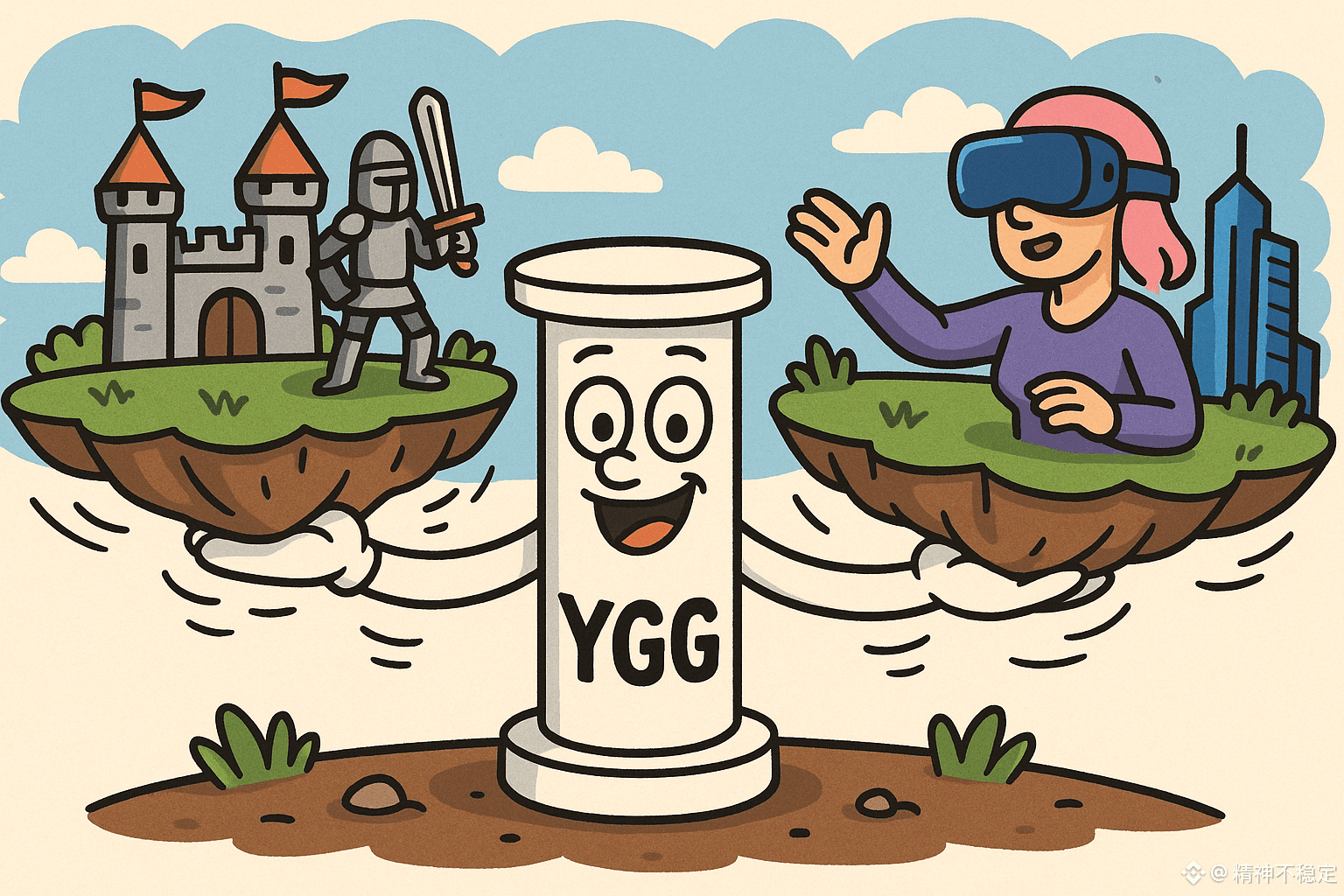
On paper, Yield Guild Games is a decentralized gaming guild and DAO that invests in NFTs, in-game assets, and web3 games, then connects those assets with communities of players. In practice, it’s a coordination machine. Instead of one game studio trying to hold a scattered audience together, you get a network of communities that can move, adapt, and carry their knowledge from world to world. That mobility is exactly what makes YGG oddly stabilizing in a space that is structurally volatile.
Think about what usually breaks first in a virtual economy. It’s rarely the code. It’s the humans. We saw it with play-to-earn spikes where entry costs soared, rewards crashed, and new players either couldn’t join or were treated as exit liquidity. A game might still technically function, but the social layer collapses. YGG leans straight into that problem by making the human layer its primary asset: players, guild leaders, scholars, local sub-communities, coaches, creators.
Because it sits above individual games, YGG can do something most titles can’t: soften shocks. When one economy becomes unbalanced or unsustainable, the guild doesn’t disappear; it rotates attention, capital, and time into other games while still keeping people inside a shared social fabric. Players don’t feel like they are being evicted from a world; they feel like they’re transitioning with their crew. That continuity of relationships is a powerful form of stability. That role doesn’t show up on token charts anywhere.
Another underappreciated role is expectation-setting. Many web3 games were marketed as money machines first and games second. YGG has had to confront that reality and evolve how it talks about opportunity, risk, and reward. A guild that survives more than one market cycle ends up becoming a kind of cultural memory. It remembers what went wrong and which incentives distorted behavior. If it’s honest, it starts pushing a healthier narrative: skills over speculation, community over quick flips, learning over blind grinding.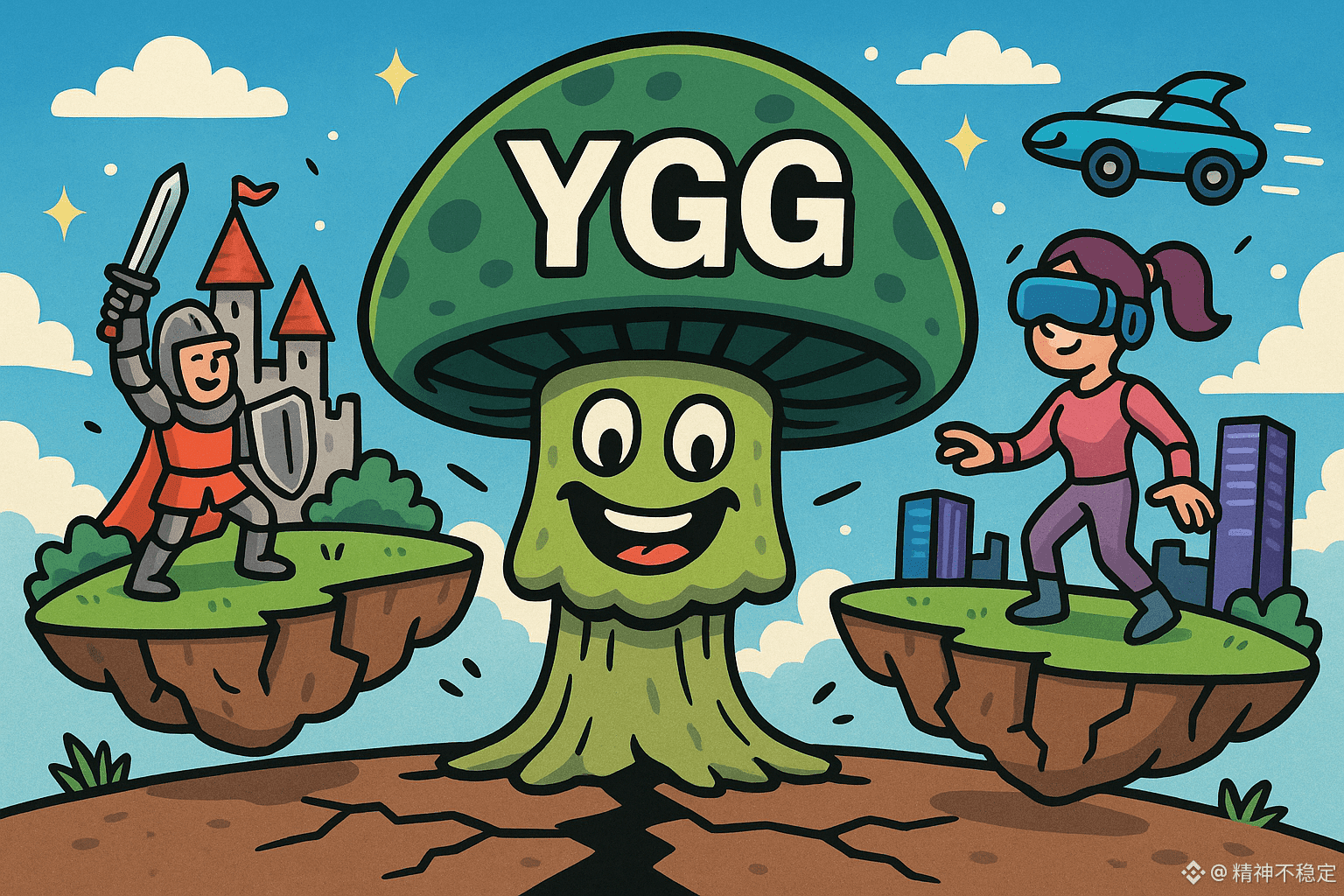
That cultural memory matters for developers too. A studio launching a new world can tap into YGG not just for eyeballs, but for feedback that has context. These are players who’ve lived through broken economies, over-tuned emissions, and badly designed sinks and faucets. When they tell you your progression loop is unsustainable, they’re drawing on patterns. In this way, the guild becomes an informal risk-management partner for virtual worlds that might otherwise repeat the same mistakes.
There’s also something stabilizing about how YGG fragments into local and thematic communities. Instead of one monolithic brand, you get country-level guilds and smaller squads around specific games or roles. If one region is hit hard by regulation, infrastructure issues, or disinterest, others can keep thriving. Within those pockets, players help each other navigate basics that decide whether they stick around: wallets, security, scams to avoid, how to budget time and money without blowing up their real lives.
Of course, none of this makes YGG some flawless guardian of the metaverse. At times, guilds can amplify unhealthy metas, crowd into the most lucrative strategies, or unintentionally widen gaps between early insiders and latecomers. When a large organized group enters a thin market, it can bend that market. Stability for the guild can still mean volatility for the unaffiliated player.
The more interesting question around YGG isn’t whether it will win any specific narrative cycle. It’s whether it can keep maturing into an institution that treats stability as a deliberate responsibility, not just a side effect of scale. That looks less like chasing every token and more like investing in training, financial literacy, and transparent communication when things go wrong. It looks like telling players this is risky, here’s what we’ve learned, here’s how to opt out safely instead of only spotlighting upside.
Virtual worlds will continue to be unstable by design. Rules get patched, items get nerfed, tokens get re-priced by markets no one controls. The real question is what remains when the numbers on the screen swing wildly. YGG’s quiet answer so far has been: people, memory, and coordination. A guild that remembers yesterday, organizes today, and still shows up tomorrow becomes, almost accidentally, a stability layer.
Maybe that’s the most hopeful angle.
Stability in digital worlds isn’t about keeping everything the same. It’s about helping people deal with changes without feeling lost. If YGG keeps doing that moving past hype and actually supporting players long-term it could be remembered not as a trend from early web3, but as one of the first real community institutions in virtual worlds.
