
Don't panic! The altcoin season will explode in the second half of 2025; 6 hardcore logic points will tell you the answer!
1. Market sentiment: the law of cycles, no one can change it
Old players understand that the script for each bull market hasn't changed:
Step 1: The big pie pulls the market trend; Step 2: Ethereum relay expands the volume; Step 3: Funds overflow to altcoins
It's not about who is controlling the market; it's the inevitable result of human greed + market consensus. As long as there are people wanting to make quick money, and as long as the bull market cycle hasn't ended, the altcoin season will definitely come. The game of fear and greed has been played for ten years and will continue.
2. Capital rules: capital always runs towards 'fat meat.'
Now, the valuations of Bitcoin and Ethereum are already not low. To pull another 50%, how much capital would be needed? But altcoins are different; with a small market cap and light volume, just a bit of capital can send them flying.
The nature of capital is to favor the rich over the poor—when mainstream coins' return rates decline, large funds will surely turn to altcoins that can double in the short term. This is not speculation; it is an iron rule that has not changed in hundreds of years in financial markets.
3. Technical hotspots: the second half of the year is full of 'explosive points.'
Every round of altcoin surges is inseparable from new concepts supporting it. The hot topics in the second half of this year are simply too many to count:
The wave of high-performance public chains landing; large-scale application of Layer2 expansion solutions; killer applications of AI + blockchain; the Web3 ecosystem truly begins to 'be usable.'
The altcoins hidden in these areas are the cradle of the next batch of hundred-fold coins. Funds always chase new stories; if you don’t squat in advance, you can only slap your thighs when it rises.
4. Chip distribution: the main forces have already secretly boarded.
Don't just look at K-line fluctuations; check the chip data! Many quality altcoins now have a concentration of chips at historical highs, especially new public chains and innovative tracks, and large funds have long been secretly accumulating goods during the pullback.
Once the main force is laid out, it just waits for a signal. Once market sentiment rises, a gentle pull can ignite the market. Those who are still hesitating should be careful not to become the last ones to take over.
5. Macroeconomic environment: The Fed 'delivers water' to altcoins.
The Fed's interest rate cut cycle is becoming increasingly clear, and central banks worldwide are loosening monetary policy. At such times, funds will frantically flow to high-risk, high-reward places—altcoins are the 'wildest' piece of fat in the crypto market.
A loose money supply is the best catalyst for altcoin season. Are you sure you want to miss this wave of liquidity dividends?
6. Institutions coming in: providing 'safety nets' for altcoins.
Recently, the inflow of funds into the Ethereum ETF has set a record, and traditional giants are frantically laying out the crypto ecosystem. Don't think that institutions only buy mainstream coins; the confidence and funds they bring will eventually permeate into high-quality altcoins.
Institutional money has entered, market stability has increased, and the speculation on altcoins has gained more confidence. This wave is not small funds blindly speculating, but genuine money backing it.
Let’s talk about something practical: how should we operate?
1. Be patient: Don’t let short-term fluctuations wash you out; wait for capital rotation to altcoins before taking action.
2. Keep a close eye on hot spots: high-performance public chains, Layer2, AI + Web3 are the key tracks to watch.
3. Flexible adjustment of positions: Regularly review, decisively change those that do not meet expectations, and do not fall in love with battles.
4. Control your position: high returns = high risks, never go all-in on one coin.
Opportunities and risks coexist forever, but the dividends of altcoin season have always been reserved for those who are prepared.
The prerequisite for the rise of altcoins is: Bitcoin must rise first, until it can't rise anymore, and funds are willing to leave Bitcoin to buy altcoins.
 Next, several possible situations and strategies:
Situation 1: BTC and altcoins generally rise. Sustained increases in 2025, then entering altcoin season; because BTC continues to rise, all tokens perform well, repeating the rise of the past two months (30-40% probability).
Strategy: Choose outstanding altcoins to buy on dips.
Situation 2: BTC rises, altcoins rise less; expected fluctuations in the coming months, but overall bullish (because BTC is rising). It is recommended to choose well-performing tokens (50-60% probability).
Strategy: Buy selected altcoins on dips. Avoid high-attention tracks, and find the next 'get-rich coin.'
Situation 3: BTC rises, altcoins generally decline (20-30% probability).
Strategy: Sell all altcoins. Reduce altcoin investments; if the altcoins held have not increased for a long time, you may have to sell them all.
Situation 4: BTC declines, and altcoins generally decline. Everything has peaked (10-20% probability).
Given the positive impact of the macro environment, the expected breakthrough of the new historical high (ATH) for Bitcoin will not take as long as in 2024. This year, during a particularly challenging summer, despite the ETF just launching, traditional finance is still working to promote the value of Bitcoin to clients. Importantly, at that time, the market generally held a skeptical attitude toward the importance of Bitcoin.
Now, with Trump's victory, discussions on establishing a strategic Bitcoin reserve are gradually unfolding. Although the actual possibility of establishing a strategic Bitcoin reserve is small, the market evaluation of Bitcoin has changed significantly.
The key lies in the narrative—in fact, the current new regime has brought new attention to the digital asset field, and the next U.S. president frequently mentions Bitcoin, making it easier to persuade people to buy Bitcoin.
This regime change is of great significance. Therefore, it is expected that Bitcoin (BTC) will continue to show an upward trend in 2025. For altcoins, the situation is similar but differs in some aspects.
Total3 (the total market value trend of all altcoins) reached a historic high in the first quarter of 2024, the highest peak in the cycle in the fourth quarter of the same year. Its performance largely followed the patterns of Situation 1 and Situation 2 mentioned earlier, with no significant differences between the two.
The key lies in correct positioning and timing. Although optimistic about the prospects for 2025, the specific time required is still uncertain. While the anticipated rise in 2025 may arrive earlier than in 2024, without catalysts, altcoins may still experience significant declines.
As long as the market cycle has not ended, whether it is Bitcoin or other cryptocurrencies, one should maintain a bullish stance. By 2025, it is unlikely that there will be a recurrence of the increased volatility seen in the summer of 2024; even if encountering a relatively stable period like the current one, prices will maintain a relatively high level.
However, from on-chain data, the situation is different. Once market sentiment changes, many altcoins may face price drops of up to 70%. Based on this observation, it is expected that altcoins have not yet reached their peak, as it is hard to imagine Bitcoin rising to new highs without the support of altcoins.
Conclusion: BTC rises, the increase surpasses 2024; altcoins are in an upward trend, although declines will occur, they will not be as strong as in 2024.
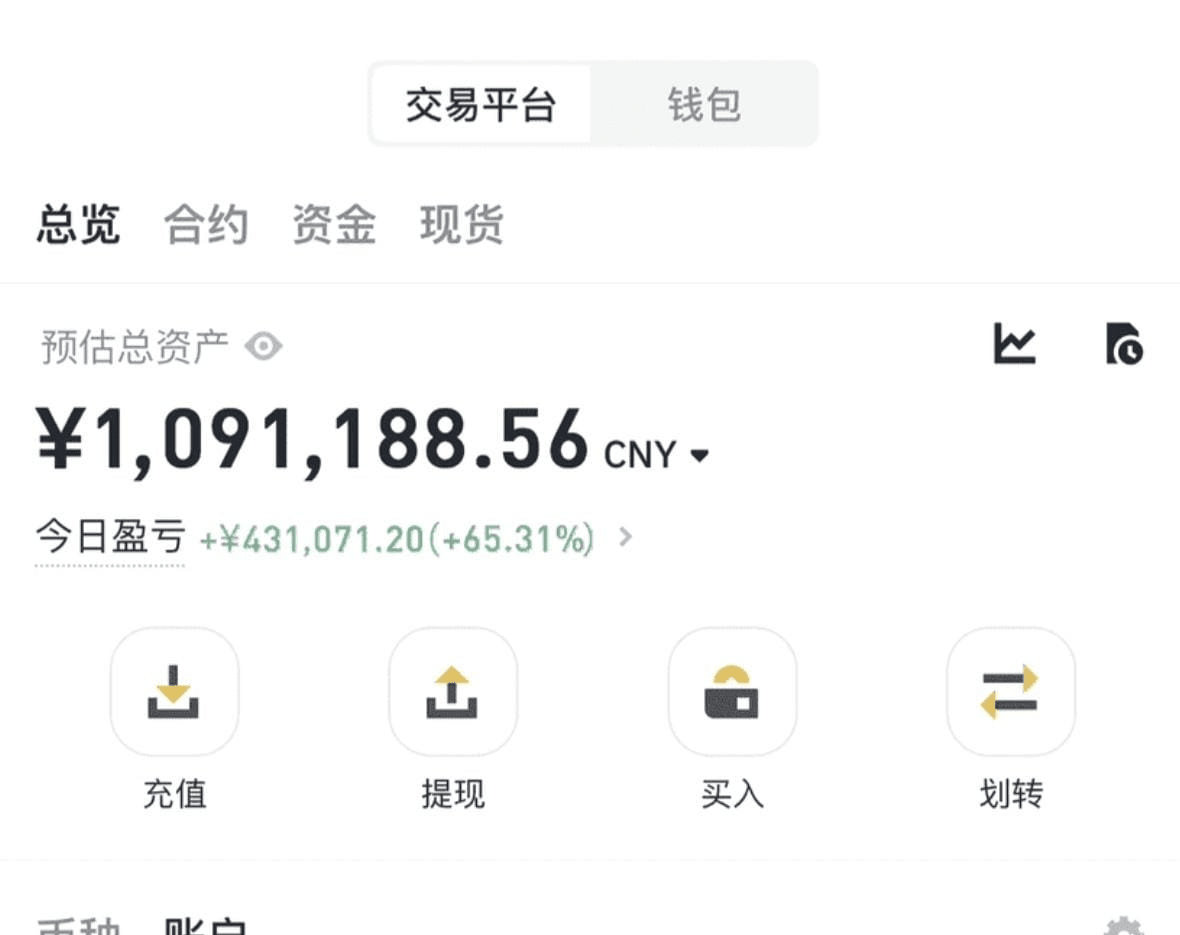
There is a term in the crypto circle that is often mythologized—'rolling'. Some say it is a 'wealth accelerator,' turning 50,000 into a million; others criticize it as a 'liquidation catalyst,' turning 100,000 to zero in a few days. In fact, rolling is neither mysterious nor evil; it's like driving: following the rules can get you there safely, while messing around will only lead to disaster.
If you only have 5,000 in capital and want to roll to the million threshold, this article will break down the specific path—it's not about luck, but about a combination of 'floating profit adding positions + low leverage + strict discipline', with each step having replicable operational details.
 First, understand: rolling is not 'gambling with leverage,' but 'using profits to roll a snowball.'
Many people misunderstand rolling as 'fully investing with leverage,' which is a fatal misconception. The true core of rolling is 8 words: floating profit adding positions, risk locking.
Simply put: use the profits earned from the principal to expand the position, while keeping the principal always safe. It's like rolling a snowball; first, use your hands to push (the principal) to get the snowball moving, and once it has inertia (with floating profits), let the snow (profits) stick to it, making the snowball grow larger while your hands (the principal) never get rolled in.
For example:
With 5,000 in capital, using a 10x leverage incremental model, only 10% of funds (500) are used as margin to open positions, equivalent to actually using 1x leverage (500 x 10 = 5,000 position, equal to the capital). Set a 2% stop loss, with a maximum loss of 100 (5,000 x 2%), which has a very small impact on the principal.
If you earn 10% (500), then total funds become 5,500. Take another 10% (550) to open a position, still using 1x leverage, with a stop loss of 2% (losing 110). Even if this time you stop loss, total funds will still remain 5,500 - 110 = 5,390, which is still 390 more than initially.
This is the underlying logic of rolling: use profits to bear risks, ensuring the principal is always safe. High leverage and using the principal to add positions in 'pseudo-rolling' is essentially gambling and will inevitably lead to liquidation.
Second, the 3 life and death lines of rolling: touching one, 5,000 can also roll into a million.
The key to rolling is not 'how fast to earn,' but 'how long to survive.' I've seen cases of rolling from 5,000 to 800,000, and also tragedies of turning 100,000 into a loss; the core difference lies in 3 rules.
1. Leverage must be 'absurdly low': 3x is the limit; 1-2x is more prudent.
'The higher the leverage, the faster the earnings'—this is the pit that beginners are most likely to fall into. In 2022, I saw a retail investor with 5,000 in capital using 20x leverage to roll, earning 3,000 on the first try, but when they increased the leverage to 10x on the second try, they encountered a flash crash and directly liquidated.
Remember: rolling relies on 'compound interest from frequency', not 'single-time windfall'. 3x leverage means 'a fluctuation of 33% can trigger liquidation', combined with a 2% stop loss, providing substantial error tolerance; whereas 10x leverage means a fluctuation of 10% could trigger forced liquidation, which simply can't withstand the normal volatility of the crypto circle.
My suggestion: initially use 1-2x leverage, and after achieving 5 consecutive profits and stabilizing your mindset, raise it to 3x, never touch above 5x.
2. Positions can only be added using 'floating profits': the principal is the trump card, and must never be moved.
The essence of rolling is 'making money with the market's money.' For example, with 5,000 in capital, after earning 1,000, total funds become 6,000. At this point, you can only use 1,000 of floating profits to add positions; the principal of 5,000 must remain untouched.
This way, even if you increase your position and incur losses, you'll only lose floating profits, and the principal remains safe. Conversely, if you invest all 5,000 in one go, a single mistake will bring you back to the starting point, wasting all previous efforts.
Just like fishermen fishing: using the fish caught as bait, even if new fish are not caught, the boat won’t incur losses.
3. Stop losses must be 'ironclad and cold-blooded': 2% is the red line; cut it when the time comes.
'Just wait, it might rebound'—this phrase can ruin all rolling plans. During rolling, each stop loss must be strictly controlled within 2% of the total funds; with 5,000 in capital, that’s 100, with 100,000 it’s 2,000. When the time comes, cut it without any excuses.
In 2023, Bitcoin rose from 30,000 to 40,000, and I rolled with 1x leverage, with 3 stop losses in between, each losing 1,000-2,000, but ultimately, 6 profits made the total funds triple. If I had held on for one of the losses, I might have been washed out by the fluctuations and missed the subsequent main surge.
Three, from 5,000 to 1 million: rolling in 3 phases, each step with specific operations.
To roll from 5,000 to 1 million requires phased advancement, with different targets and strategies for each phase. It's like climbing stairs; jumping three steps at a time can lead to a fall, but taking one step at a time can lead to the top.
First phase: 5,000 → 50,000 (accumulate starting capital, practice feel).
Core goal: Familiarize yourself with the rhythm using spot + small leverage, and accumulate the first 'pressure-free funds.'
First, use 5,000 for spot: buy BTC and ETH at the bear market low (for example, when BTC drops to 16,000 in 2023), and sell when it rebounds by 10%-20%, repeating 3-5 times to roll the funds to 20,000.
Join with 1x leverage rolling: When BTC breaks through key resistance levels (like 20,000, 30,000), open a long position with 1x leverage, and when making a profit of 10%, use the floating profit to increase the position by 10%, with a stop loss of 2%. For example, with 20,000 in capital, first open a position of 2,000, earn 200, and then add another 200, keeping the total position no more than 10% of the capital.
Key point: in this stage, don’t pursue speed; focus on practicing 'stop losses + floating profit adding positions' muscle memory, completing at least 10 profitable trades before entering the next stage.
Second phase: 50,000 → 300,000 (grasp the trend market, amplify profits).
Core goal: Increase the frequency of rolling in clear trends, relying on 'segment compounding' to speed up.
Only operate in 'certain trends': for example, when BTC stands firmly on the 30-day line, and trading volume increases by more than 3 times, confirm the upward trend before rolling. After BTC ETF passes in January 2024, it will be a typical trend market suitable for rolling.
Adding position ratio: every 15% profit, use 30% of the floating profit to add positions. For example, with a capital of 50,000, earning 15% to 57,500, take out 2,250 (30% of floating profit of 7,500) to add positions, controlling the total position within 20% of the capital.
Take profit strategy: Every 50% increase, cash out 20% profit. For example, rolling from 50,000 to 100,000, first withdraw 20,000 in cash, leaving 80,000 to continue rolling. This way, you can both lock in profits and avoid the collapse of the mindset of 'profit giving back.'
Third phase: 300,000 → 1,000,000 (relying on the big cycle trend, earning the 'era dividend')
Core goal: Seize the major market trend of bull-bear transitions, using one major trend to leap forward.
Wait for 'historic opportunities': for example, Bitcoin rises from the bear market bottom (like 15,000) to the mid-bull market (like 60,000). This level of trend can amplify rolling to over 10 times the profit. In the bull market of 2020-2021, someone rolled from 300,000 to 5 million, relying on this major trend.
Dynamically adjust positions: in the early stage of a trend, positions should be 10%-20%, increase to 30%-40% in the mid-stage, and decrease back to 10% in the later stage. For example, if BTC rises from 30,000 to 60,000, initially use a position of 30,000, increase to 60,000 when it rises to 40,000, and reduce back to 30,000 when it rises to 50,000, ensuring you don't miss the main upward trend while reducing risk at the top.
Ultimate discipline: Stop rolling over when funds reach 800,000, withdraw 500,000 to store in stablecoins, and continue to operate with the remaining 300,000. Remember: the endpoint of rolling over is 'wealth realized,' not 'rolling forever.'
Four, the most easily overlooked: the 'mindset moat' of rolling.
Rolling from 5,000 to a million, technology only accounts for 30%, while mindset accounts for 70%. I've seen too many people with good skills, but they fail because of two mindset traps.
1. Don't be greedy for 'perfect averaging': missing out is better than making a wrong move.
Some people always get tangled up in 'adding early' or 'adding too little'; for instance, planning to add positions after a 10% profit but getting anxious at 9% or waiting for a pullback at 15%. In fact, rolling doesn't need to be precise; as long as you add positions within the 'profit range', it’s not a mistake.
It's like farming; as long as you sow in spring, it doesn't matter if you're a few days early or late—it's always better than missing the planting period.
2. Accept 'imperfect stop losses': stop losses are costs, not failures.
In the process of rolling, having 3-4 stop losses out of 10 trades is normal. In 2023, I rolled SOL; out of 5 trades, 2 were stop losses, but the remaining 3 profits allowed the total funds to increase by 80%.
Treat stop losses as 'buying tickets'—to enter the amusement park, you have to buy a ticket. Occasionally encountering a ride that isn't fun means you can't get a refund on the ticket, but it doesn't affect your ability to enjoy other rides.
Five, 3 practical cases of rolling from 5,000: don't step into the pits others have already stepped in.
Positive case: 5,000 → 780,000, relying on the 'foolproof method.'
From 2022 to 2024, someone started with 5,000 in spot, bought ETH (880 dollars) in a bear market, sold at 1,200 dollars, earning 40%; then used 1x leverage to roll, adding 10% to the position each time they made a profit of 10%, with a stop loss of 2%, rolling to 780,000 in two years. His secret: only do ETH, don't touch altcoins, don't switch coins, and win by 'focus + discipline.'
Negative case: 100,000 → 500, dying from 'leverage addiction.'
In 2023, a retail investor with 100,000 in capital used 5x leverage to roll. In the first two times, they earned 50,000, but raised the leverage to 10x and encountered a flash crash in BTC, liquidating to 30,000; not willing to accept, they used 10x leverage again, and a week later, they completely went to zero. They fell into the major taboo of rolling: using the principal to add positions and increasing leverage excessively.
Key conclusion: The essence of rolling is 'exchanging time for space.'
From 5,000 to 1 million, it will take at least 2-3 rounds of bull and bear (3-5 years). Those who fantasize about achieving it in 1 year will ultimately be educated by the market. The wealth code in the crypto circle has never been 'fast,' but rather 'steady + long.'
Finally: The enlightenment of rolling for ordinary people
Can 5,000 roll to 1 million? Yes, but it needs to meet 3 prerequisites:
Use spare money to operate; losing it won't affect life; at least spend 6 months practicing skills, completing 100 simulated trades; accept 'slow', don't pursue getting rich overnight.
Rolling is not a myth but a tool for 'ordinary people to counterattack through discipline.' It's like climbing stairs; each step is very ordinary, but if you persist for 1,000 steps, you can reach heights that others cannot.
If you only have 5,000 now, don't rush; start from the first profit of 100, and start rolling—wealth's snowball must start from a small one.
 A veteran trader with twelve years of experience teaches you life-saving tricks! I used to lose sleep over losses, but now I steadily earn 50%+ each year, relying on these few simple methods.
1. The itchy hand rule: If the market doesn’t show the patterns I’ve practiced thousands of times, I’d rather scroll through Douyin than place an order. Just like playing Mahjong, never follow a hand that you can't win!
2. Night owl strategy: Daytime market is like a crazy fit, with all kinds of fake news bouncing out. After 9 p.m., the dealers have finished dinner, and the trends reveal their true form.
3. Take a bite of the meat that is within reach. Earned 1,000 USDT? Immediately transfer 300 to your bank card! The rest, play however you like. I've seen too many people earn a Porsche and not stop, ultimately losing even their bicycles.
4. Install a "Demon Mirror" on your phone. Download TradingView, and before placing an order, you must check three indicators: MACD golden cross and dead cross (the crossing of two lines), RSI overbought and oversold (above 70/below 30), and Bollinger Bands contraction and expansion.
5. Stop losses must be flexible: in front of the computer, play 'moving castle': when you earn 100 USDT, raise the stop loss line by 50 USDT, repeat the process. Going out for a dog walk? Set a hard stop loss of 5%, and don't worry about the dealer crashing the market at night.
6. Every Friday, profits must be shared. No matter if you earn 10,000 or 1,000, transfer 30% to your bank card promptly at 3 p.m. on Friday.
7. Watching K-lines is like watching a series. Want to make quick money? Focus on the 1-hour chart; two consecutive bullish lines mean it’s time to jump into a constipation market (sideways), switch to the 4-hour chart to find support levels, just as accurately as finding restroom signs.
8. These pitfalls will lead to certain death. Leverage over 10 times = looking for death (beginners are advised to open 3 times for practice). Shit coins and Dogecoin are all scythes for cutting韭菜. Maximum of 3 orders per day; if you can't stop like you're snacking on sunflower seeds, you're done.
Remember: the more佛系 you are, the more your wallet will bulge. There's a saying I strongly agree with: the boundary of knowledge determines the boundary of wealth, and a person can only earn wealth within their boundary of knowledge. The mindset in trading coins must be good; during a big drop, don't let your blood pressure spike, and during a big rise, don't become complacent; securing profits is paramount.
I am Little Egg Tart, a professional analyst and teacher, a mentor and friend on your investment journey! As an analyst, the most basic thing is to help everyone make money. To solve your confusion, to get out of positions, to speak with strength, when you lose direction and don't know what to do, follow Little Egg Tart. Little Egg Tart will point the way.


