

There’s a moment I remember from the early days of Web3 gaming not because of some dazzling chart or a flashy launch, but because of a conversation with a young player in Southeast Asia. He told me he had spent months grinding games but could never join the ones everyone was talking about. The barrier wasn’t skill. It was money the cost of NFTs and tokens you needed just to enter. That simple gap between an idea and real access is where @Yield Guild Games (YGG) found its purpose, and where Web3 gaming began to look more like a community project than a niche experiment. 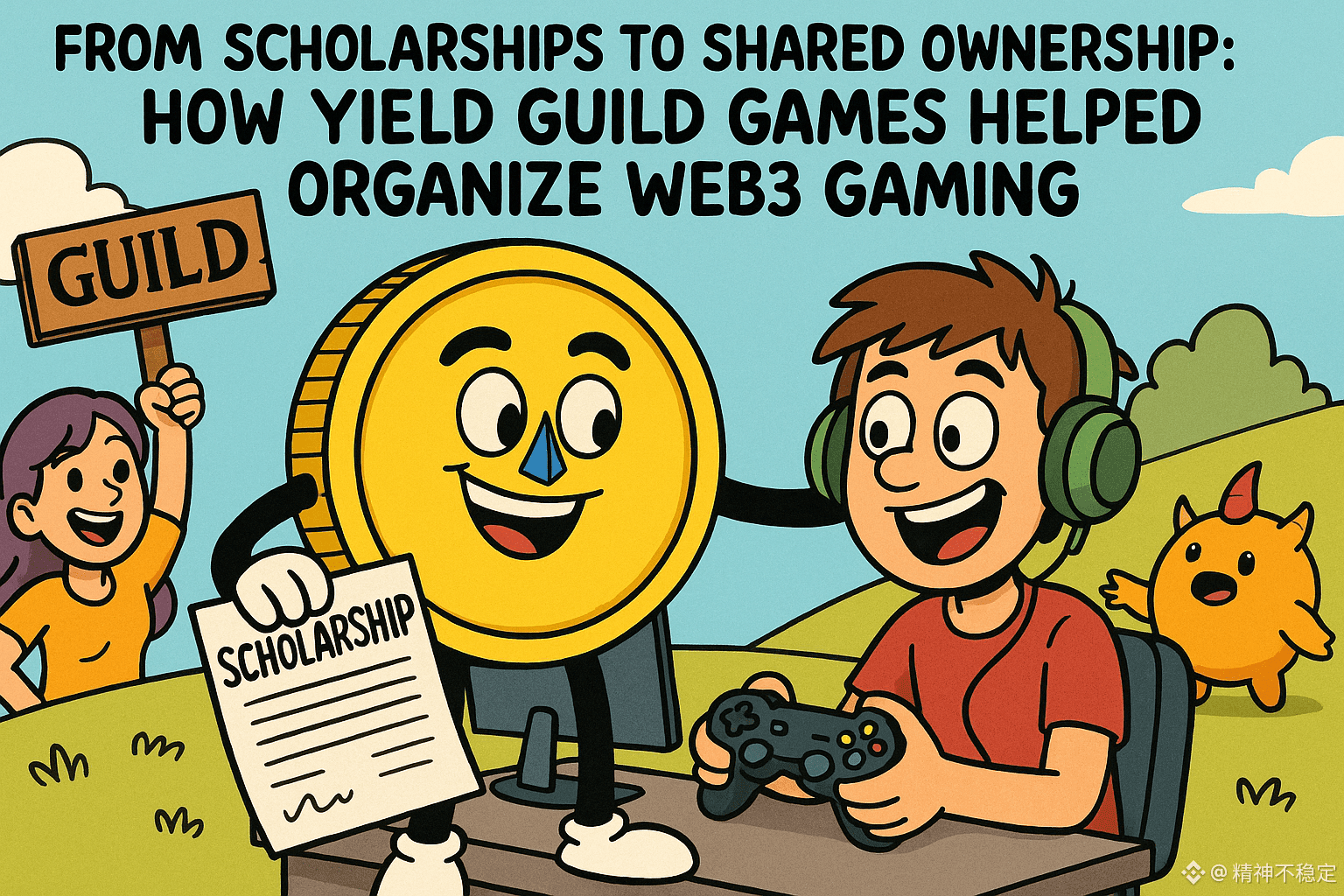
YGG didn’t arrive as a slick startup with polished slogans. It began as a practical response to a practical problem: blockchain games were rich with potential, but too often, that potential was gated behind upfront costs. If you couldn’t afford the necessary NFTs digital characters, tools, or land — you couldn’t participate. That limitation shut out a huge portion of gamers, especially in regions where gaming income could make a real difference in someone’s life.
The idea of scholarships was simple in theory and powerful in effect: the guild would acquire valuable in-game assets and lend them to players — called “scholars” — so they could start playing without paying anything upfront. In return, the earnings from playing would be shared among the scholar, a manager who supported and trained them, and the guild itself. Early splits would see scholars keep most of their earnings, with the guild and managers taking smaller portions.
What happened after that was something many in the crypto world hadn’t fully anticipated. Scholarships didn’t just unlock gaming access for individuals — they created networks of people learning, earning, and coaching one another. Managers, often local organizers with deep knowledge of both the games and their communities, became more than middlemen. They were mentors, connectors, and the ones who turned a simple asset rental into a pathway for economic participation.
It’s easy to describe the scholarship model as a technical mechanism — “NFT rental”, “revenue split”, “DAO” — but that misses the deeper impact.
For many scholars, this wasn’t just entertainment. It gave them a chance to earn money in areas where work is limited and digital work doesn’t get much respect. Some players said their earnings matched local pay, while others said gaming helped them cover family expenses.
. Whether or not that economic model holds forever, the human effects were unmistakable.
Over time, YGG evolved from that early model into a more complex ecosystem. It’s built out a network of SubDAOs — smaller, semi-independent groups focused on particular games or regions — that reflect the guild’s grassroots origins while allowing more tailored strategies and community governance. Players from the Philippines may join one sub-guild; Southeast Asian communities another; and specific game titles often have their own guild focus. That structure spreads decision-making and local context through the network rather than concentrating it.
This pattern resonates with how gaming itself has always grown.
Online games used to succeed when players willingly built groups like guilds and teams, simply because they enjoyed playing together. They sought shared strategies, shared goals, and shared stories. Web3 guilds like YGG echo and extend that instinct — only now the “shared” piece comes with shared ownership and shared outcomes.
This goes beyond the technology. It shifts the mindset.
Players don’t feel like they’re just buying something anymore.
They feel like they truly fit into the game. And by 2025, Web3 gaming has changed a lot from the early days.Play-to-earn games aren’t the flashiest trend anymore — they’re one of many segments within a broader push toward decentralized, player-centric digital experiences. YGG’s role has shifted too: it’s less about singular headlines and more about infrastructure and community continuity. The guild isn’t just lending assets; it’s experimenting with reputation systems, reputation tokens (such as soulbound tokens that signify achievements), and other mechanisms meant to anchor a longer-term sense of identity and value for players in Web3 games.
Yet, questions remain.
Is “shared ownership” really shared, or does most of the benefit still flow back to the guild treasury? If games stop relying on easy token rewards and start running like normal game economies, will this model hold up? And can the spirit of inclusion and teamwork stay strong when the market swings and attention moves on? These are real concerns — and they’re the kinds of tensions that make the story of YGG worth watching, not just reporting.
What’s noteworthy about YGG isn’t that it invented play-to-earn or decentralized gaming. Plenty of projects have tried to do that. It’s that YGG scaled community participation in a way that was both operationally practical and meaningfully human. Scholarships and shared ownership weren’t slick gimmicks; they were tools for lowering barriers and creating opportunities. The guild’s journey from grassroots scholarship programs into a broader Web3 organization mirrors the evolution of the space itself — from hype and speculation to something more grounded in real, human-level outcomes.
I still think about that player I spoke with years ago, and how much his experience shaped my understanding of what “Web3 gaming” can mean. In that simple desire to play, to connect, and to earn, there was something that no amount of buzz could manufacture: genuine entry into an economy that felt, at least for a moment, equitable and shared. That remains the central thread in Yield Guild Games’ story — an imperfect, evolving attempt to make Web3 not just bigger, but meaningfully accessible.
@Yield Guild Games #YGGPlay $YGG
