
Every time you check the token reward system, the same question arises: do these rewards really create real demand, or are people just accumulating tokens much faster than they can use them? With APRO, the pressure and confrontation between creating something lasting and plunging into crazy inflation becomes quite intense. More users are joining, the network is expanding — staking, liquidity pools, new partnerships — all at a crossroads.
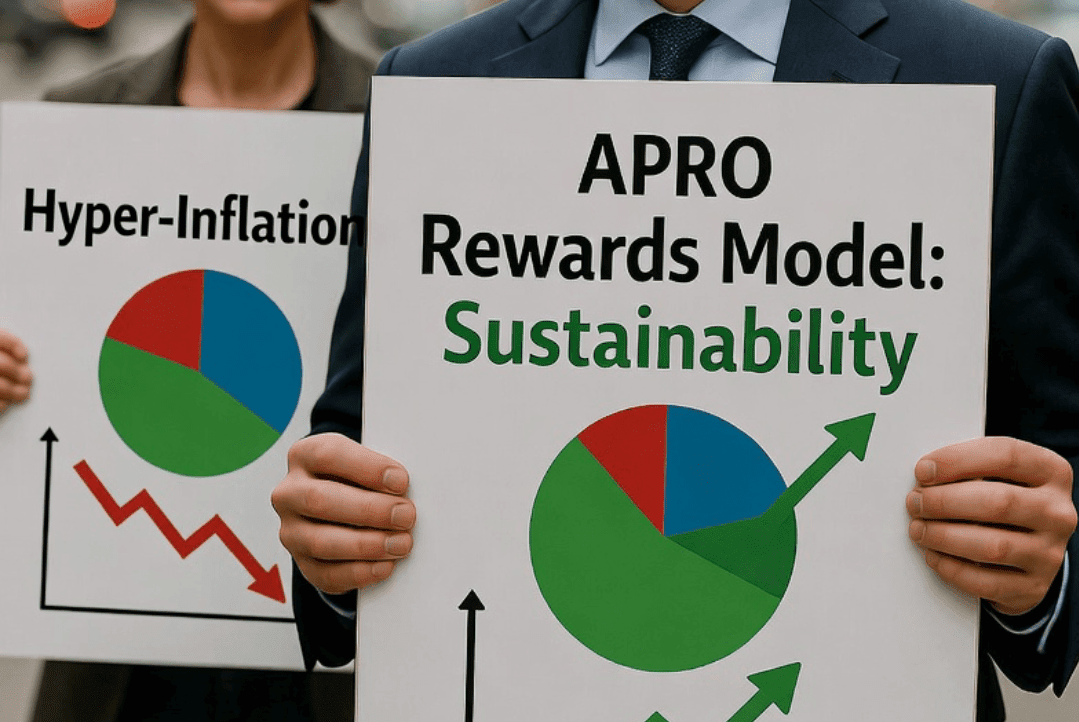
Let's talk about sustainability for a second. Rewards only work in the long term if every token distributed actually comes from real activity, not just random giveaways. APRO pursues this balance in several different ways.
First, rewards are tied to real utility. You don't just get APRO for breathing. You have to actually do something that helps the network—staking, trading, using partner platforms, joining cross-protocol incentives. This is a closed system. If you move forward, you get rewarded.
Then there are built-in feedback mechanisms. APRO controls emissions through a curve, sets limits for different programs, and uses hard boundaries to prevent market overflow. These controls slow down uncontrolled supply and maintain growth at a stable level.
APRO also gives tokens a real purpose. Tokens shouldn't just sit idle or be dumped quickly. APRO addresses this by locking tokens in staking (which takes them out of circulation and reduces market pressure), collecting protocol fees (which can go towards buybacks or burning), and providing APRO with real use cases—paying for services, voting in governance, whatever. So, tokens don't just gather dust or flood the market all at once. They are actually used, and this helps control inflation.
But let's look at the other side—the risk of hyperinflation. Lose control over emissions, and everything can fall apart quickly. If APRO starts emitting too many tokens before real demand appears, the supply will increase, and the ecosystem won't be able to cope.
High emissions may initially seem exciting—huge revenues, a lot of advertising—but if most people are just farming and dumping, the price drops, and value disappears. Demand must outweigh supply. If new tokens flood the market faster than the number of users, trading, or revenues grow, you get inflation. Of course, expanding to more platforms sounds great, but if every partner gets a share of the rewards, emissions simply accelerate. Without a sufficient number of new users, it just dilutes everything.
So, what keeps APRO stable? Discipline, plain and simple. You need a real plan: reduce emissions over time, ensure rewards match real usage (not just presence), tie liquidity incentives to actual fees, and continuously add new ways to use APRO—staking, governance, spending—all of this helps take tokens out of the market.
If APRO gets all this right, it will avoid the inflation trap and create real value, not just another token for those chasing profit.
Here's the crux: APRO's reward system walks a fine line between sustainability and inflation. If rewards and emissions keep pace with real activity, and the team continuously finds new ways to utilize APRO, all of this remains stable. But if rewards outpace utility, or tokens are distributed too thinly without sufficient demand, hyperinflation lurks on the horizon.
It all comes down to maintaining discipline and ensuring that rewards actually grow with real demand. This is key to APRO maintaining its balance during increased loads.@APRO Oracle#APRO $AT


