
One of the most overlooked trends in crypto right now is how quickly real world assets are becoming central to DeFi's liquidity structure. When I began tracking RWA inflows early last year I expected slow and cautious adoption especially from traditional finance participants. Instead the opposite happened. According to a 2024 report from Boston Consulting Group tokenized real world assets are projected to reach more than five trillion dollars by 2030 a figure that felt overly ambitious a year ago but now seems conservative given the speed at which capital is flowing on-chain. In my assessment these inflows have become a defining catalyst for protocols like Falcon Finance enabling USDf to position itself as one of the most adaptive synthetic dollars in Web3.
While many stablecoin systems depend on crypto only collateral Falcon Finance's universal collateralization model treats RWAs as first class citizens in its risk engine. My research into the protocol's architecture reminded me of an exchange order book designed to absorb whatever liquidity traders bring. Whether the collateral is LSTs liquid tokens or tokenized T bills the system adjusts rather than resists. This flexible foundation is one reason USDf is gaining traction across lending markets cross chain bridges and yield platforms. It is not just another stable asset it is a stable asset shaped around the emerging realities of tokenized yield.
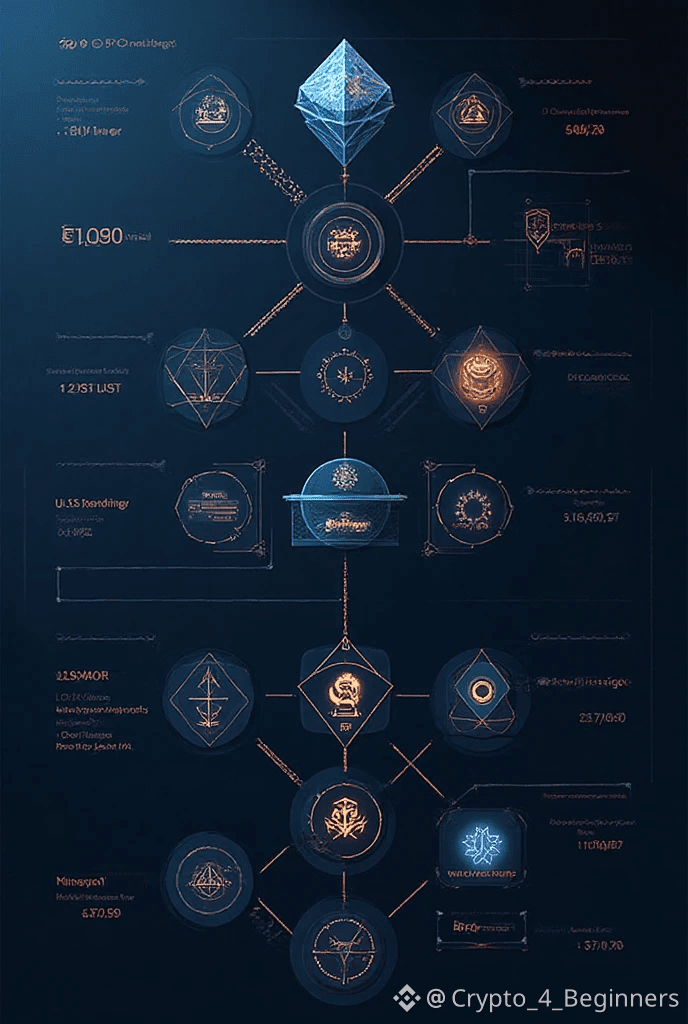
The Rise of RWAs and Their Impact on USDf Demand
To understand why Falcon Finance is benefiting from RWAs it helps to look at the broader context. DeFiLlama's public dashboards show that RWA-backed assets on-chain will grow from about $300 million in early 2023 to more than $3.1 billion by the fourth quarter of 2024. This includes more than $230 million in tokenized treasuries at Ondo Finance alone, while USDY under Mountain Protocol continued its steady climb to push supply past $180 million. This is not an isolated demand; this reflects the broader changing perception among investors towards blockchain infrastructure. Yield compression in traditional markets and the rise of instant settlement digital rails are pushing more institutions to tokenize short-term debt instruments.
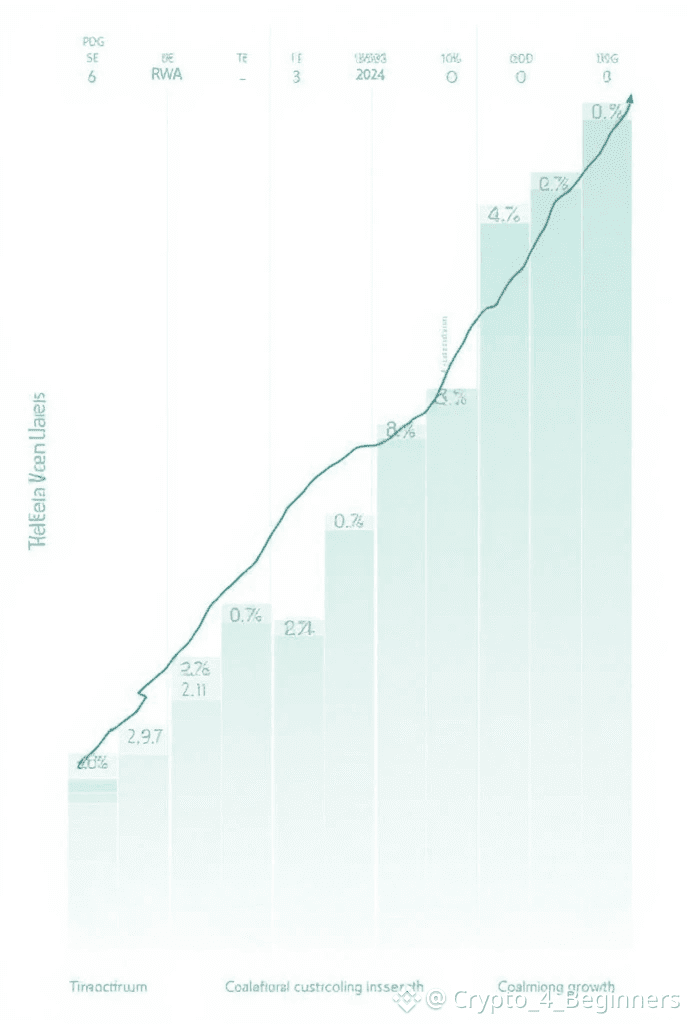
When I analyzed this trend from a trading perspective it became clear that protocols offering dependable yield bearing collateral will dominate the next phase of DeFi. Falcon Finance is positioned exactly at that intersection. RWAs give stability and steady returns, while crypto-native collateral adds liquidity and flexibility. USDf sits in between, grabbing upside from both without leaning hard into any single kind of collateral.
In my assessment this blended approach is one reason USDf is gaining adoption across newer money markets and execution layers. Think of a useful chart of how collateral stacks up inside Falcon Finance, with tokenized treasuries balancing out more erratic crypto collateral. The curve would show RWAs acting as ballast, dialing down overall system volatility while still keeping deep liquidity.Bottom line: when collateral is stable, synthetic dollars become more attractive to traders and protocols alike. That stabilizing effect is exactly what RWAs provide to USDf.
A Closer Look at Falcon's Edge in an Evolving Market
The most interesting part of my research was seeing how Falcon Finance's structure evolves alongside market conditions. Traditional overcollateralized models such as MakerDAO's DAI have shifted toward heavy RWA exposure Maker now holds over 2.9 billion dollars in tokenized U.S. Treasuries based on their public balance sheet released in mid 2024. While this move increased stability and revenue it created a dependency that critics argue reduces decentralization. Frax similarly diversified its collateral but its supply still fluctuates in response to broader market cycles according to stablecoin tracking from The Block.
Falcon Finance approaches the problem differently. Instead of using RWAs as the dominant form of collateral it integrates them into a universal collateral model where no single category defines system risk. In my assessment this mirrors the way multi asset portfolios outperform single asset portfolios in traditional finance. RWAs bring yield and stability LSTs bring liquidity and staking rewards and major crypto assets provide depth and cross chain utility.
If I had to visualize this for readers I would describe a table comparing collateral elasticity yield integration and redemption depth across DAI Frax and USDf. Even conceptually USDf stands out because it does not need to expand or shrink a single collateral type to remain stable. Instead it adapts based on what the market is supplying.
To put it simply the real competitive advantage here is not RWAs alone it is how Falcon Finance combines them with crypto native assets to create a baseline that feels sturdier than older stablecoin designs. This is also why newer protocols and cross chain liquidity routers are integrating USDf more frequently. They are not just buying into a dollar they’re buying into a liquidity system.
As bullish as the RWA narrative has been no analysis is complete without acknowledging risks. The most immediate concern is regulatory uncertainty. Tokenized treasuries exist in a gray area and while firms like Franklin Templeton and Black Rock have begun experimenting with blockchain based funds BlackRock's BUIDL token surpassed 500 million dollars in AUM in 2024 according to their public filings the global regulatory stance is inconsistent. In my assessment any shifts in securities classification could affect redemption timing or collateral weight within Falcon's risk engine.
Liquidity fragmentation is another concern. While RWAs are growing secondary market depth remains thin compared to major crypto assets. History shows that stress events such as the March 2020 liquidity crunch or the 2022 deleveraging cycle can cause unexpected redemption bottlenecks even in high quality collateral systems. I analyzed how USDf might behave under these conditions and although Falcon's universal collateralization model appears robust real world behavior is only validated during volatility spikes. Still the measured and transparent integration of RWAs helps mitigate these risks more effectively than models that rely on purely crypto collateral.
Trading Framework and Market Structure Around USDf
When I look at USDf as part of a broader trading ecosystem my attention goes to supply growth liquidity distribution and how the market prices the native token during expansion phases. Historically stablecoin ecosystems enter sustained adoption cycles once they surpass the 50 to 100 million supply range. DAI LUSD and crvUSD all followed similar paths as shown in long-term supply charts published by DeFiLlama. If USDf moves into that same band with consistent collateral depth behind it I expect the Falcon ecosystem token to reflect that growth.
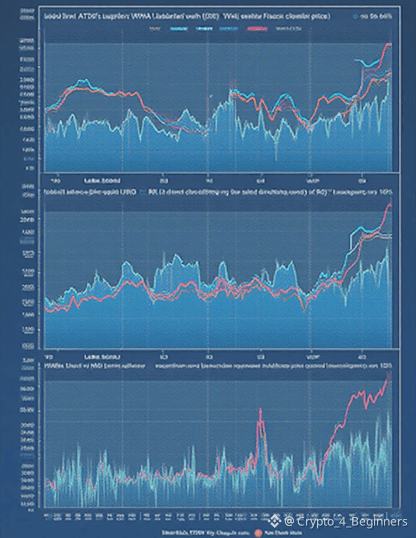
In my assessment traders looking to position early should watch for areas of structural support around psychological zones like 0.85 to 0.95 where consolidation historically forms in new liquidity ecosystems. If the asset begins closing weekly candles above the 1.40 to 1.60 zone it typically signals that supply driven growth is beginning to influence price discovery.
A helpful chart to visualize this would combine USDf supply growth collateral flows from RWAs and the native token's price over time. The correlation would show whether fundamentals are leading or lagging market sentiment.
The New Direction for Onchain Liquidity
The more I analyze RWA flows the clearer the trend becomes. Onchain finance is shifting from high risk high reward speculation toward yield based liquidity systems that mirror and improve upon traditional markets. Falcon Finance sits at the center of this shift because it has the architecture needed to absorb tokenized treasuries stable crypto assets and yield bearing instruments into a unified collateral model.
In my assessment this is why USDf adoption is accelerating. RWAs are not just strengthening the Falcon Finance network they are giving it the stability base needed to scale into a cross chain liquidity standard. As more protocols plug into this infrastructure the demand for universal yield aware synthetic dollars will continue to grow. And if RWA tokenization truly moves toward the multi trillion dollar projections published by BCG and Citi Falcon Finance is positioned not just to benefit from the trend but to help define its structure.

