
The native token of Solana, SOL, has been unable to maintain a price above $145 for the past four weeks. The decline in network activity, along with a sharp drop in demand for decentralized applications (DApps), has negatively impacted the growth outlook for SOL.
The total value locked (TVL) on Solana has now decreased by more than $10 billion compared to the peak in September, clearly reflecting a decline in user participation, faster than previously forecasted.
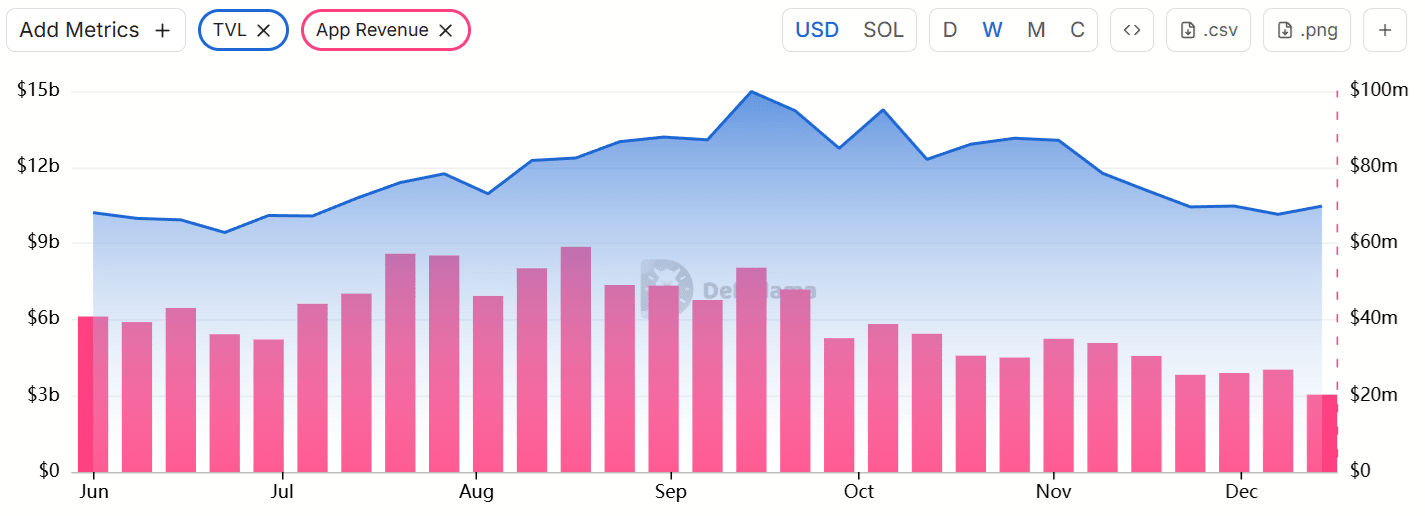 The total value locked (TVL) of Solana (left) compared to the 7-day revenue of DApp (right), measured in USD | Source: DefiLlama
Since reaching a record TVL of $15 billion in September, Solana has continuously recorded a decline in the amount of funds deposited into smart contracts, leading to an increase in the supply of SOL available for trading in the market. At the same time, revenue from decentralized applications on Solana has decreased to $26 million per week, significantly lower than the $37 million two months ago.
Trader interest in memecoins has also weakened since the cryptocurrency market shock on October 10. This event exposed serious vulnerabilities in leveraged positions and highlighted the poor liquidity of smaller altcoins. Whether the derivatives market plays a role in driving volatility or not, trader sentiment towards DEX platforms has significantly declined after the liquidation event worth $19 billion.
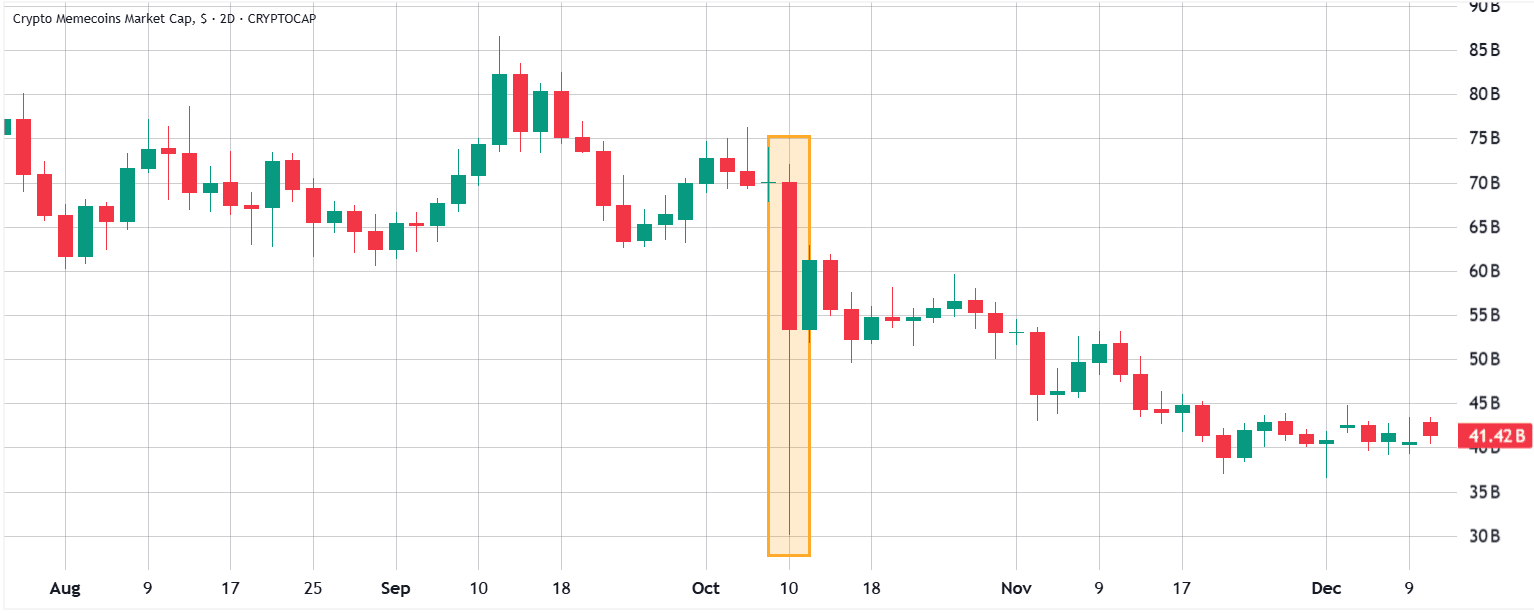 The market capitalization of Memecoins, measured in USD | Source: TradingView
Memecoins were once a powerful driving force for SOL, especially after the launch of Official Trump (TRUMP) in January, which helped trading volume on Solana's DEX platforms reach $313.3 billion in that month alone. However, according to data from DefiLlama, this activity has declined by up to 67%, contributing to the downward revenue trend of DApps on Solana.
Nevertheless, the decline in demand for blockchain applications may reflect the overall slowdown of the market rather than a specific weakness of Solana.
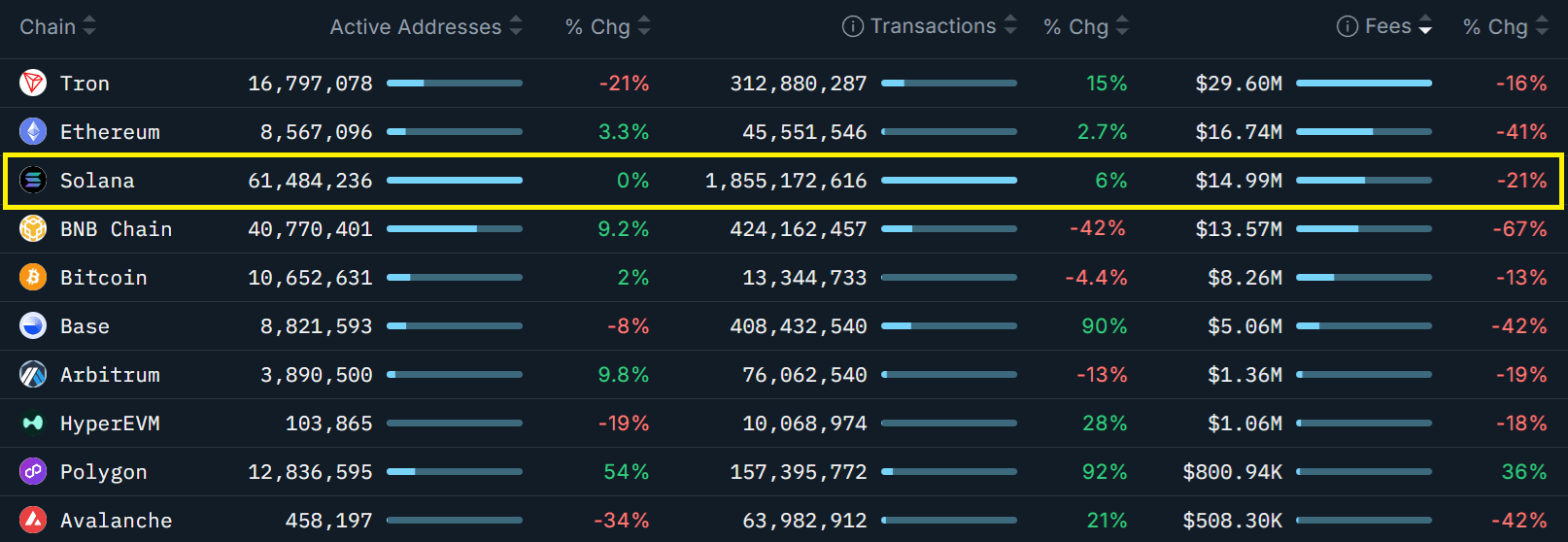 Ranking of blockchains based on network fees over 30 days | Source: Nansen
Transaction fees on the Solana network have decreased by 21% over the past 30 days, but competing blockchains have recorded even sharper declines: BNB Chain down 67%, while Ethereum down 41%, according to data from Nansen. Notably, the number of transactions on Solana has increased by 6%, while activity on BNB Chain has decreased by up to 42%.
The demand for long leverage with SOL has decreased
The perpetual futures of SOL are a useful measure reflecting market sentiment, as exchanges charge fees to buyers (long) or sellers (short) based on demand for leverage. Under normal conditions, the funding rate ranges from 6% to 12% per year, with buyers (long) having to pay a fee to maintain their position due to capital costs. Conversely, a negative funding rate indicates bearish market sentiment.
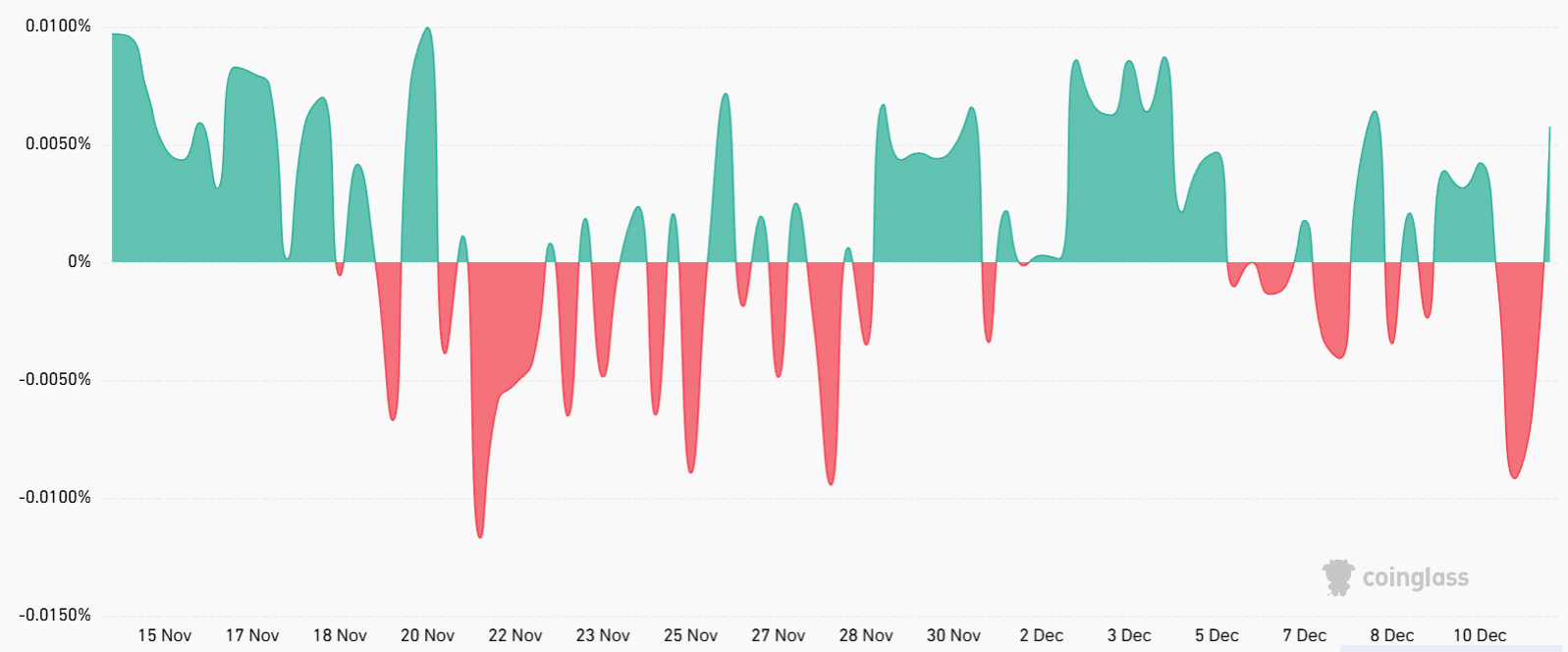 The 8-hour funding rate of SOL perpetual futures | Source: CoinGlass
The annual funding rate of SOL stood at 6% on Friday, indicating relatively weak bullish leverage demand. Notably, the unusual negative 11% on Thursday should not be interpreted as a sign of strong demand for bearish positions, as market makers quickly intervened to rebalance the market. However, it will take more time for bulls to rebuild confidence after SOL has lost 46% in value over the past three months.
Some new advancements in the Solana ecosystem are expected to attract renewed interest from investors, notably the launch of the Firedancer mainnet on Friday – a new validation client aimed at expanding the network's processing capacity. This project has been developed over three years under the guidance of Jump Trading, one of the leading market makers in the industry. Developers report that the validating node synchronized in less than two minutes, receiving very positive feedback.
Kamino, the second-largest DApp on Solana by TVL, also just announced a series of new products on Friday, including fixed-rate and term loan packages, off-chain collateral, personal credit, and institutional credit lines secured by Bitcoin on-chain. Kamino reported annual fees of up to $69 million, with an average deposit yield of 10% per year, clearly reflecting the expansion of the ecosystem.
However, whether SOL can regain the price level of $190 as it did two months ago remains an open question, and it is hard to expect that improvements in validation software or the diversification of DApp products will be sufficient to restore confidence, laying the foundation for a sustainable bullish trend.
https://coinphoton.com/sol-gap-kho-khan-khi-tvl-cua-solana-giam-va-nhu-cau-doi-voi-memecoin-suy-yeu.html




