In a market that has tested conviction, patience, and belief, Yield Guild Games stands as one of the few Web3 gaming projects that has chosen evolution over stagnation. What began as a pioneering play to-earn guild has matured into something far more durable: a decentralized gaming infrastructure designed for longevity, trust, and meaningful participation. As of December 2025, YGG’s journey reflects not hype driven expansion, but a measured transformation rooted in consistency, community alignment, and long-term value creation.
At its core, Yield Guild Games has always been about people players, creators, developers, and communities navigating a new digital economy together That ethos remains intact even as the organization reshapes its operating model. The strategic partnership with Warp Chain is a clear signal of this intent. Rather than chasing short-term user spikes, YGG is investing in scalable infrastructure that can support large player bases across multiple ecosystems. Warp Chain’s technology provides the throughput and reliability needed to onboard the next wave of Web3 gamers without compromising decentralization or transparency. This is not merely a partnership of convenience; it is a structural decision that reinforces YGG’s commitment to immutable systems and trust minimized growth.
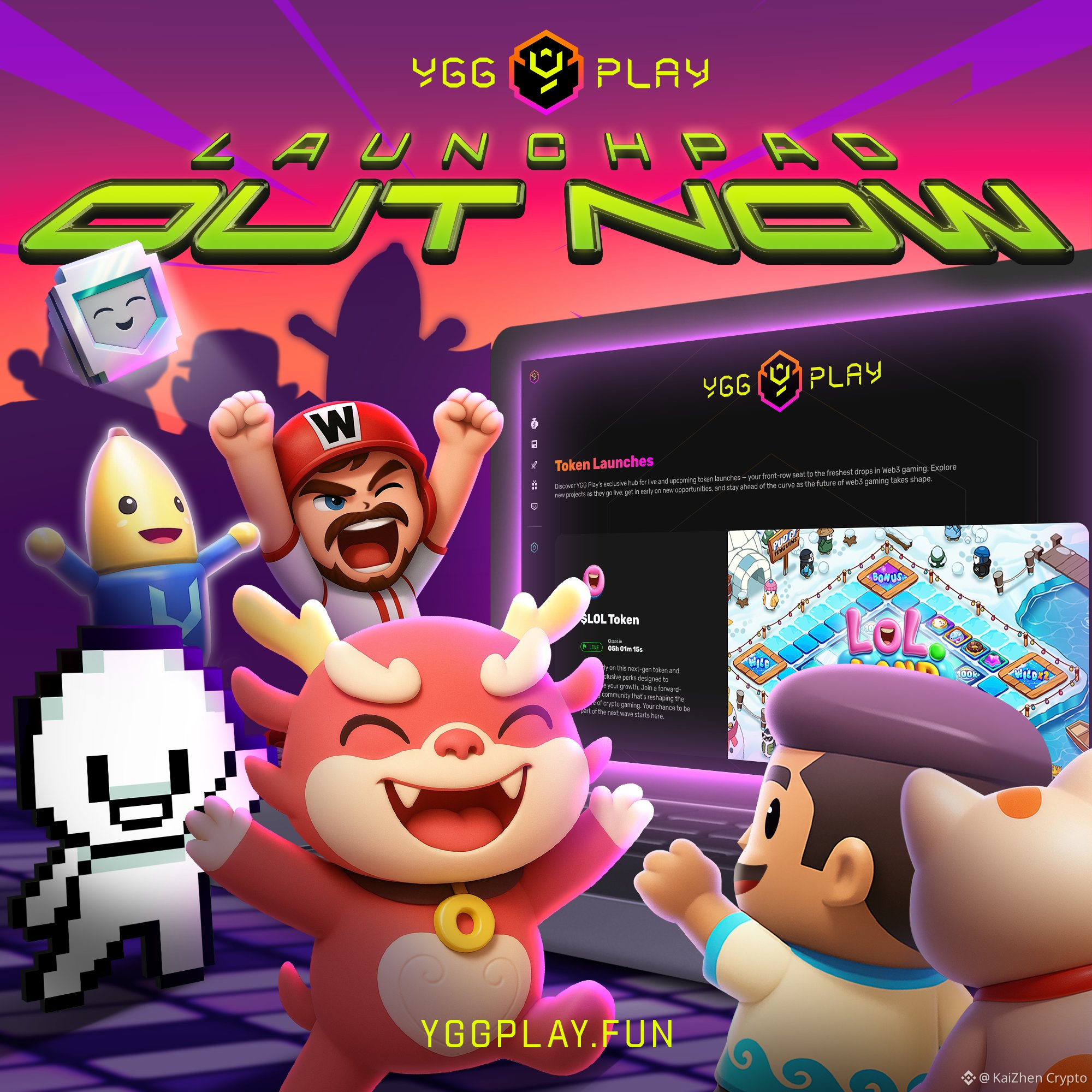
The launch of the YGG Play Launchpad marks one of the most important milestones in the project’s history. Instead of positioning itself solely as a guild or token driven ecosystem, YGG Play functions as a unified access layer for Web3 gaming. Game discovery, questing mechanics, and token launches are now integrated into a single platform, reducing fragmentation for both players and developers. This consolidation reflects a deep understanding of user behavior: sustainable engagement comes from simplicity, clarity, and consistent incentives. By aligning these elements under one platform, YGG is creating a foundation that rewards participation without exploiting it.
What makes this transition particularly compelling is how it aligns with the broader evolution of the Web3 gaming sector. In 2025, blockchain gaming is no longer a fringe experiment. It is an emerging industry undergoing natural consolidation, where only projects with real infrastructure and committed communities maintain relevance. YGG’s presence in industry rankings and analytical reports as a top blockchain gaming company is not accidental. It is the result of years spent building relationships, refining incentive models, and learning from both successes and failures. Trust in this context is earned through survival and adaptation, not marketing cycles.
Ahead of the YGG Play Launchpad debut, partnerships such as the collaboration with Proof of Play further reinforce YGG’s strategic direction. Supporting titles like Pirate Nation is not about exclusivity, but about enabling developers with proven gameplay loops and community traction. YGG’s role here is closer to that of a publisher and ecosystem enabler, offering distribution, integration, and economic alignment without imposing extractive control. This model respects the autonomy of creators while ensuring that players benefit from fair, transparent systems a balance that many Web3 projects struggle to achieve.
Perhaps the most symbolic shift came with the conclusion of the GAP questing era. GAP played a foundational role in onboarding users and rewarding early participation, but YGG recognized that no system should persist beyond its usefulness. Ending GAP was not a retreat; it was a conscious step toward more sophisticated incentive structures that better serve a growing creator and player economy. This decision reflects emotional maturity as an organization the ability to let go of legacy mechanisms in favor of systems that scale sustainably. In decentralized ecosystems, this kind of consistency builds credibility far more than clinging to familiar narratives.
Community remains the quiet constant throughout YGG’s evolution. Events such as the YGG Play Summit 2025, which drew thousands of participants, are not merely showcases but trust-building exercises. They demonstrate that behind the infrastructure and tokens lies a living network of contributors who believe in the project’s direction. These gatherings highlight creator growth, player engagement, and ecosystem collaboration all critical signals for mainstream adoption. In an industry often criticized for transactional relationships, YGG continues to invest in human connection.
On the token side, transparency remains central. With a significant portion of supply already circulating and clearly defined vesting and unlock schedules, including upcoming events later this month, YGG reinforces predictability over surprise. Markets may react to unlocks, but long-term participants value clarity. Immutability is not just a technical concept here; it is reflected in consistent communication and the absence of sudden rule changes. This steadiness allows stakeholders to make informed decisions grounded in trust rather than speculation.
Ultimately, Yield Guild Games in December 2025 represents a project that has grown up alongside the Web3 gaming industry itself. It has moved beyond the narrow framing of play to earn and into a broader role as infrastructure, publisher, and community anchor. Its strategy emphasizes durable engagement over fleeting rewards, alignment over extraction, and transparency over noise. In doing so, YGG is not just adapting to the future of gaming it is helping define it.
For those looking beyond short-term cycles, YGG’s story is one of emotional consistency and quiet conviction. It is a reminder that in decentralized systems, trust is built block by block, decision by decision. And Yield Guild Games, through its steady evolution, continues to prove that trust once earned can be the most immutable asset of